
Brazil Has Counted a Record Coffee Crop. The 2027 Crop Is Flowering Unevenly.
CONAB has counted a record 2026 coffee crop of 67.6 million bags, and the crop now in flower, which Brazil will harvest in 2027, has had an early, broken bloom, the wettest start to September in five seasons and a hot, dry end to the month, which puts October and November fruit set at the centre of the risk.

October 1, 2026
3 min read
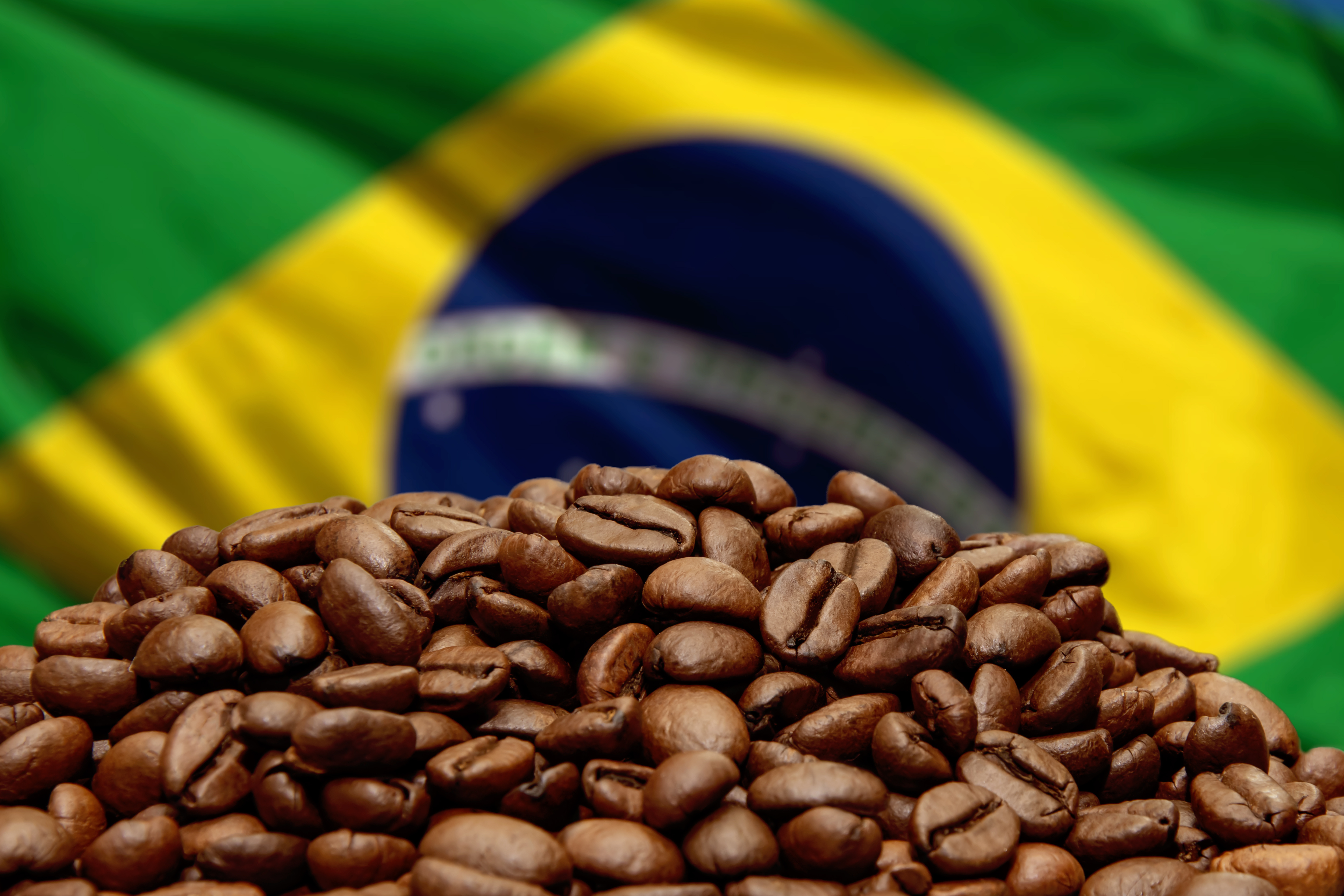
CONAB has counted a record 2026 coffee crop of 67.6 million bags, and the crop now in flower, which Brazil will harvest in 2027, has had an early, broken bloom, the wettest start to September in five seasons and a hot, dry end to the month, which puts October and November fruit set at the centre of the risk.
By João Pedro Rodrigues Morciani · Senior Analyst, Helios AI
The Crop in Flower Now Is the 2027 Harvest.
Brazil's coffee trees are flowering now, and the fruit they set between now and November is the crop Brazil will pick in 2027, in a harvest that normally peaks in June and July. That is the crop this piece is about. The crop CONAB counted last week is the one before it: flowered in late 2025 and harvested this year.
That 2026 crop is the largest on record. CONAB, Brazil's Companhia Nacional de Abastecimento, released its third survey of it on 24 September: 67.6 million 60-kg bags, up 19.6% on 2025 and raised from 66.7 million in May. Arabica is 48.2 million bags, up 34.8%. CONAB credits the positive biennial cycle and better rain distribution in the months before flowering. The US Department of Agriculture's Foreign Agricultural Service (USDA FAS), which labels the same harvested crop 2026/27, put Brazil at a record 71.9 million bags in its July 2026 Coffee: World Markets and Trade, with "near-record yields in Minas Gerais".
The cycle is against the crop now in flower. Arabica alternates higher and lower years, and Reuters wrote on 22 September that after a record 2026, trees are stressed and less productive the following year, making 2027 the off-year. USDA FAS gives the scale in general terms: "Under normal conditions, the on-year crop can rise 5 to 10 million bags and decline by a similar amount during the following off-year."
As we wrote in July, the flowering sets that crop. It is under way now.
September Started as the Wettest in Five Seasons.
The Helios read on the new crop starts with rain. Helios observed rainfall for Minas Gerais, 65% of Brazil's crop in our coverage, ran at 2.22 times its own historical norm from 1 to 27 September (pulled 28 September), the wettest of the five Septembers our daily series covers. São Paulo ran at 2.45 times and Espírito Santo at 1.73, both also the wettest of five. Bahia, 3% of the crop, was the dry exception at 0.59.
The wet spell began in winter. Guilherme Vinícius Teixeira, geoprocessing coordinator at the Cooxupé cooperative, told Estado de Minas on 28 September: "We had an atypical year because we went through one of the wettest winters in history" (our translation). The US National Oceanic and Atmospheric Administration's Climate Prediction Center had an El Niño Advisory in place on 10 September, with the event strengthening.


The Flowering Came Early and in Pieces.
Early rain brought an early bloom. Cooxupé recorded early floradas, the flowering flushes, in July and August, and Reuters reported on 22 September that the first major flowering came a month earlier than typical. Without the usual May-to-August dry spell, Teixeira said, trees in Cooxupé's area flowered several times, the first flushes weaker and the last the largest. Adriano Rabelo, technical coordinator at the Minasul cooperative, told Reuters: "We did not have the traditional dry period this year, which helps to make flowering and fruit development more uniform."
The bloom is not finished. In the Cerrado Mineiro, Expocacer's technical manager Farlla Gomes counted 60% of the expected flowering by late September. "The rest will depend on the next rains," she said (our translation). Coffee agronomist Lucas Ubiali told Reuters that more flowering could follow in the coming months, which can leave fruit maturing at different times, and that an earlier harvest next year could be expected. Reuters noted that analysts mostly downplayed the quality risk.
The Month Ended Hot and Dry.
The last days of September turned. In the Helios observed series for Minas Gerais, pulled 29 September, 20 to 29 September brought 0.45 times the rainfall norm for those days. Maximum temperatures topped 90°F (32°C) on 26, 27 and 28 September and ran about 5°F (3°C) above normal across 26 to 29 September. São Paulo was hotter still, above 90°F (32°C) on all four days from 26 to 29 September.
That is the combination CEPEA flagged. CEPEA, the applied-economics centre at the University of São Paulo's ESALQ agriculture school, said on 23 September that the September rains favor the floradas of the 2027 crop, and told producers to watch whether high temperatures and dry weather affect fruit set.
The forecast turns wet and cooler. The Helios forecast for Minas Gerais, pulled 29 September, carries two more days above 90°F (32°C), on 30 September and 1 October. It puts 1 to 15 October at 1.83 times the rainfall norm, heaviest from 2 to 6 October, with no day above 90°F (32°C) from 2 to 15 October and maximums averaging about 5°F (3°C) below normal. That is a forecast, not an observation.

These are weather readings, not a crop rating. Helios's seasonal climate-risk ratings still describe the 2026 season, which is closing, and there is no rating for the 2027 crop yet.
The Market Has Moved Lower.
Futures fell through September. The December 2026 arabica contract (KCZ26) on ICE Futures U.S. (Intercontinental Exchange) settled at 309.45 ¢/lb on 1 September and 278.60 ¢/lb on 25 September, with a low of 272.30 ¢/lb on 22 September, per Barchart. The curve slopes down: the December 2027 contract (KCZ27) settled at 264.40 ¢/lb on 25 September, 14.20 ¢/lb below KCZ26 that day. That spread was 31.50 ¢/lb at the 24 August settlements, on the same source.

The physical market moved with it. The CEPEA/ESALQ arabica indicator stood at R$ 1,538.29 per 60-kg bag on 25 September (US$ 296.40), for bica corrida (unsorted) type 6, hard cup or better, delivered in São Paulo city, with payment discounted at Brazil's interbank (CDI) rate. It was down 12.02% month to date.
Funds are still long, but less so. The Commodity Futures Trading Commission (CFTC) shows non-commercial traders net long 10,273 Coffee C contracts as of 22 September, about half the 20,531 of 30 June. ICE certified arabica stocks fell to a 27-year low of 217,646 bags on 15 September, per Barchart, and were back at 258,415 bags by 18 September.
What Would Change the 2027 Read.
Fruit set decides it, through October and November. If the forecast rain arrives from 2 October and the heat breaks, the late floradas Expocacer is waiting on would complete under the conditions CEPEA called favorable. If hot, dry spells return while fruit is setting, that is the case CEPEA warned about. Neither outcome is visible until the chumbinho, the pinhead-fruit stage, in October and November.
Hail has already hit Sul de Minas. Estado de Minas reported two hail episodes in the region in September, during flowering, and that 2027 production in those places will be hurt. We found no estimate of the area affected.
Disease pressure persists in a wet canopy. Jonas Ferraresso, an agronomist in São Paulo and Minas Gerais, told Reuters: "Dry periods help to control diseases. If it continues humid, they tend to remain present in the fields into the next cycle." We found no published figure for 2026 incidence. A wet first half of October would keep that question open.
The next official number will be CONAB's first survey of the 2027 crop.
The Bottom Line.
Brazil has a record 2026 crop in the warehouse and an off-year 2027 crop on the branch. The new crop flowered early and several times after the wettest start to September in five seasons, then met a run of 90°F (32°C) days at the end of the month. For a buyer setting 2027 cover, the evidence arrives over the next six weeks: the rain forecast for 2 to 6 October, fruit set through October and November, and field reports on hail and disease from Sul de Minas.
Frequently asked questions
Was Brazil's 2026 coffee crop a record?
Yes. CONAB's third survey of the 2026 crop, released 24 September 2026, puts it at a record 67.6 million 60-kg bags, up 19.6% on 2025: 48.2 million bags of arabica, up 34.8%, and 19.4 million of conilon, down 6.6%. CONAB raised the figure from 66.7 million in its May survey. USDA FAS put Brazil at a record 71.9 million bags in its July 2026 Coffee: World Markets and Trade, and StoneX had forecast 75.3 million bags on 16 March 2026.
When does Brazil's coffee flower, when is that crop harvested, and why was the flowering early in 2026?
Main flowering normally opens with the first rains after the dry season, in September, and runs into November, and the fruit it sets is harvested the following year, with the harvest normally peaking in June and July. The flowering under way now is therefore the 2027 crop; the record 2026 crop CONAB counted in September flowered in late 2025. In 2026 the winter was unusually wet. Cooxupé recorded early floradas in July and August, and Reuters reported on 22 September that the first major flowering came a month earlier than typical. September added more: Helios observed rainfall for Minas Gerais ran at 2.22 times its norm from 1 to 27 September, the wettest of the five Septembers in our daily series (pulled 28 September 2026).
What does an early flowering mean for the 2027 crop?
It is uneven. Without a dry spell, trees flowered several times, so fruit will set and ripen at different times. Field sources also point to disease pressure while it stays humid, and Estado de Minas reported two September hail episodes in Sul de Minas during flowering. CEPEA says the rains favor the floradas of the 2027 crop but flags fruit set under heat and dry weather as the thing to watch. Agronomist Lucas Ubiali told Reuters that an earlier harvest next year could be expected.
Why did arabica futures fall in September 2026?
The December 2026 contract (KCZ26) settled at 309.45 ¢/lb on 1 September and 278.60 ¢/lb on 25 September, with a low of 272.30 ¢/lb on 22 September (ICE Futures U.S. via Barchart). Barchart's market reports of 21 and 24 September set the decline beside heavy rain in Minas Gerais, which Somar Meteorologia put at 242% of the historical average for the week ended 20 September, and the 24 September report set it beside CONAB's raised crop estimate the same day.
Is 2027 an off-year for Brazilian arabica?
Yes. Arabica alternates between higher-yielding on-years and lower-yielding off-years, and 2026 was the on-year. USDA FAS notes that under normal conditions the on-year crop can rise by 5 to 10 million bags and fall by a similar amount the following year. Reuters, on 22 September 2026, described 2027 as the off-year after this year's record.
What should a buyer watch before CONAB's first 2027 survey?
Four things. October rain and heat: the Helios forecast for Minas Gerais, pulled 29 September, puts 1 to 15 October at 1.83 times its rainfall norm with no day above 90°F (32°C) from 2 October, and that is a forecast. Fruit set through October and November, from cooperative and CEPEA field reports. Hail and disease reports from Sul de Minas. And positioning: the CFTC showed non-commercial traders net long 10,273 Coffee C contracts as of 22 September, and ICE certified arabica stocks, per Barchart, hit a 27-year low of 217,646 bags on 15 September before recovering to 258,415 bags on 18 September.


.png)

Personalized commodity intelligence for the teams that feed the world.
