
By the time shortage makes headlines, it is too late to respond.
Food security and policy leaders need to act before prices spike and populations are exposed. Helios AI turns climate foresight into early warning, so you can pre-position aid and shape policy ahead of the crisis.

Response arrives after the crisis
Late Shortage Signals
Shortage signals arrive too late to act on.
Reactive Planning
Aid and distribution planning is reactive, not predictive.
After-the-Fact Response
Crisis response happens after prices have already spiked.
Early warning that buys you time

.png)
.png)
Solve Your Biggest Sourcing Challenges
Detect Climate Deviations
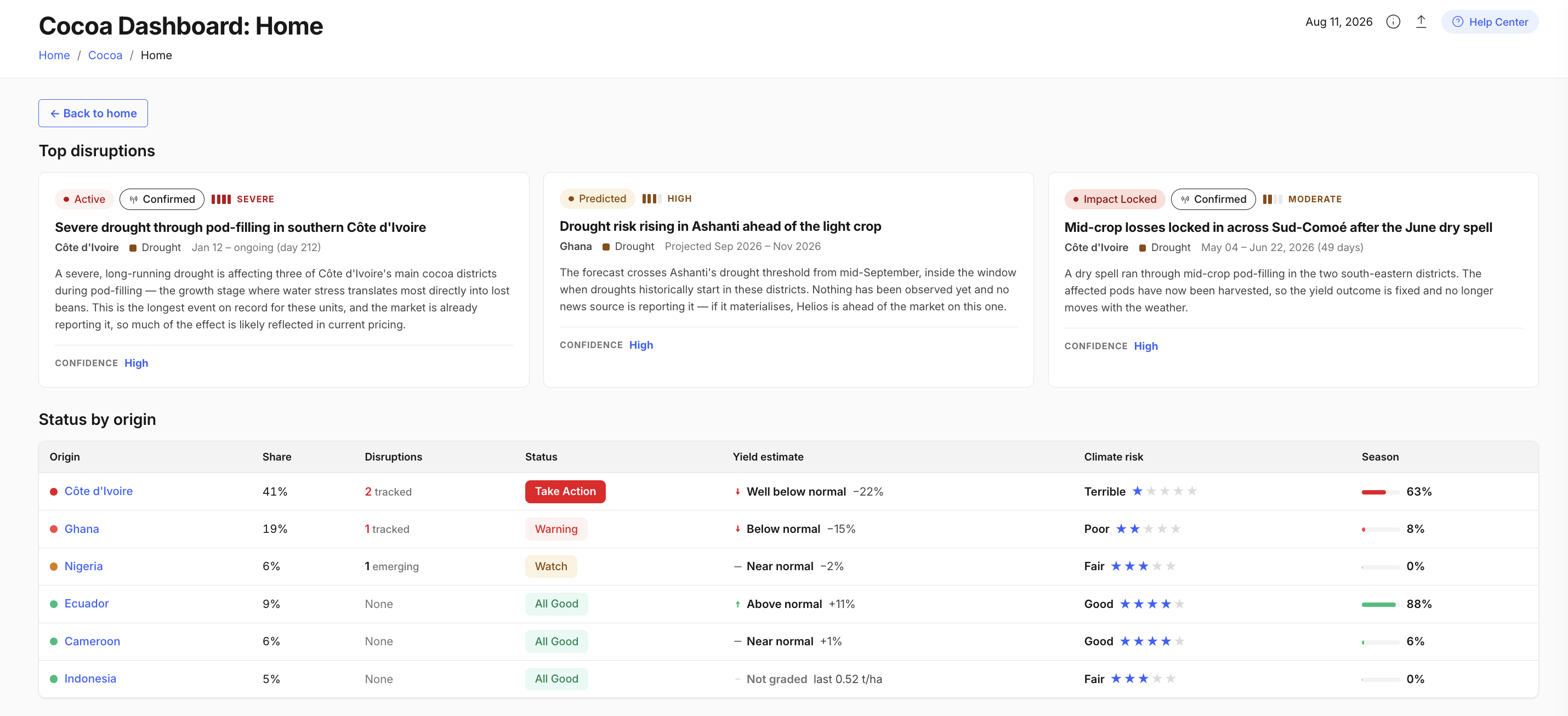
Crop-specific climate-risk models flag when conditions deviate from a region's historical baseline.

Identify Early Supply Risk
Sustained climate-risk spikes tend to precede yield loss and supply reduction, which is what creates the early-warning lead.
Measure Global Supply Impact
A global rollup weights major producing and exporting regions, so the signal reflects real supply impact.
Track Fast-Moving Disruptions
A catastrophe dataset and continuous news monitoring add fast-moving disruption context.
From supply signals to stronger sourcing decisions.
One Integrated View
Climate, price, and disruption signals in one place.
12-Month Forward Forecast
ML models forecast price and climate risk forward.
AI-Powered Intelligence
NLP and AI analysts deliver research-grade answers fast.
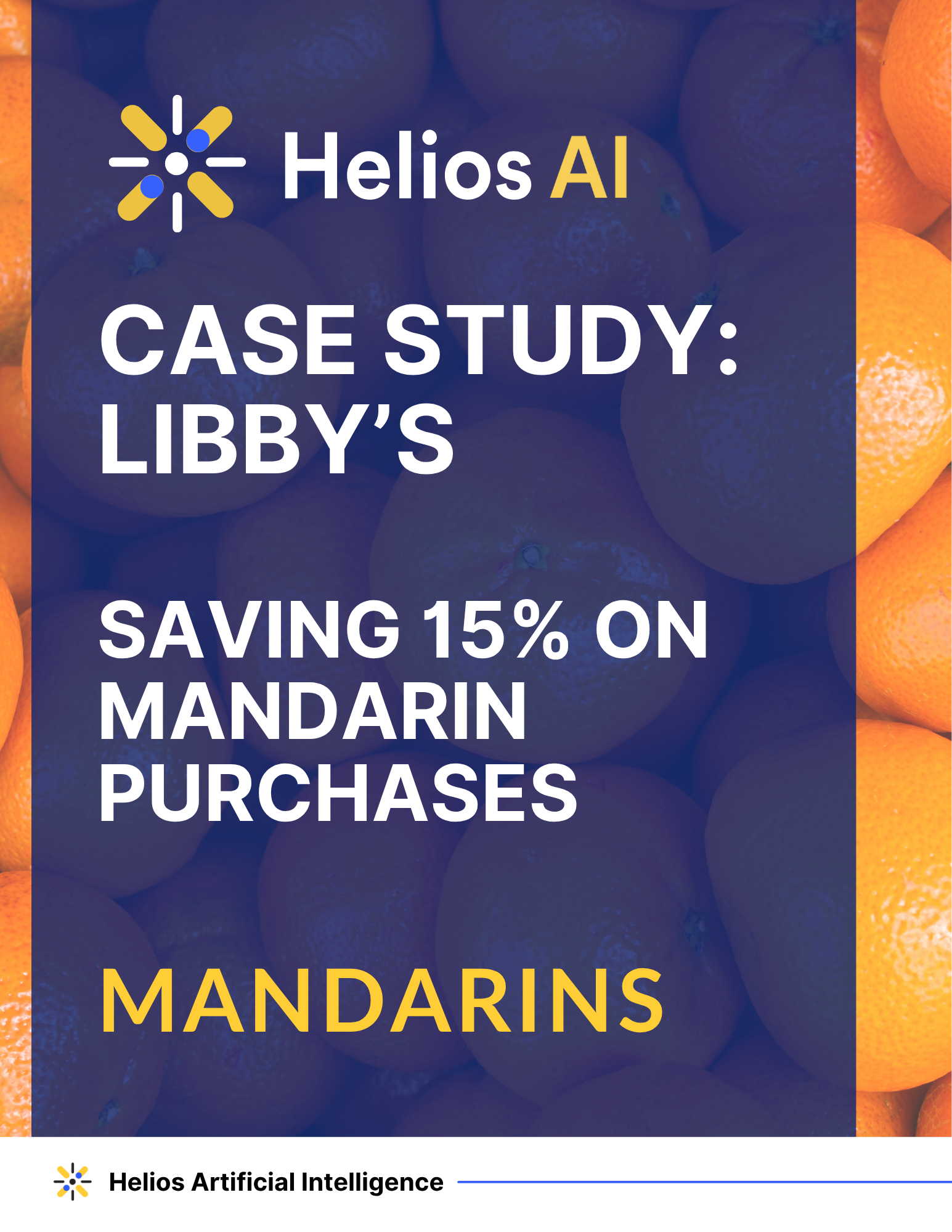
See how teams secure sourcing.
Helios Global Commodity Report Saved Libby's 15% on Mandarin Purchase
"Thanks to Helios AI's platform, we were able to predict an increase in mandarin prices six weeks before the market and buy a year's worth of supply from our partners - saving us 15%!"
.png)
An early-warning food security outlook for your regions of focus.

.png)

Personalized commodity intelligence for the teams that feed the world.
