
Coffee Repriced in Two Sessions. The Damage Took a Season.
On July 6, 2026, the September 2026 arabica contract (KCU26) on the Intercontinental Exchange (ICE) closed up 16.19%, at a 5.5-month high, per Barchart, on…

July 9, 2026
11 min read
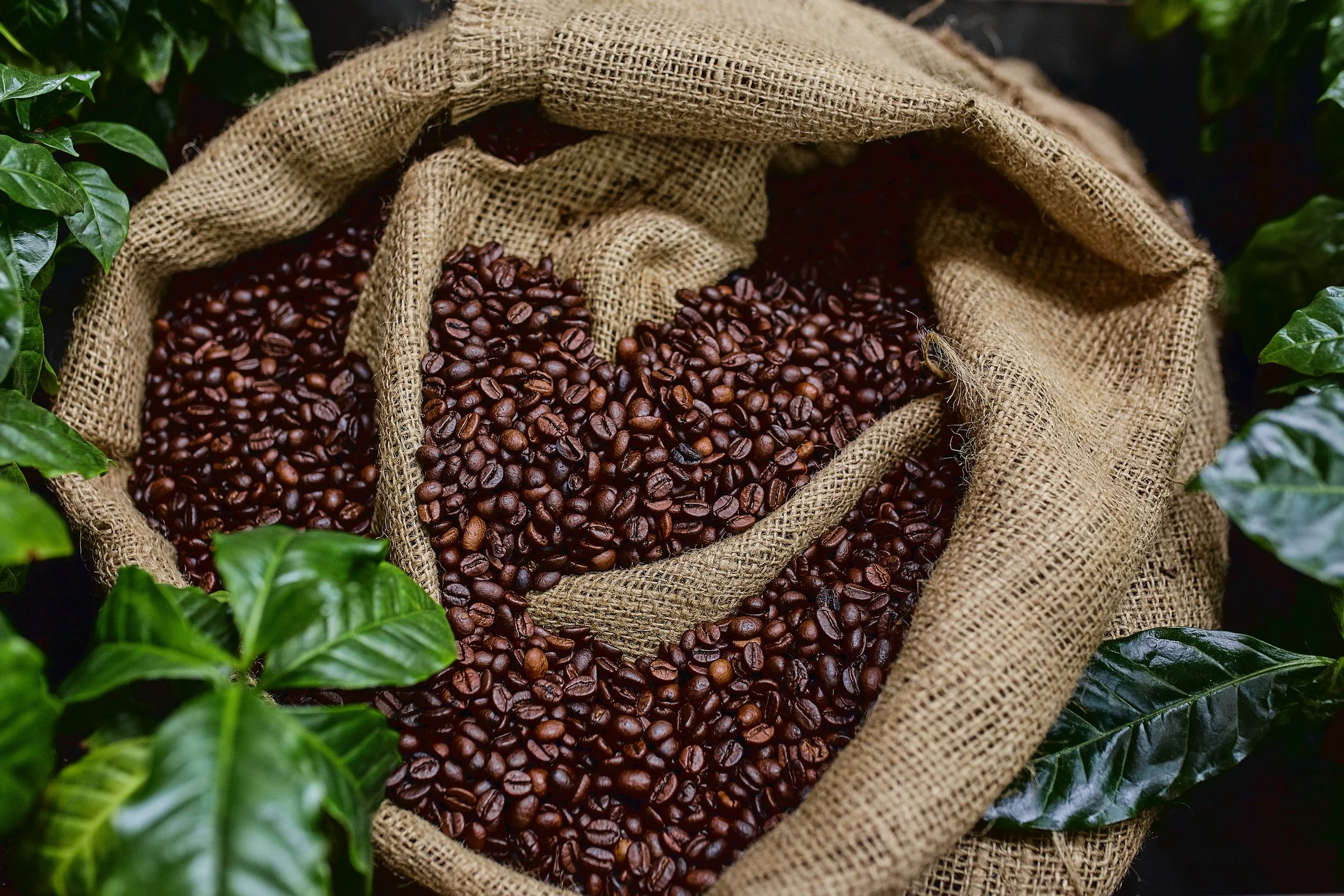
Helios's climate-risk ratings held every major Brazilian coffee state at one star while three official agencies forecast a record crop — last week, the futures market began pricing what the field data had recorded months earlier.
By João Pedro Rodrigues Morciani · Senior Analyst, Helios AI
On July 6, 2026, the September 2026 arabica contract (KCU26) on the Intercontinental Exchange (ICE) closed up 16.19%, at a 5.5-month high, per Barchart, on headlines about a possible "Super El Niño." The next session, it settled down 9.24% as longs liquidated under raised margins. Nothing about Brazil's coffee crop changed on either day. What changed was how visible its condition had become — and who was positioned for it.
In May 2026, we argued that El Niño's direction is settled; its size is not: emergence was the easy call, magnitude the hard one, and decision windows close before peak visibility. The field data moved first, months ago. The board moved last week — in both directions. And the same climate-risk model that recorded the damage now points forward, at a flowering window that opens in September. That sequence is this piece.
Three agencies forecast a record. Four states rated Poor.
The United States Department of Agriculture's Foreign Agricultural Service (USDA FAS) published its Coffee Annual for Brazil on June 3, 2026: 71.9 million bags for 2026/27, with arabica up 25% year over year. Brazil's National Supply Company (CONAB) put its May 2026 survey at 66.7 million bags; the Brazilian Institute of Geography and Statistics (IBGE) came in at 65.1 million in early June 2026. Three official bodies, one direction: a record or near-record rebound.
Helios AI's seasonal climate-risk ratings describe a different season. In the run dated July 5, 2026, all four major Brazilian coffee states — Minas Gerais, São Paulo, Espírito Santo, and Bahia — carried the system's worst rating: status "Take Action," one star, label "Poor." And the rating is not a reaction to the July headlines: all four states have held one star since at least late April, at status "Warning" through mid-June, before escalating together to "Take Action" in the June 21 run — nine days before the board's first repricing session (Helios AI ratings history, queried July 8, 2026).
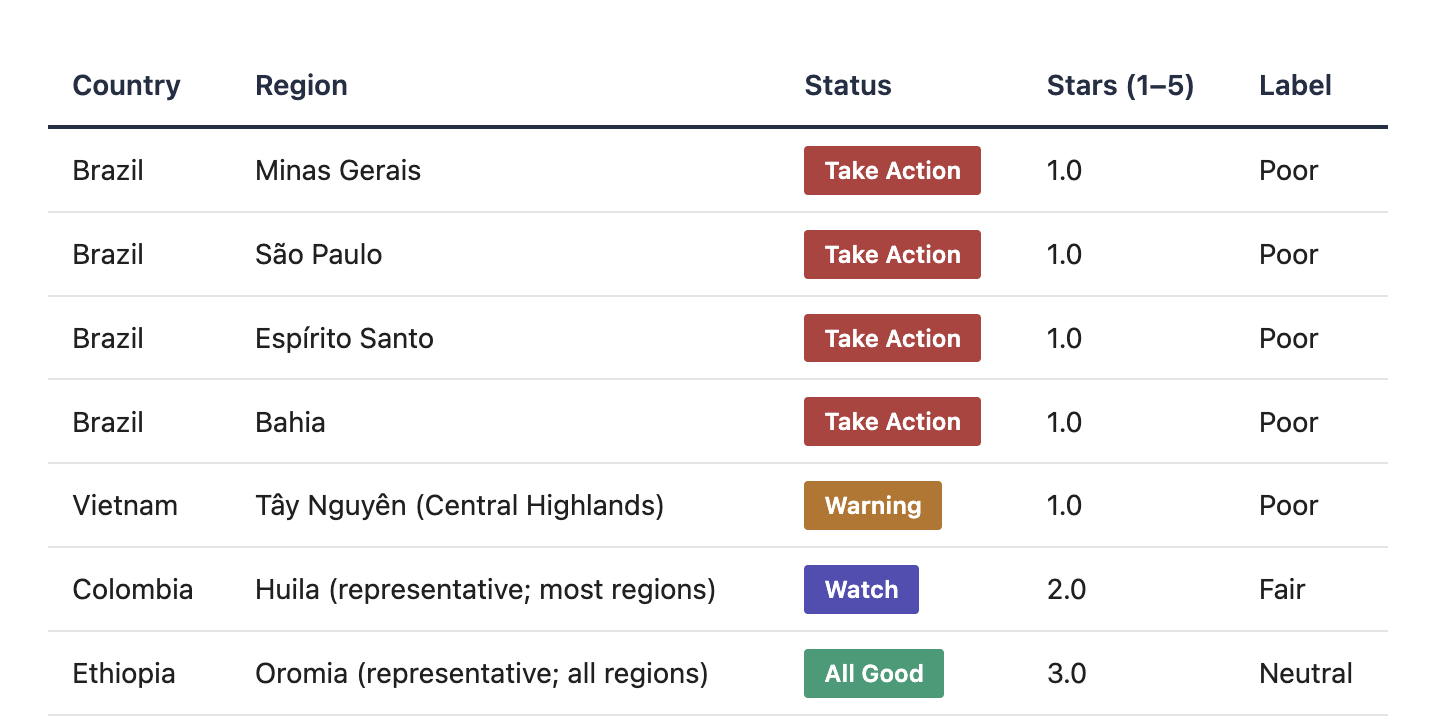
Chart 1: Helios seasonal climate-risk ratings for coffee — the entire Brazilian belt at the system's worst rating while three official agencies forecast a record crop. Colombia is shown at its modal rating (Huila); Caldas and Tolima rate Warning / 1.0 / Poor.
Source: Helios AI seasonal climate-risk ratings, run July 5, 2026, queried July 7, 2026.
Range: Ratings run of July 5, 2026; Brazil's four major coffee states plus comparative origins Vietnam, Colombia, and Ethiopia.
The agencies count bags; Helios AI’s ratings measure observed climate stress against eight seasons of history, phase by phase. The disagreement is plain: USDA's Coffee Annual reads the same season as benign, reporting rainfall volume "sufficient to ensure good development of the main flowering periods in September and October" and a growing season that "proceeded satisfactorily," with "isolated" heat and dryness that "did not affect the 2026 crop." They cannot both be describing a comfortable year; the field percentiles, harvest pace, export flows, and the market's own repricing below carry our side of the argument. The 6.8-million-bag spread between the highest and lowest official estimates says that the crop's size, at least, is not settled.
The stress was recorded phase by phase, months before the headlines.
Take Minas Gerais, Brazil's largest arabica state, through the crop's own calendar — flowering opens with the first rains after the dry season in September and runs into December, fruit fill follows January through March, and harvest peaks in June and July (the standard Embrapa/Camargo phenology). During the window our climate-risk model scores as October–December 2025 reproductive development, it recorded heat stress on 95% of days. During January–March 2026 fruit fill, it recorded drought on 63% of days: the worst fruit-fill drought in the eight seasons we score, exceeding the 2018 and 2020 stress years. The phases run in sequence — what flowering loses, fruit fill cannot restore, and harvest can only collect what filled. The beans now being harvested set under that heat and filled under that drought.
The other three states tell the same story in different registers. São Paulo logged dry stress on 68% of fruit-fill days — worse than 2022 and 2023, seasons that still yielded near average under lighter stress; this season sits beyond that analog. Espírito Santo, the conilon heartland, recorded cold, heat, and drought stress simultaneously in October–December; no season in our history matches that signature. Bahia saw cold stress on a record 83% of fruit-fill days.
Then came harvest, the one phase the market could watch: wet stress in Minas Gerais at the 88th percentile of its history, with the crop roughly half collected. A season of compound stress ended in the rain, in public.
The board repriced when the risk reached the headlines.
Through the second quarter of 2026, coffee futures fell as the record-crop consensus hardened — the market was trading the forecast, not the field. The repricing then came in two sessions. On June 30, 2026, after Minas Gerais received roughly twenty times its historical weekly average rainfall (Somar Meteorologia, via Barchart) and harvesting stopped, ICE September arabica rose 6.71% — the largest single-day gain since 2022 (Barchart, via Perfect Daily Grind). On July 6, 2026, the same contract added the 16.19% described above, on nothing more material than the El Niño headlines (Barchart).
Why so fast? There was nothing to sell against the move. ICE certified arabica stocks ended June 2026 down 55% year over year, at their lowest level since March 2024 (ICE certified-stocks data, via Barchart). And the physical trade agreed with the ratings, not the forecasts: the harvest stood 52% complete on July 1, 2026 against 60% a year earlier (Safras & Mercado, via Barchart), and the Brazilian Coffee Exporters Council (Cecafé) reported green arabica exports down 21.3% for January through May 2026.
Who was buying matters. Commitments of Traders data from the Commodity Futures Trading Commission (CFTC) show non-commercial traders in ICE Coffee C net long 20,531 contracts as of Tuesday, June 30, 2026 — a position rebuilt from an early-June trough. Funds entered the spike already long and got longer: fresh long and momentum buying stacked onto that thin certified-stock buffer. One caveat: the report covering the spike week (as of July 7) releases around July 10, after this piece publishes — spike-week flows are inference for now.
Positioning then cut the other way. On July 7, 2026, the September 2026 contract settled 9.24% lower — profit-taking on overbought technicals, long liquidation after ICE raised coffee margin requirements, and a drier Climatempo forecast revision for Brazil's coffee regions. Absent from the list: any new crop fact — certified stocks still down 55% year over year, the harvest still behind. A headline-driven spike, a positioning-driven giveback, and a settlement still well above where the board sat before June 30. The premium was re-rated, not erased.
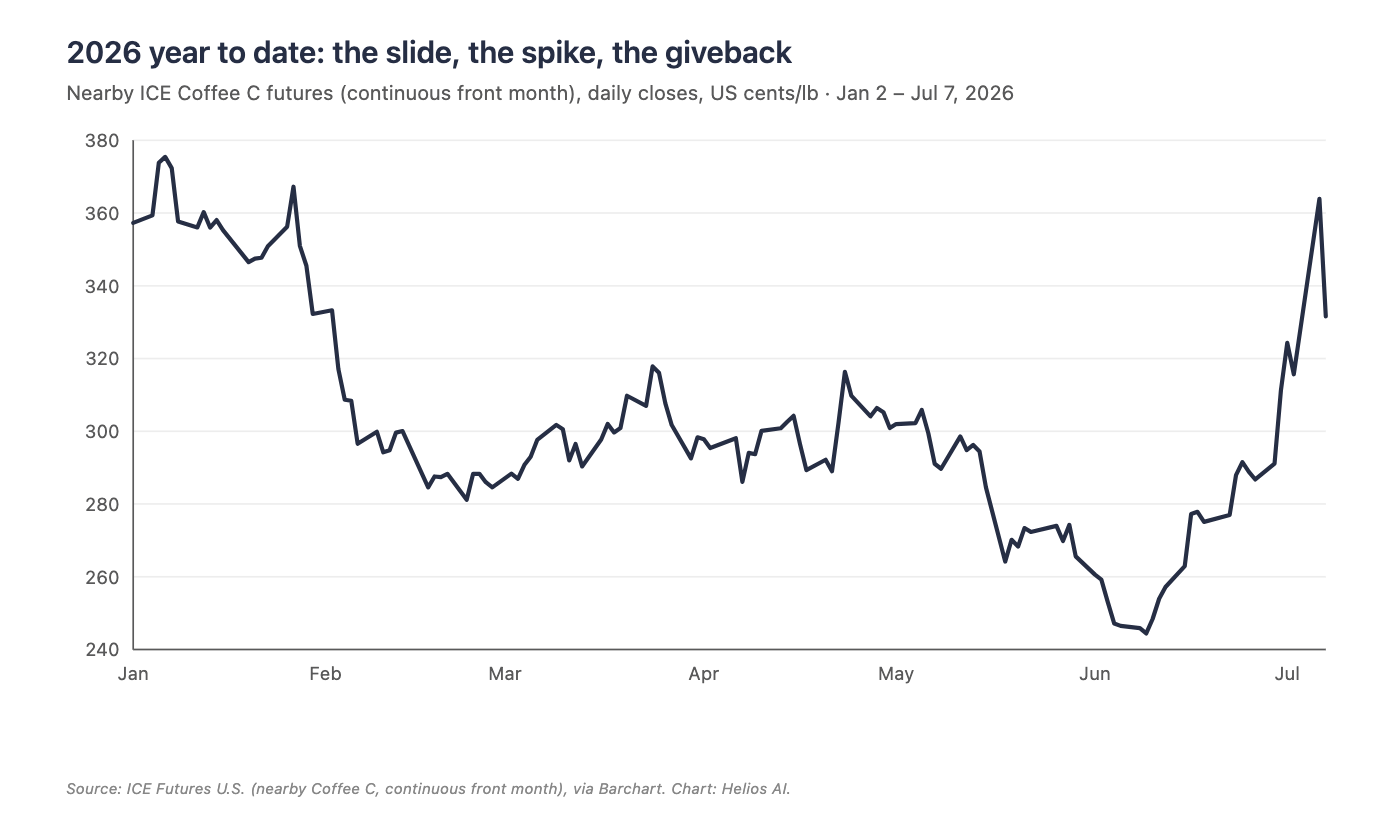
Chart 2: Nearby ICE Coffee C futures, daily closes, 2026 year to date.
Range: January 2 – July 7, 2026, US cents per pound.
What is that lead time worth? The two July sessions answer in both directions. A climate signal matters to a buyer when it is specific enough to act on — which region, which phase, how far outside history — and early enough to beat the board. The Brazilian ratings were both: specific in the phase-by-phase record above, early by the dated escalations in section one. And it is not the first time: the same score ran hot through the 2025/26 crop's fruit fill, ahead of the board's repricing through the first quarter of 2025.

Chart 3: Nearby ICE arabica futures against the Helios climate-risk score for Minas Gerais. The score ran hot through the 2025/26 fruit fill before the board repriced in early 2025, and again from the 2026/27 flowering onward — the episode the market ignored until July 2026.
Range: Weekly, January 2025 – July 2026.
September decides 2027/28. The ratings are already pointing at it.
The El Niño setup needs little reintroduction — we have covered it since May. The short version: the National Oceanic and Atmospheric Administration's Climate Prediction Center (NOAA CPC) puts the odds of a very strong event at 63%, with the peak forecast for September–November.
That forecast peak sits directly on flowering onset: Brazil's flowering breaks in September, main flowering September through November — the window that determines the 2027/28 crop. 2027/28 is already the off-year of the biennial cycle, and it will flower on trees carrying the full season of compound stress described above. USDA's own record forecast carries the caveat: above-average temperatures during flowering and grain development, combined with shifting rainfall patterns, could negatively affect the 2027/28 cycle. The document that calls last season benign flags the next one itself.
The honest counter-case: three independent official bodies raised their estimates, and the biennial on-year plus expanded area can genuinely offset weather stress — Rabobank lifted its 2026/27 global arabica surplus estimate to 9.5 million bags on July 6. El Niño's teleconnection to Brazilian coffee is not deterministic; the same pattern suppresses frost risk, and last season's flowering succeeded despite irregular rains. A well-timed October rain event dissolves the worst scenario.
That is why we frame September as a distribution, not a destiny — the same posture we took in El Niño's direction is settled; its size is not. What has changed since May is that the distribution now has a date on it, and the date is close.
What the lead time is for.
For a procurement or risk desk, the past nine months are the lesson, not the trade. The ratings went to one star while the board was still falling. Once the risk reached the headlines, the board moved roughly 24% across two sessions, surrendered 9.24% the next day, and still stood roughly 12% above its pre-June-30 level (compounded from the three KCU26 session moves above). A buyer who waited for confirmation paid for the confirmation.
The next window is dated. Flowering opens in September 2026 under an El Niño that CPC gives 63% odds of reaching very strong. The decision in front of a buyer is not to predict the event's size — our prior piece argued no one can do that yet — but to choose whether to position while the outcome distribution is wide or after the market has narrowed it. If September repeats the pattern, the field data will move first again. The only question is who is watching it when it does.
Our climate-risk ratings and disruption alerts exist to move that decision earlier — region by region, phase by phase, months before the board. What a strong El Niño does to every agricultural book — beyond coffee — is the subject of the El Niño 2026 procurement playbook, publishing the week of July 15.
Frequently asked questions
Why did arabica coffee futures jump 16% on July 6, 2026?
The September 2026 arabica contract (KCU26) on the Intercontinental Exchange closed up 16.19% on July 6, 2026, at a 5.5-month high, after a run of headlines about a possible "Super El Niño," per Barchart. No new Brazilian field data was released that day. The move landed on a thin buffer: ICE certified arabica stocks ended June 2026 down 55% year over year, at their lowest level since March 2024.
Why did coffee futures fall 9% on July 7, 2026?
The September 2026 arabica contract settled 9.24% lower on July 7, 2026 — a move Barchart attributed to profit-taking on overbought technicals, long liquidation after ICE raised coffee margin requirements, and a drier Climatempo forecast revision for Brazil's coffee regions. No new crop fact drove the decline: ICE certified stocks remained down 55% year over year and Brazil's harvest remained behind its year-earlier pace. The settlement still stood well above the market's level before the June 30, 2026 session.
Were funds short coffee before the July 2026 rally?
No. Commitments of Traders data from the Commodity Futures Trading Commission show non-commercial traders in ICE Coffee C net long 20,531 contracts as of Tuesday, June 30, 2026 — a position rebuilt from an early-June trough, not a net short. Funds entered the rally already long and added to it, so the upside came from fresh long and momentum buying rather than from shorts being forced out of positions. The report covering the spike week itself releases around July 10, 2026, so spike-week flows remain inference until then.
How does El Niño affect Brazilian coffee production?
El Niño can delay the rains that trigger Brazil's coffee flowering, which opens in September with the first rains after the dry season — the window that sets the size of the following season's crop, and the mechanism Barchart reported behind the July 6, 2026 futures move. The relationship is not deterministic: the same pattern suppresses frost risk in the coffee belt, and last season's flowering succeeded despite irregular rains. The effect on any single season depends on the event's strength and its timing relative to flowering onset.
Why did coffee prices fall through Q2 2026 if the crop was damaged?
Through the second quarter of 2026, arabica futures tracked the record-crop consensus: USDA FAS forecast 71.9 million bags for Brazil's 2026/27 season on June 3, 2026, with CONAB and IBGE also projecting a strong rebound. The climate stress recorded in the field between October 2025 and March 2026 was not yet visible in headline data, so the market traded the forecast rather than the field. The repricing came only when harvest disruption and El Niño headlines made the risk public in late June and early July 2026.
What do Helios AI's coffee climate-risk ratings measure?
Helios AI's seasonal climate-risk ratings measure observed climate stress — heat, drought, cold, and wet stress — against eight seasons of history for each producing region, phase by phase across the crop calendar, and summarize the result as a status, a star rating, and a label. They are field-condition ratings, not production estimates and not price forecasts. In Brazil's case the timeline ran ahead of the market: all four major coffee states rated "Warning" with one star by April 25, 2026, escalated together to "Take Action" on June 21, 2026 — nine days before the futures market's first repricing session — and held the system's worst rating in the run dated July 5, 2026.
See the field before the board does
Helios climate-risk ratings and disruption alerts score every major producing region, phase by phase, against eight seasons of history — the same system that held Brazil's coffee belt at one star from late April 2026 and escalated it to "Take Action" nine days before the first repricing session. Book a platform demo to see the current ratings and alerts for the regions in your book.


.png)

Personalized commodity intelligence for the teams that feed the world.
