
Commodities Wrapped: February Highlights and What to Watch in March
February highlighted how quickly climate volatility can reshape commodity markets. While Southern Europe experienced excessive rainfall, parts of Mexico,…

February 25, 2026
2 min read

Climate Extremes, Price Swings, and What to Watch in March
February highlighted how quickly climate volatility can reshape commodity markets. While Southern Europe experienced excessive rainfall, parts of Mexico, Florida, Vietnam, and Argentina battled prolonged dryness. At the same time, terminal markets reflected real price instability across fresh produce and grains.
READ FULL REPORTStrawberries – Portugal
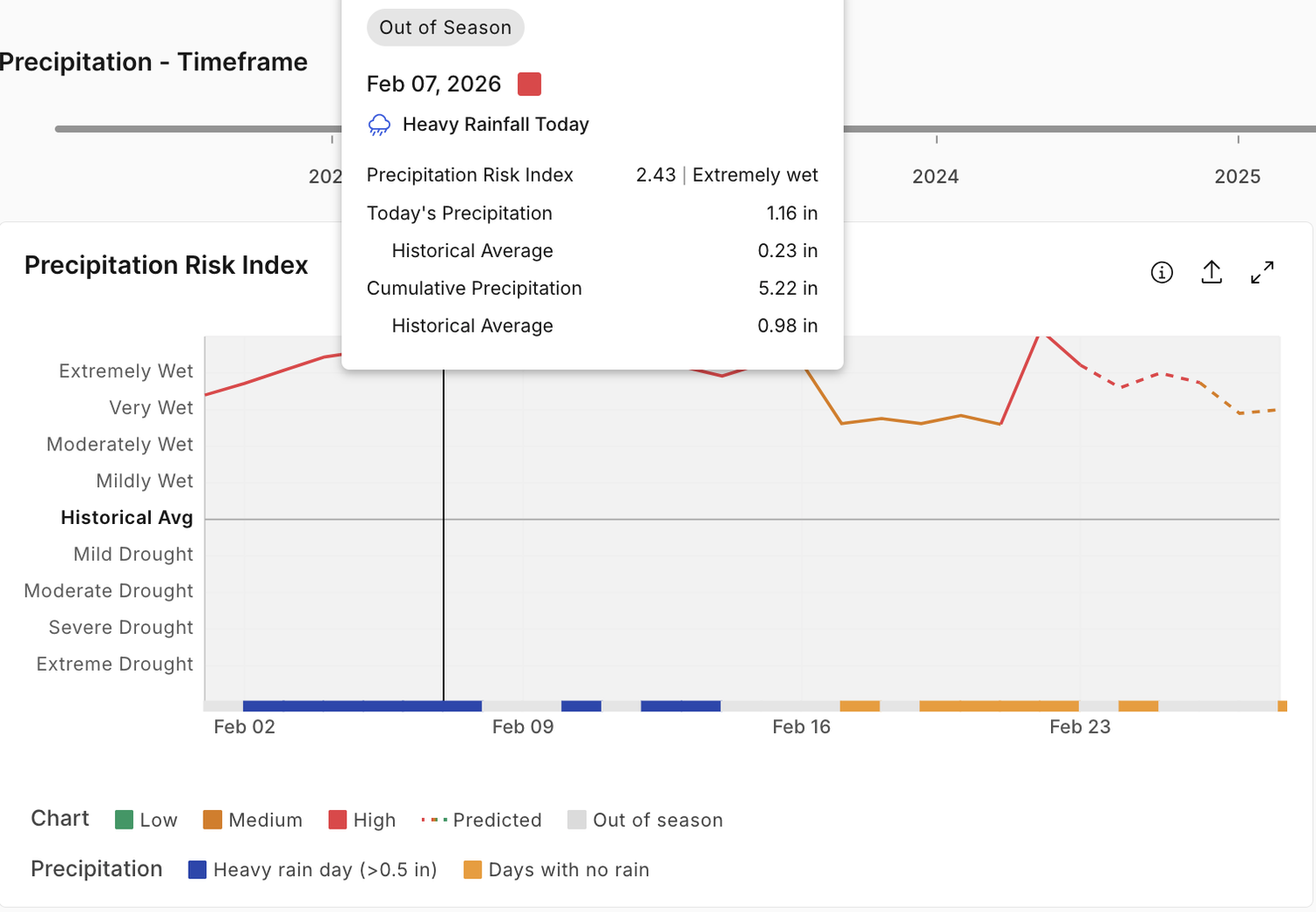
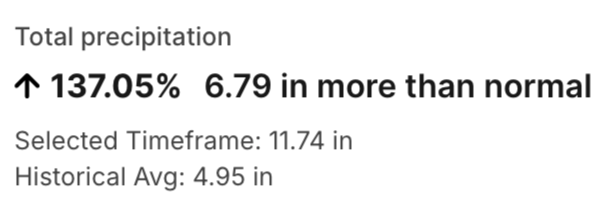
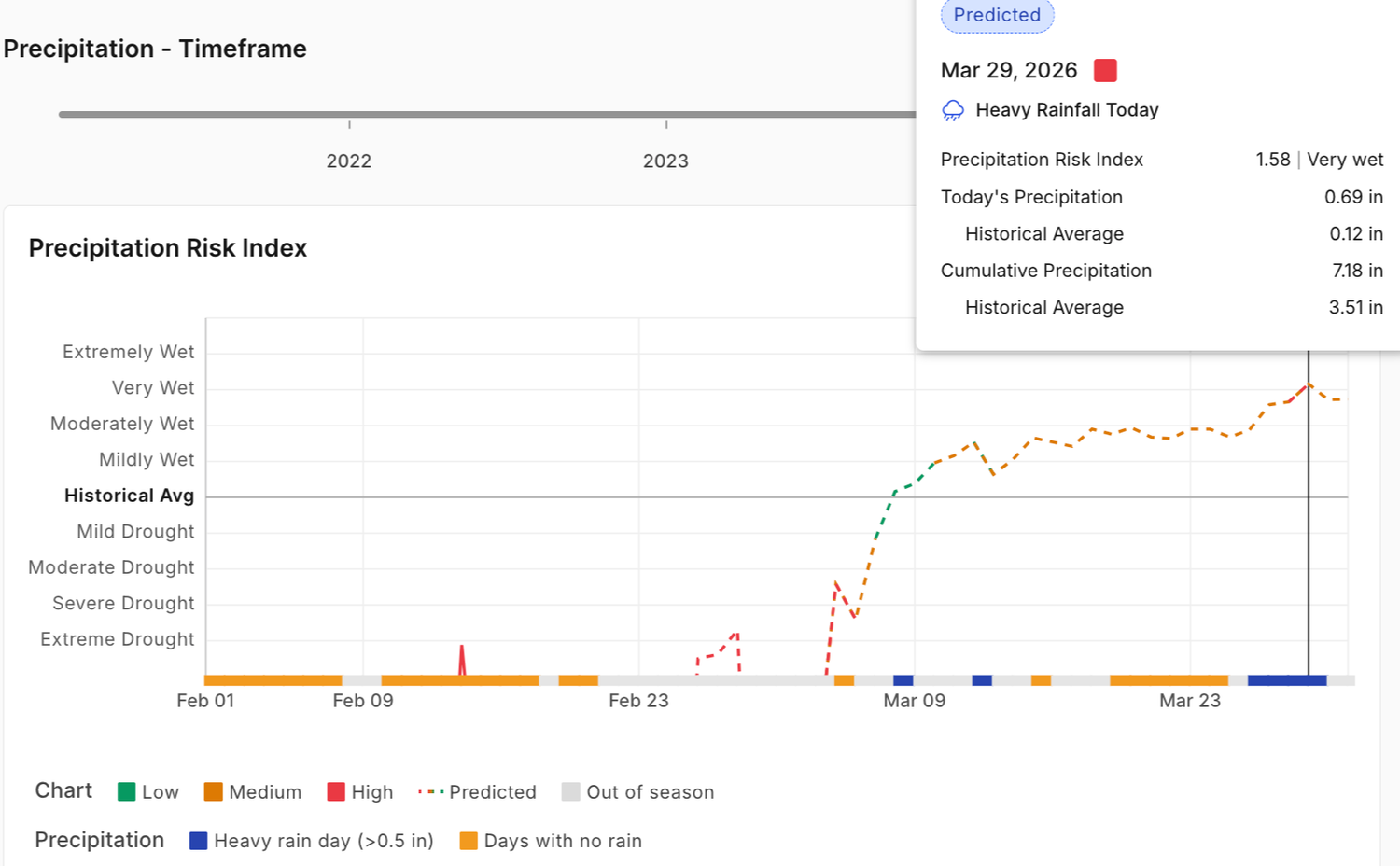
Portugal saw rainfall nearly four times above normal in February (9.26 inches vs. 2.40 inches historically), with heavy rain days increasing sharply and dry days cut in half. The Precipitation Risk Index reached “Extremely Wet,” signaling field saturation, higher disease pressure, and harvesting disruptions. Although price forecasts suggest normalization, quality volatility remains a real risk heading into March.
Oranges – Mexico

Mexican orange pricing showed mixed short-term movements, stabilizing around $1.58/kg but with inconsistent month-to-month adjustments. February drought stress continues to accumulate, raising concerns around fruit size, juice content, and potential Q2 supply pressure if heat risk intensifies.
Avocados—Mexico & Florida
Avocado prices fluctuated notably in February, with F.O.B. Hass 48s moving between $23.25 and $28.25 within weeks. Despite a fairly heavy supply, persistent drought stress in Mexico and Florida continues to affect fruit sizing and oil content. March forecasts point to a potential +10.7% price increase, suggesting upward pressure building into spring.
Apples – Washington & Portugal
Washington apple prices remained largely stable, aside from a brief mid-month dip that quickly corrected. However, climate signals from Portuguese apple regions indicate elevated drought stress and extended dry spells during the growing season, which could affect fruit development later in the cycle.
Coffee – Vietnam
Vietnam’s coffee harvest faced drought and earlier cold spells, conditions that can reduce bean size and impact cup quality. With Vietnam accounting for a significant share of global supply, sustained stress raises the risk of tighter availability and upward price pressure in the months ahead.
Commodities to Monitor in March
Soybeans – Argentina
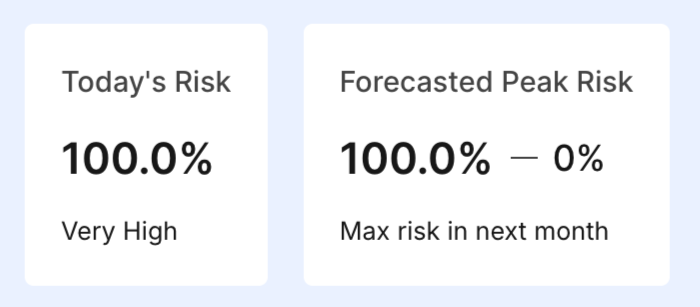
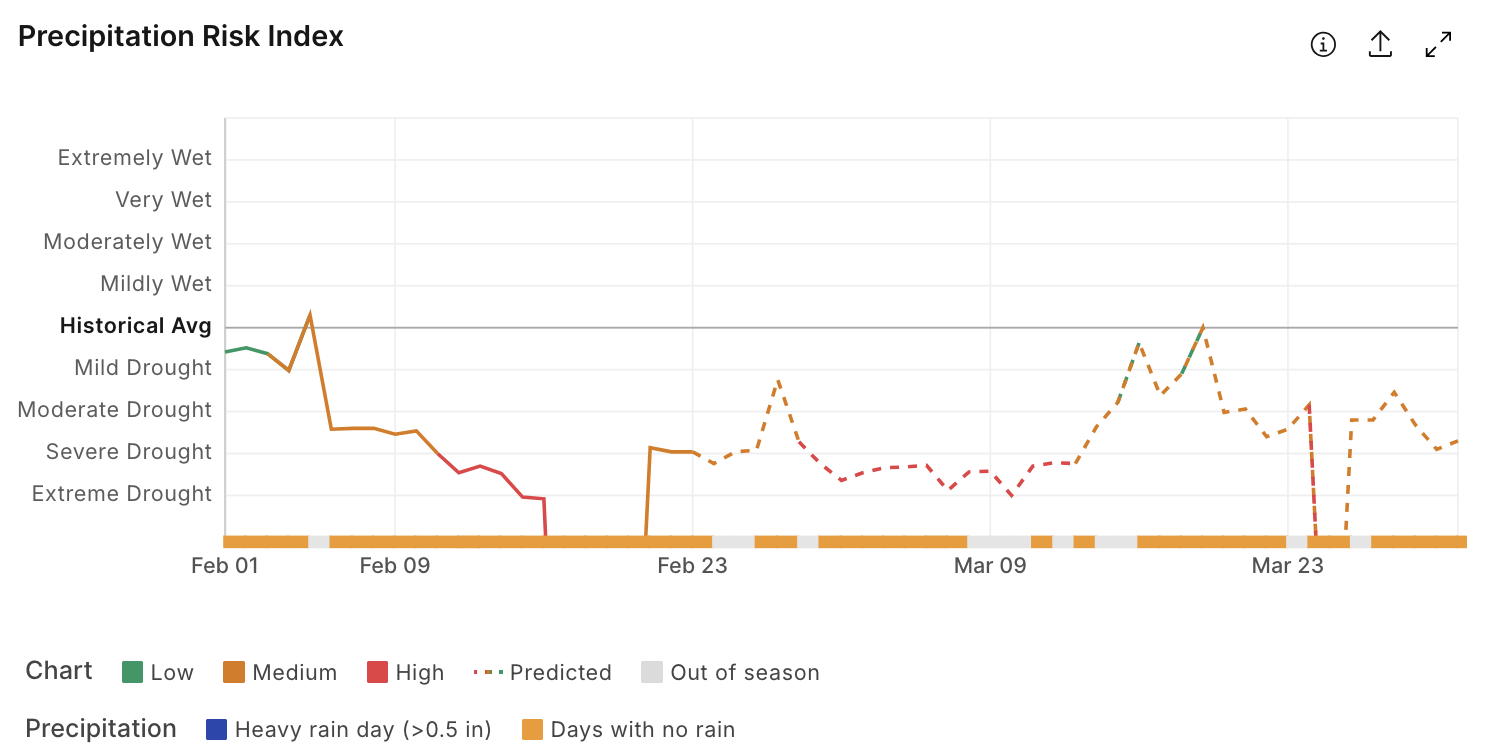
Soybeans enter March with a “Poor” climate risk rating due to prolonged dry conditions. The precipitation outlook shifts from mild to severe drought mid-month, with risk projected to peak at 100% in the coming weeks. Continued dryness during pod development could reduce yield potential.
Wheat – Montana, USA
Wheat is experiencing rising climate stress, with current risk levels elevated and forecasted to climb further. Multiple frost events are predicted, including temperatures dropping near 12°F, well below historical norms, posing threats during sensitive growth stages and increasing production uncertainty.
February reinforced a clear pattern: excessive rainfall in some regions, drought in others, and temperature volatility in key grain belts. As March begins, climate risk remains the dominant driver across soft commodities and grains alike.
READ FULL REPORT


.png)

Personalized commodity intelligence for the teams that feed the world.
