
COSA and Helios AI Launch Gates-Funded Pilot to Bring Predictive Climate Intelligence to Coffee Co-ops
A new collaboration delivers actionable, climate-driven insights to coffee cooperatives in East Africa, enhancing data-driven resilience for smallholder…

January 20, 2026
6 min read

A new collaboration delivers actionable, climate-driven insights to coffee cooperatives in East Africa, enhancing data-driven resilience for smallholder farmers.
The Committee on Sustainability Assessment (COSA) and Helios AI have partnered to pilot a new generation of climate intelligence tools designed to give coffee cooperatives weather forecast information. This project has the objective to better understand how cooperatives value this information, whether they modify their behaviour, and whether they disseminate this information to their members, and how they do this.
Supported under a Gates Foundation-funded initiative focused on “Agile tools for smallholder farmers,” the pilot brings predictive climate analytics from Helios AI’s platform to COSA’s network of agricultural cooperatives across Rwanda and Uganda.
“We expect the Helios AI platform to provide our cooperative with accurate and updated climate and weather conditions information, which will help us make different decisions about our coffee agricultural practices and coffee seasonal planning. We will get not only weather information but also information about global coffee production and price. By using this platform, we will be able to disseminate updated weather information to our members to help them adapt to forecasted weather conditions.”
- Gustave Nikomeze, Sustainability Manager at Abateraninkunga ba Sholi Coffee Cooperative
"My expectation is about how to control the risk that is caused by weather changes. My experience so far with this platform is that the training gives us ways of avoiding the risks related to weather changes. We will be able to know when to harvest, process, and when shipments can be planned for. This helps one to avoid price and weather changes."
- John Masereka, Production and Logistics Officer at Rwandaro Farmers Cooperative
Empowering Co-ops with Foresight, Not Just Data
Smallholder farmers face intensifying weather volatility and uncertainty in production planning, without having access to tools that can help them be better prepared for those situations. COSA and Helios AI are aligning to change that—combining COSA’s deep experience in sustainability measurement with Helios AI’s predictive climate analytics to help cooperatives translate data into usable foresight.
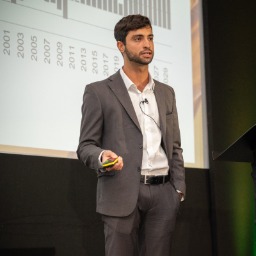
“This pilot is about creating two-way value,” said Jeroen Bollen, Project Lead at COSA. “For too long, data has been extracted from farmers without giving anything meaningful back. With Helios AI, we’re testing actionable tools that make climate data accessible and practical—helping co-ops and farmers anticipate risk and make smarter decisions in real time.”
The pilot emphasizes a non-extractive approach to data: information gathered from co-ops feeds directly back into dashboards and insights that can guide planting, harvesting, and investment choices.
Why This Pilot: Understanding Value, Behavior, and Information Flow
At the core of this pilot is a set of research questions aimed at understanding how climate information can meaningfully support decision-making within coffee cooperatives and, by extension, their farmer members. COSA and Helios AI are not only testing whether climate forecasts can be delivered effectively, but also whether they create tangible value for cooperatives operating in increasingly unpredictable environments.
Specifically, the pilot seeks to answer:
- How do cooperatives value weather and climate forecast information as a risk-management tool?
We aim to understand which types of forecasts are most useful, how they influence planning, and where climate intelligence fits within co-ops’ operational decision cycles. - Does access to this information change cooperative behavior?
Through agile surveys and qualitative interviews, the project investigates whether co-ops adjust harvesting schedules, member communications, procurement planning, or extension services based on the insights provided. - How—and to what extent—do cooperatives disseminate this climate information to their members?
A key element of the study examines whether and how co-ops pass climate forecasts to farmers, the channels they use, and what barriers or facilitators exist.
Together, these research questions will help determine the real-world applicability, value, and scalability of climate intelligence tools in smallholder-dominated regions.
Here’s what co-op leaders, themselves, expect from this pilot:
“This platform will be helpful in decision-making, and it is going to help them know the right time when and what agricultural practices should be done according to weather conditions. The platform will be used for weather forecasting, and our members will be given early warning information to make decisions to cope with unfavorable climate and weather conditions.”
- Gustave Nikomeze, Sustainability Manager at Abateraninkunga ba Sholi Coffee Cooperative
"My expectation for this program is to gain extensive knowledge, particularly on climate change and weather patterns. Through this program, I expect to receive timely and reliable weather information specific to the areas where our farmers operate. This will enable me to support farmers in improving their agricultural practices by making informed decisions based on accurate weather forecasts.
The training provided through this program is highly relevant to my work, as it directly responds to the needs of our farmers. Integrating reliable weather forecasting information into agricultural planning will help farmers adapt their practices to climate variability. I strongly believe that this program is very important for our farmers, as it will help them practice profitable agriculture while minimizing losses. Access to accurate and reliable weather forecasts will allow them to plan farming activities more effectively and sustainably.”
- Jean Baptiste Munezero, Production Manager at Abahuzamugambi Ba Kawa Maraba Cooperative
"My expectations of the program are to get more skills for map navigation about weather situation, coffee price management, and climate change issues according to regional mitigation. My experience is that, as an agronomist for 7 years in the coffee sector, this platform will help me to increase knowledge about many things, like dealing with prices with clients, and help farmers to produce the best quality of coffee related to climate analysis. It will help them to cultivate coffee based on the local weather situation."
- Justin Tuyisenge, Production and Certification Officer at Kopakama Cooperative
How the Pilot Works
COSA is deploying Helios AI’s climate intelligence module—part of its integrated platform that combines predictive climate, commodity, and disruption signals—within a select group of cooperatives.
During the first phase, COSA’s teams are conducting baseline and follow-up agile surveys to generate real-time, cost-effective insights into how co-ops engage with the tool, how frequently they access insights, and what changes in decision-making occur as a result.
Helios Horizon, an interactive AI analyst, is being introduced as a simple way for users to query the platform in natural language — e.g., “How will expected rainfall affect our harvest timing this quarter?” — making complex forecasts easier to interpret.
“Our mission is to turn climate complexity into supply chain foresight,” said Francisco Martin-Rayo, CEO of Helios AI. “By combining predictive models with intuitive AI interfaces, we can help organizations like COSA deliver climate intelligence that is real-time, localized, and human-readable — giving producers an edge in an increasingly unpredictable world.”
A Ground-Level Test of Scalable, Affordable Resilience Tools
The pilot aligns with COSA’s broader mandate under the Gates initiative to identify cost-effective, scalable digital tools that support farmers’ resilience and data ownership. Early phases are focused on usability and accessibility, with the goal of ensuring insights can be easily shared across language and literacy levels.
Participating co-ops are currently onboarding, with engagement data and qualitative feedback to inform improvements to both the Helios AI platform and COSA’s measurement framework. A follow-up publication will share learnings on adoption, user behavior, and impact once the pilot’s midline surveys are complete.
Looking Ahead
COSA and Helios AI plan to release a joint case study in 2026 summarizing lessons from the pilot—including user adoption trends, feedback from co-ops, and quantified impact on climate-informed decision-making. A fireside chat or webinar is also being considered for the first half of this year, bringing together sustainability leaders, farmer organizations, and digital innovators to discuss what “practical climate foresight” looks like in action.
About COSA
The Committee on Sustainability Assessment (COSA) is a nonprofit organization that develops and applies sustainability metrics and measurement systems for agriculture to help organizations understand sustainability with easy and credible, science-based solutions. Working with global development agencies, private companies, and producer organizations, COSA helps align sustainability strategies with measurable outcomes.
→ Learn more at https://agiledata.thecosa.org/
About Helios AI
Helios AI is an AI platform purpose-built for agri-food that predicts climate, price, and supply disruption for 75+ commodities across 90+ countries. Its integrated platform combines 40K+ USDA reports, 500B+ climate and pricing signals, and 10K+ commodity-specific news sources to deliver actionable foresight for procurement, sourcing, and sustainability leaders worldwide.
→ Learn more at www.heliosai.com

.png)

Personalized commodity intelligence for the teams that feed the world.
