
Love Is in the Air, But So Is Climate Risk: Cherry Market Alert
As Valentine’s Day puts cherries, desserts, and seasonal ingredients back in focus, it’s worth remembering that agricultural supply chains are shaped long…

February 11, 2026
2 min read

As Valentine’s Day puts cherries, desserts, and seasonal ingredients back in focus, it’s worth remembering that agricultural supply chains are shaped long before products reach shelves. While consumers celebrate with sweet treats, climate signals captured months earlier are already influencing market dynamics.
As the cherry market moves past the 2025 harvest, attention is already shifting to 2026. While most post-season reporting focuses on yields already realized, Helios Horizon data shows that the most consequential risks for next year emerged after harvest, during late 2025.
Across key cherry regions in Turkey and Michigan, a clear pattern has emerged:
Spring 2025 cold stress followed by renewed cold exposure during dormancy materially increases downside risk for the 2026 crop.

Spring 2025: A Weakened Starting Point
Both Turkey and Michigan entered the 2025 season with elevated vulnerability.
In March–April 2025, widespread cold events coincided with flowering and early growth, a highly sensitive phase for cherries.
In Turkey, repeated cold exposure across inland and transition regions damaged blossoms and reduced early resilience.
In Michigan, the Northwest growing areas experienced late spring freezes that directly impacted developing buds.
While the effects of these events were partially reflected in 2025 yields, their longer-term consequences were less visible: trees entered dormancy under stress.
Late 2025: Risk Shifted Underground
By November–December 2025, the cherry crop had been harvested. However, Helios Horizon signals show that climate risk resurfaced during the off-season, directly affecting dormant trees.
Turkey: Ankara, Bursa, Isparta
These regions share a climatic transition profile: enough inland to experience cold snaps, yet not stable enough for fully continental winters.
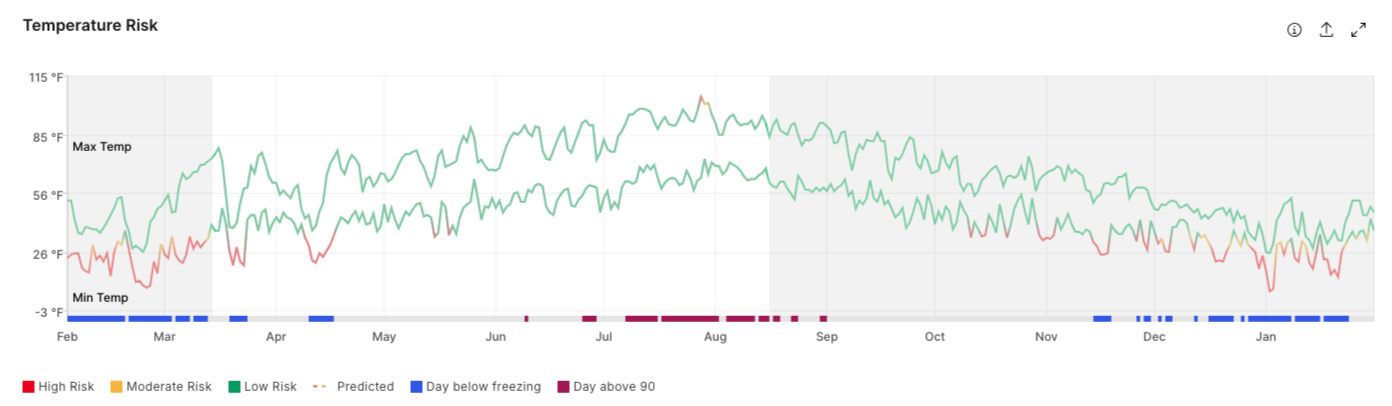
Ankara, Turkey
After spring cold stress, late-year unseasonably cold conditions and temperature variability increased the risk of:
Dormant bud damage
Reduced cold hardiness
Uneven flowering in spring 2026
This compounding stress pattern places these regions among the most exposed for below-trend recovery in 2026, even if early-season weather appears average.
Michigan: Traverse City & Northport
In Northwest Michigan, Helios detected a distinct cold sequence:
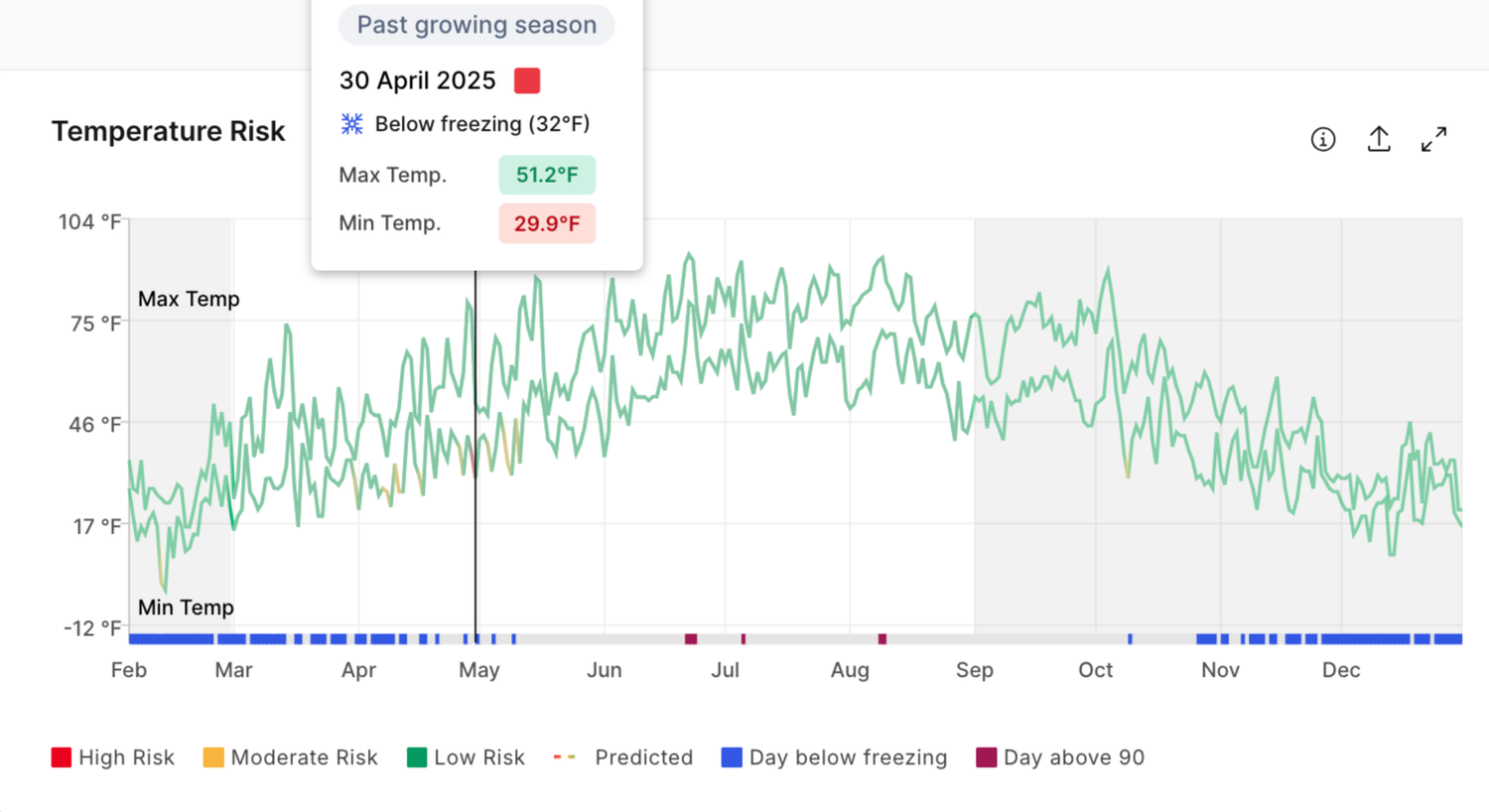
Traverse City, Michigan
Late April 2025 freezes during the bloom window
Early November freezes, marking an abrupt return to sub-freezing temperatures during dormancy
This spring-to-dormancy cold pattern heightens the likelihood of bud mortality and uneven fruit set, making 2026 yields especially sensitive to early-spring conditions.
Why This Matters for 2026 Supply
Dormant-season stress doesn’t show up in harvest data—but it sets the ceiling for the next crop.
Late-2025 anomalies directly influence:
Bud survival rates
Bloom density and uniformity
Fruit set potential
Regions that experienced both spring stress and late-year cold volatility face a materially higher risk of supply shortfalls in 2026.
The Helios Takeaway
2026 cherry risk is already being priced by the climate—not by the market.
This is why Helios AI tracks climate signals beyond harvest, helping customers identify where supply risk is building before it becomes visible in production forecasts or prices.
Want our latest Cherries report?
UNLOCK CHERRY REPORT


.png)

Personalized commodity intelligence for the teams that feed the world.
