
Peru's Table Grape Season Has Split in Two. The North Is Early and Small; the South Is Up.
PROVID's second estimate, reported 8 October, has the north 28% below last season and the south 6% above it; the northern number moved across a September in which Piura recorded the warmest nights of the five seasons on file, and a buyer's exposure sits in weeks 44 to 47 and in berry size.

October 22, 2026
3 min read
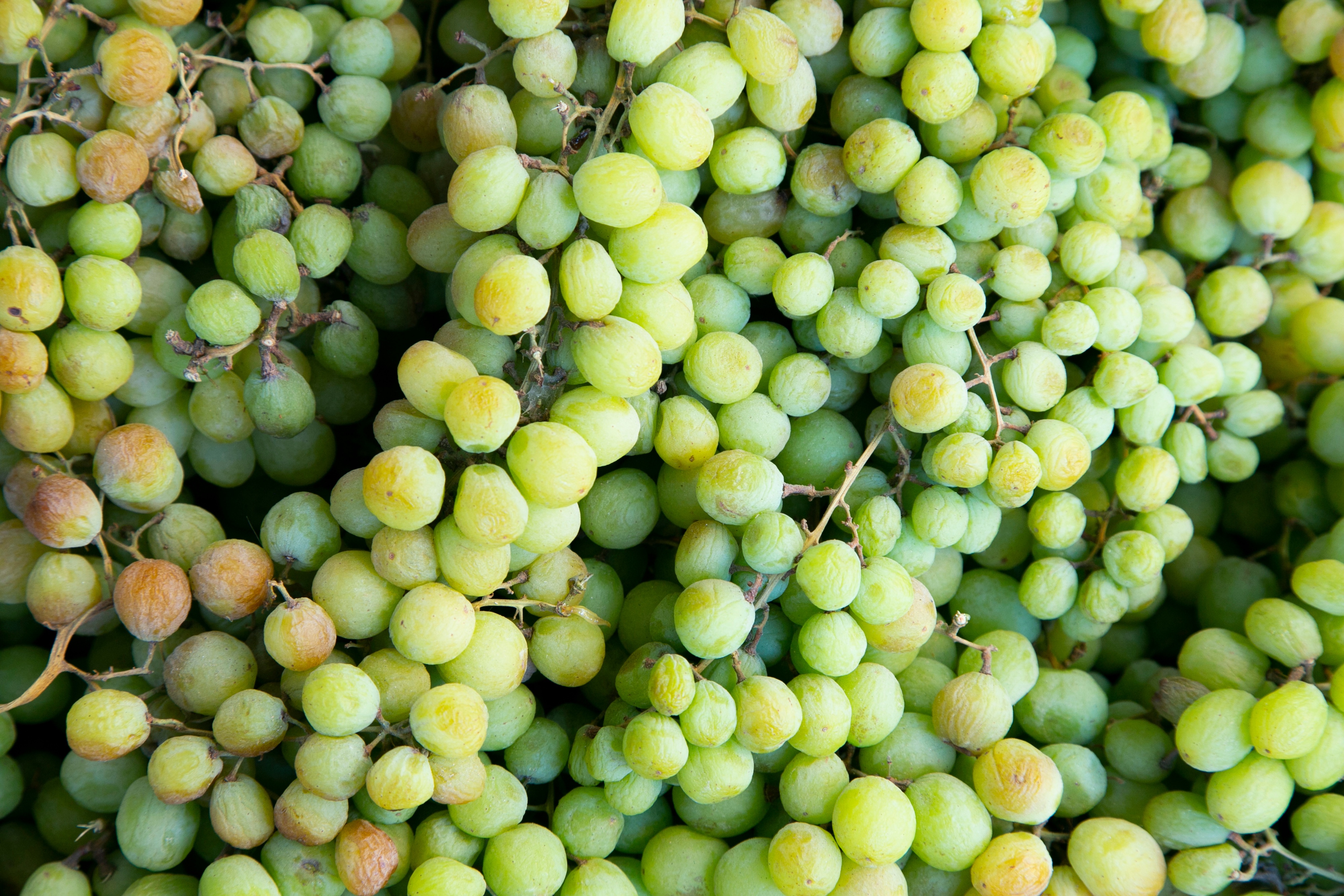
PROVID Counts the North Down 28% and the South Up 6%.
The growers' body has split its own forecast. PROVID, the Asociación de Productores de Uva de Mesa del Perú, put the 2026/27 export crop at 78.7 million boxes of 8.2 kg in its second estimate, reported on 8 October: 9% below last season's 86.4 million and 3.95 million below its late-August first estimate. The north, led by Piura and Lambayeque, is at 27.8 million boxes, 28% down. The south, Ica above all, is at 50.9 million, 6% up.
PROVID gives two reasons for the north and one for the south. The northern harvest is running up to three weeks early in some varieties, and bunches weigh less because the berries are smaller. The south has more productive hectares; nationally, the first estimate put about 27,000 ha in production against 23,748 certified last season, on Redagrícola's report. The northern peak is weeks 44 to 47, 26 October to 22 November.
The northern number moved across September. The first estimate had the north 16% down on 28 August; by 8 October it was 28% down. Between those dates sat the warmest September of the five Piura has on file in our observed temperature series.

Every September Night in Piura Was Warmer Than Normal.
The signal is in the nights. In our observed series for Piura, pulled 19 October, each of September's 30 nights sat above the historical minimum for its date; the mean minimum was 72.7 °F (22.6 °C), 8.8 °F (4.9 °C) above norm. Twenty-five nights stayed at or above 70 °F (21.1 °C); the four prior Septembers, 2022 to 2025, held one such night between them.
The days were hot too. Piura counted 7 days at or above 90 °F (32.2 °C) against a previous high of one, in 2025. October has not broken the pattern: through the 18th the minimum averaged 74.5 °F (23.6 °C), 9.8 °F (5.5 °C) above norm, and 12 days reached 90 °F. Lambayeque and Ica rank 2026 first on minima too.
SENAMHI, Peru's meteorological service (Servicio Nacional de Meteorología e Hidrología), logged the same month. Its September bulletin, Boletín N°36, has La Esperanza in Piura at a minimum of 24.7 °C on 8 September, above the station's previous September record, 23.0 °C on 17 September 1997. Our regional Piura minimum for that night is 23.9 °C.
Warm Nights Make Small Berries, and PROVID Said So in August.
The agronomy is published and dated. Keller and colleagues, in Frontiers in Plant Science in 2022, heated Cabernet Sauvignon inflorescences in the field; heating shortened the time to fruit set and accelerated berry development. On nights, the June 2025 San Joaquin Valley viticulture newsletter of UC ANR, the University of California's agriculture and natural resources division, says it plainly: higher night temperatures accelerate respiration and burn carbohydrate the fruit would otherwise use, and heat during berry growth impairs cell division, giving smaller, less plump berries.
PROVID connected the two before the hottest month began. On 28 August its general manager, Luis Miguel Vegas, told Infobae that Piura was registering night minima 3 to 4 °C above normal and tied them to more vegetative growth and smaller berry calibre. "Estamos viendo un adelanto de dos a tres semanas tanto en el norte como en el sur," he said: a two-to-three-week advance in both north and south (our translation). Helios measures air temperature and rainfall against a norm; berry size, bunch weight and brix are the exporters' numbers.
Ica Had the Same Heat and Is Counted Up.
The heat does not explain the count on its own. Ica's September was as anomalous as Piura's: every night and every day above norm, a mean minimum of 66.0 °F (18.9 °C), 7.6 °F (4.2 °C) above norm, the highest of the five Septembers on file. PROVID has the south up 6% anyway.
Hectares are PROVID's reason. The first estimate cited almost 2,000 new ones, and the 6% is a net figure: on a base that was 50.9% of the national total last season on Inform@cción's count, the new area outran the heat even if Ica's berries come in smaller too. The split is a finding about area and timing as much as about weather.

2023/24 Is the Precedent, and It Had Rain as Well as Heat.
The shape has happened before. In 2023/24 PROVID's final count was 62.7 million boxes, 12% down, north 30% down and south 6% up, as reported by Blue Book in July 2024. In our series, September 2023 is the second-warmest Piura September of the five, with one night at or above 21.1 °C; 2026 has 25. The resemblance ends there: that season also carried Cyclone Yaku's rain in March 2023, a rain-and-heat precedent.

Part of the Cut Has Already Shipped.
The 28% is partly a calendar effect. PROVID's weekly report with data from SENASA, Peru's agricultural health service, reported by Revista Lombriz on 7 October, had 1.9 million boxes exported by week 38 against 1.3 million at the same point in both prior seasons. FreshFruit.pe, on 14 October, put weeks 38 to 41 at 57.7 kt against 18.8 kt a year earlier, three times the volume. Fruit that would have landed in November has partly landed already.
The early boxes are not the US programme. To week 38, Red Globe was 50% of exports and Sweet Globe 22%; Colombia took 40% of the boxes and North America 12%. The second estimate was built on exports through week 39, so it counts the fruit already shipped; what remains on the northern vines for weeks 44 to 47 is the part PROVID calls uncertain. In FreshFruitPortal's rendering: "The coming weeks will be key to reducing uncertainty in the estimate."

The First Peruvian Price Is One Line at New York. California Is Still the Reference.
US terminal markets quoted no Peruvian grapes on 16 October. USDA AMS, the US Department of Agriculture's Agricultural Marketing Service, reports no Peruvian grape line at six terminal markets from Philadelphia to Los Angeles that day, while Peruvian blueberries are quoted, so the absence is product, not reporting. Helios has no price series for Peruvian grapes. The first Peruvian line appeared at New York on 21 October: Red Globe in bagged 18 lb containers at $40 extra large and $38 large-extra large, and white seedless type at $46 to $48 extra large, wholesale, first-receiver sales to 9 a.m., with still no Peruvian line at Philadelphia that morning (USDA AMS, 21 October).
The closing origin sets the reference. At Philadelphia on 16 October, California Red Globe, jumbo, in bagged 19 lb lugs, sold at $40 to $42 a package, mostly $40, wholesale, first-receiver sales to 9 a.m. At Los Angeles the same day, on the same basis, white seedless type, jumbo, fine appearance, fetched $53 to $55 in bagged 19 lb containers against $32 to $34 for extra large: the size premium in one print. California is itself two to three weeks early and ends mid-November (FreshFruitPortal, 14 October).
The Exposure Is Weeks 44 to 47, by Size.
Write the northern programme as a calibre programme. A buyer booking Piura Sweet Globe or Red Globe for November is exposed on the share of jumbo and extra-large fruit in each lot more than on volume. Southern volume is the hedge in time: Ica's peak harvest runs December to February on our phase calendar, and Chile, the next origin, projects 67.9 million boxes, 16.5% more than last season (Frutas de Chile, 29 September).
The call becomes checkable from week 44: if PROVID's weekly reports show northern volumes in weeks 44 to 47 at or near last season's, the early shipments explained the cut rather than the heat. Behind both the heat and the rain outlook is the El Niño we described for the north coast in July, in our piece on Peru's mango season: CPC, the US Climate Prediction Center, holds an El Niño Advisory (8 October), and ENFEN, Peru's El Niño study committee, a coastal El Niño alert (Comunicado Oficial 18-2026, 16 October).
The Bottom Line.
PROVID's count is the finding: 78.7 million boxes, the north 28% down, the south 6% up. Our observed series shows the month in which the northern number moved, every September night in Piura above norm. Ica had the same heat and is counted up on hectares, and part of the north's cut has shipped already, mostly Red Globe to Colombia.
For a buyer the exposure is narrow and dated: Piura and Lambayeque, weeks 44 to 47, and the calibre of what arrives. The box count is PROVID's. The berry size arrives with week 44.
Frequently asked questions
How big is Peru's 2026/27 table grape crop?
PROVID's second estimate, reported on 8 October 2026, puts the export crop at 78.7 million boxes of 8.2 kg, about 645 kt, 9% below the 86.4 million boxes of 2025/26 and down from the 82.65 million of its first estimate in late August, built on exporter information and cumulative exports to week 39. The north, Piura and Lambayeque, is at 27.8 million boxes, 28% down; the south, led by Ica, is at 50.9 million, 6% up. FreshFruit.pe, working from customs run-rates on 14 October, projects a milder cut, 680.6 kt against about 709 kt last season.
Why is the north down 28% while the south is up 6%?
PROVID's reasons for the north are an early harvest, up to three weeks in some varieties, and lower bunch weight from smaller berries; its reason for the south is more productive hectares. Our observed series, pulled 19 October, shows September 2026 as the warmest September of the five on file in Piura, Ica and Lambayeque alike, with every night above norm in all three, so heat alone cannot account for the split. Area does, and so does timing: the first estimate already had the north 16% down before September began, and weeks 38 to 41 shipped three times last year's volume.
What does heat during bud break and bloom do to berry size and bunch weight?
Heat at flowering shortens the path to fruit set and, above about 33 °C by day and 27 °C by night in chamber work summarised by Keller and colleagues in 2022, aborts flowers; Greer and Weston found in 2010 that a 40/25 °C regime at flowering dropped the flowers while the same regime at fruit set left berries developing normally. Heat during berry growth impairs cell division and elongation, which UC ANR's June 2025 newsletter links to smaller, less plump berries. Warm nights raise respiration and consume stored carbohydrate that would otherwise feed the fruit, which is the mechanism PROVID's general manager tied to Piura's night minima on 28 August.
When do Peruvian grapes peak in US and EU markets this season?
PROVID puts the northern peak at weeks 44 to 47, 26 October to 22 November, with the harvest up to three weeks early in some northern varieties; Ica's peak harvest runs December to February on our phase calendar, and December was the largest export month last season at 213.8 million kg on Inform@cción's count. Last season's first US arrivals came around Thanksgiving, on Divine Flavor's account to FreshPlaza, and MIDAGRI, Peru's agriculture ministry, reported the first SENASA-certified consignments from Ica for the United States on 13 October 2026. The United States took 52% of last season's exports and Europe 22%, on PROVID's figures.
What are Peruvian grape prices now, and how do they compare with last season?
The first Peruvian print is dated 21 October 2026: USDA AMS New York quotes Peru Red Globe, 18 lb containers bagged, extra large $40 and large-extra large $38, and white seedless type extra large $46 to $48, wholesale, first-receiver sales to 9 a.m.; on 16 October the terminal reports for Philadelphia, New York, Boston, Baltimore, Los Angeles and Miami quoted no Peruvian grapes. The reference is still California as the closing origin, all wholesale, first-receiver sales to 9 a.m.: Red Globe jumbo in bagged 19 lb lugs at $40 to $42, mostly $40, at Philadelphia; white seedless type extra large in bagged 19 lb lugs at $40 to $44, mostly $42, at New York; and white seedless type in bagged 19 lb containers at Los Angeles, jumbo fine appearance at $53 to $55 against $32 to $34 for extra large. No like-for-like comparison with last season exists: the first US arrivals from Peru came around Thanksgiving in 2025, on Divine Flavor's account to FreshPlaza, and last season's week-42 terminal reports were not retrievable.
Will El Niño rain affect the harvest in Piura?
Not yet, though it has begun: in our observed series, pulled 21 October, rainfall in Piura since 1 August is still a fraction of norm, but 19, 20 and 21 October are the first three consecutive days with rain in the window, SENAMHI measured 5 to 10 mm in Piura on 19 to 20 October under an orange alert that runs to 22 October (La República, 20 October), and Ica and Lambayeque remain near zero, so the season's stress to date is heat. ENFEN's Comunicado Oficial 18-2026 of 16 October keeps a coastal El Niño alert in place, expects coastal warming to stay at extraordinary magnitude until January 2027, forecasts above-normal rain on the north coast for the rest of 2026 with possible moderate to strong episodes, and expects the Chira and Piura rivers above normal mainly from November. November is the phase Helios calls Fruit/Crop Fill in Piura, inside the northern peak weeks.




Personalized commodity intelligence for the teams that feed the world.
