
The $4 Sandwich Is a Global Supply Chain: What Five Ingredients Are Telling Procurement Teams This Fall
August is National Sandwich Month. It is also the month when procurement teams lock in Q4 contracts for the produce that goes into every sandwich sold in…

August 17, 2026
6 min read
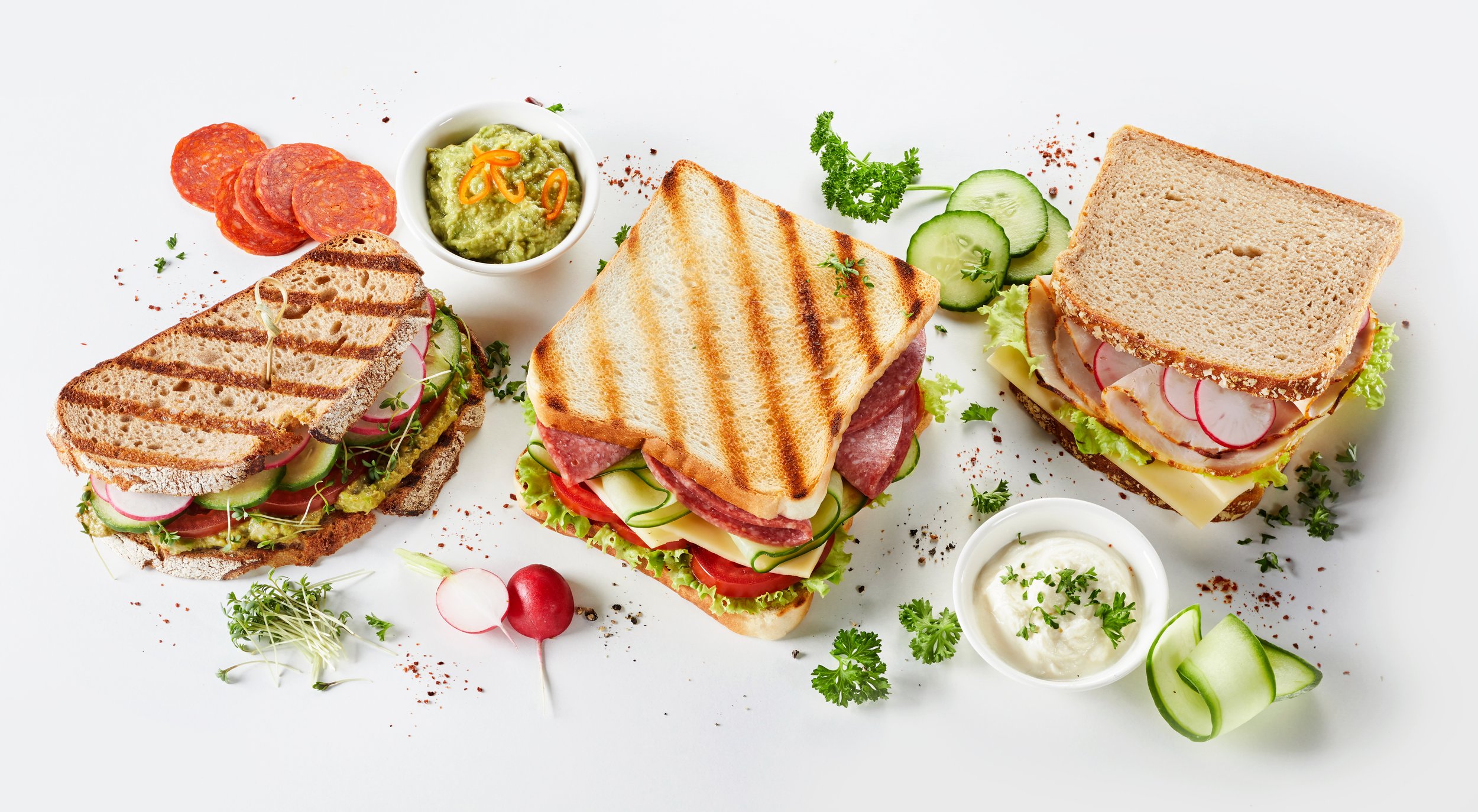
August is National Sandwich Month. It is also the month when procurement teams lock in Q4 contracts for the produce that goes into every sandwich sold in North America. This year, those two facts collide in an interesting way.
So we built a sandwich out of CommodiTrack data. The roasted red pepper on the panini. The tomato slice. The caramelized onion. The smashed avocado. The garlic aioli holding it all together. Five ingredients, five global supply chains, and four of them are carrying elevated climate risk signals right now. The next 90 days will decide what your sandwich costs in 2027.
Here is what the data shows, layer by layer.
What is happening to the roasted red pepper on your panini?
The pepper is the ingredient that turns a sandwich from lunch into a menu item. It is also the loudest risk signal of the five.
Mexico, the dominant winter supplier to the US, moved from All Good to Watch on July 12. Sinaloa and Sonora together represent half of national production, and both are under compound heat and wet stress at the 100th percentile of severity. Peak Harvest recorded heat stress every single day, the worst reading in the 8-season record. Wet stress in the current harvest phase is hitting 70.2 percent of days in Sinaloa, more than double the prior 8-season maximum of 33.1 percent.
The US picture is no calmer. Florida, 38 percent of domestic production, is still recovering from Winter Storms Ezra and Gianna, which caused 80 percent production losses during Peak Harvest. California and Georgia both sit at 1-star Warning, and planting-phase heat for the new US season ranks worst on record.
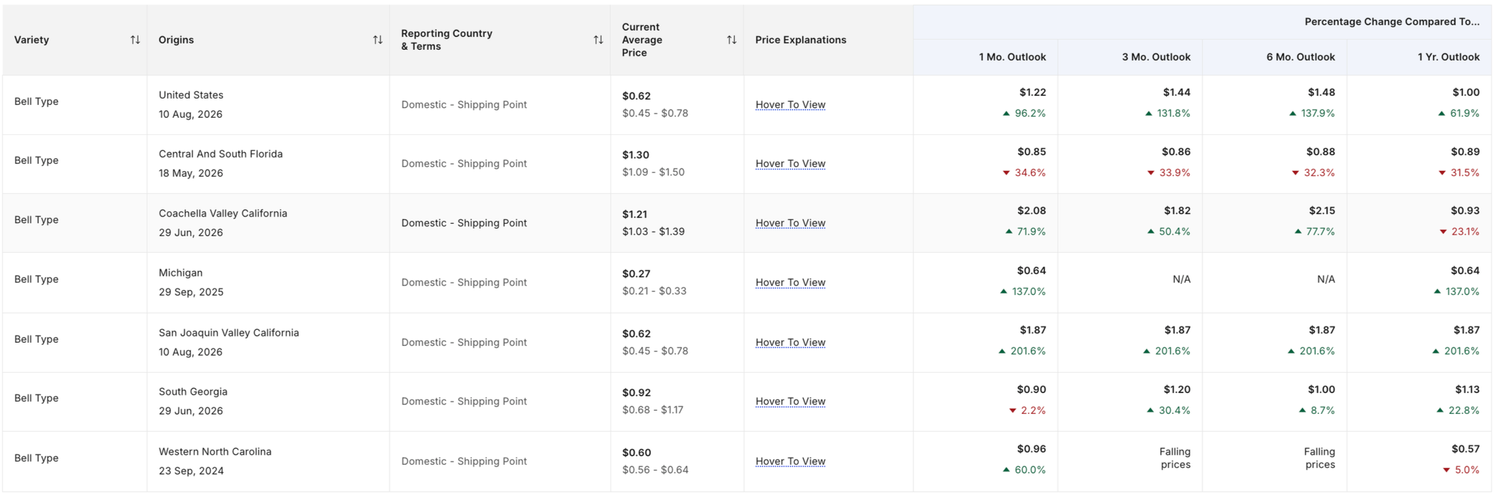
The price forecast reflects the squeeze. US wholesale bell pepper sits at $0.62 per kg today. CommodiTrack projects $1.22 within one month, $1.44 by November, and $1.48 at the six-month mark, an increase of 137.9 percent from today. The 2024 Sicily heat event, a moderate analog for current Sinaloa conditions, produced 25 to 30 percent yield losses.
The roasted red pepper on your panini is about to become the most expensive thing between the bread.
Why is the tomato slice getting more expensive this fall?
No ingredient is more non-negotiable. A BLT without the T is just bacon on toast. Which makes what happened in Mexico this season a problem for every menu in North America.

Mexico's 2026 tomato season closed with confirmed moderate-to-severe yield damage. Sinaloa and Michoacán, together nearly 30 percent of production, both finished at Take Action after worst-on-record compound stress across yield-critical phases. Off-season dry stress reached the 88th percentile, exceeding the 2023-24 drought disruption intensity by 4 times.
That damage is now baked into the forward curve. US wholesale tomatoes average $1.65 per kg today, up 53 percent over the past 30 days. The 3-month outlook is $2.08 and the 6-month outlook is $2.24, a 35.9 percent increase, with a predicted peak of $2.14 per kg in December as the market transitions to off-season supply.
September through November is exactly when US sourcing shifts from domestic field production to Mexican imports. Buyers entering that window are negotiating against a supply base that has already confirmed its losses.
Is the caramelized onion the quiet risk nobody is pricing in?
Raw on a deli sub, caramelized on a burger, pickled on a banh mi. The onion is in more sandwiches than any other vegetable on this list, and it is the calmest of the five right now. That is precisely why it is worth watching.
India, the world's swing exporter, is rated Neutral with Maharashtra, 46 percent of production, tracking All Good through the planting phase. But two signals sit underneath the calm. Karnataka is showing planting-phase dryness at its worst level in 8 seasons. And forecasts project severe dryness during Vegetative Growth on 93 percent of days, followed by heavy wet stress at Peak Harvest on 97 percent of days.
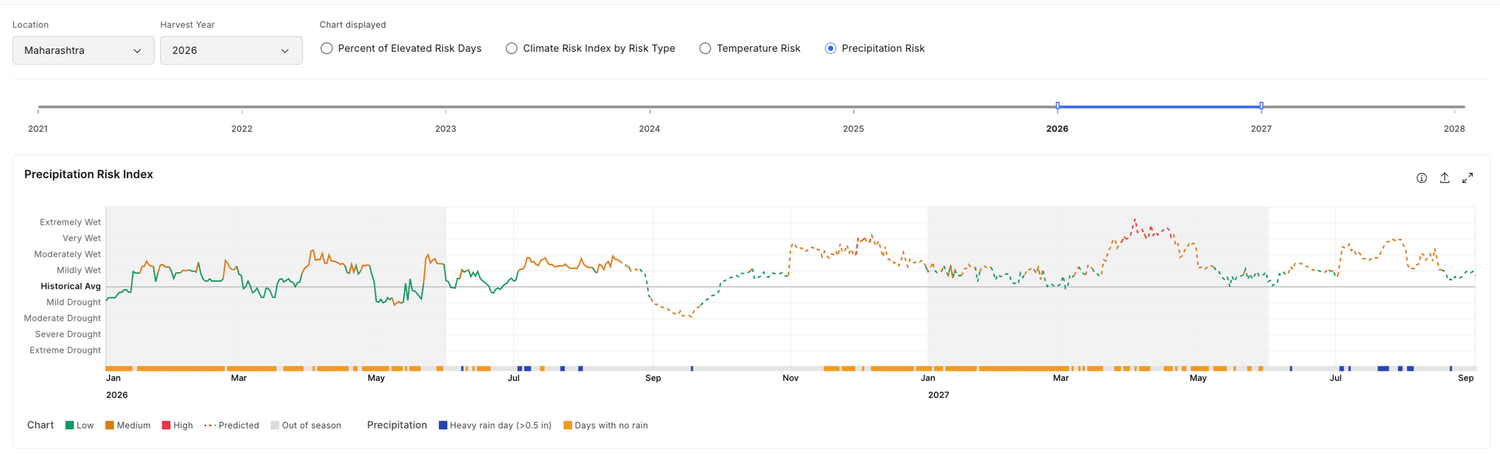
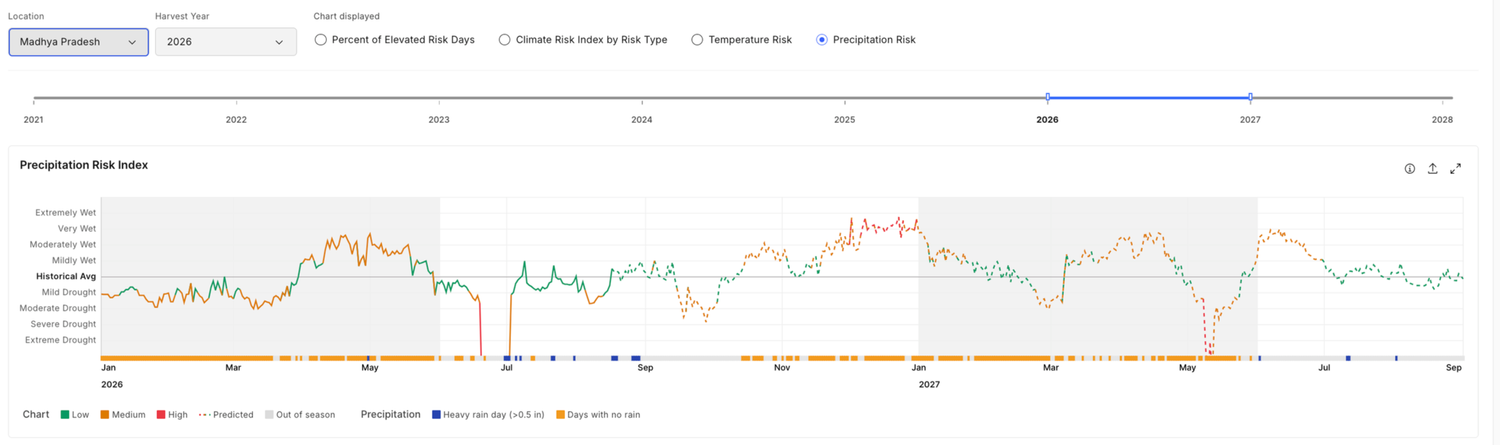
That combination, drought during growth and excess rain at harvest, is the exact pattern that triggered India's export restrictions in prior cycles. When India restricts, global onion trade reprices within weeks. The status moved from Warning to Watch on July 19. It can move back just as fast.
Can the smashed avocado hold its price through the fall?
The avocado is the upgrade. It is the ingredient that adds $2 to the menu price and a dollar of margin, which only works if the supply side cooperates. Right now it is a tale of two origins, and both are stressed.
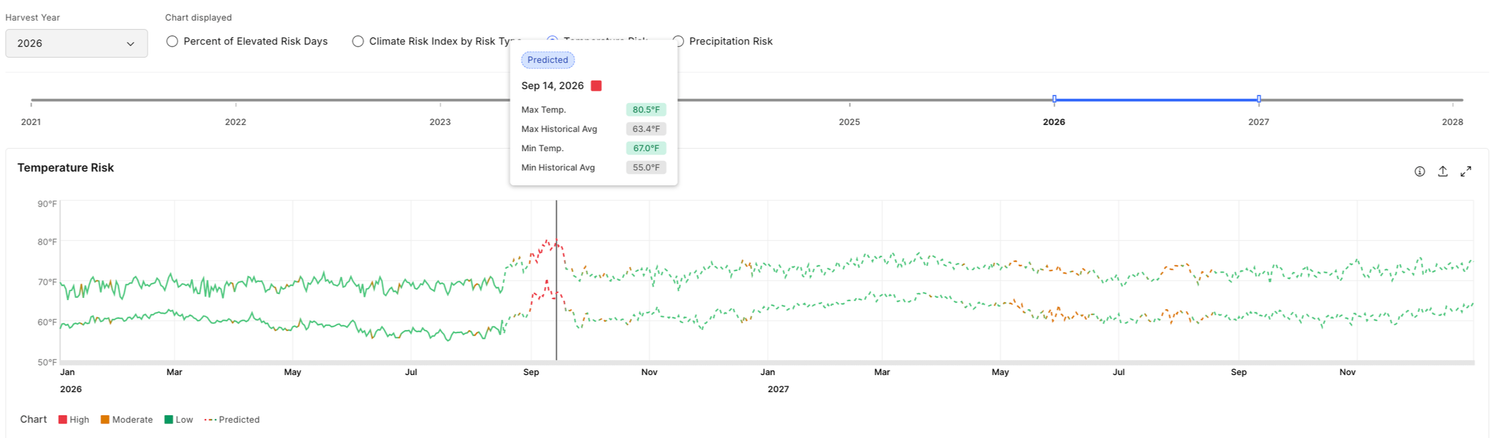
Peru's Lima region, a key counter-season supplier, carries a Warning status. Peak Harvest recorded heat threshold breaches on 60.4 percent of days, and the current harvest period is tracking at 272 percent of the intensity of the 2024 disruption that cut Lima fruit size and output. Heat is the sole risk, and it is sustained.
Mexico, which supplies the majority of US avocado volume, moved to Watch on August 2. Michoacán, 73 percent of production, is under dry stress at the 88th percentile against a historical median of zero percent of days affected. Current drought intensity tracks 24 percent above 2024's disruption year. The offsetting context: 2024 still yielded near-average nationally, and the new Mexican crop year opened with strong volume expectations after a record export season.
But regional averages hide the places where the season is already lost. Zoom into Copitero, a growing area inside Michoacán, and the rating drops from Fair to Terrible. The locality has taken severe cold stress and drought simultaneously; today's climate risk reads 100 percent, and yield prospects sit below the regional expectation. A buyer watching only the country-level dashboard sees a Watch. A buyer with sub-regional visibility knows exactly which orchards to call.
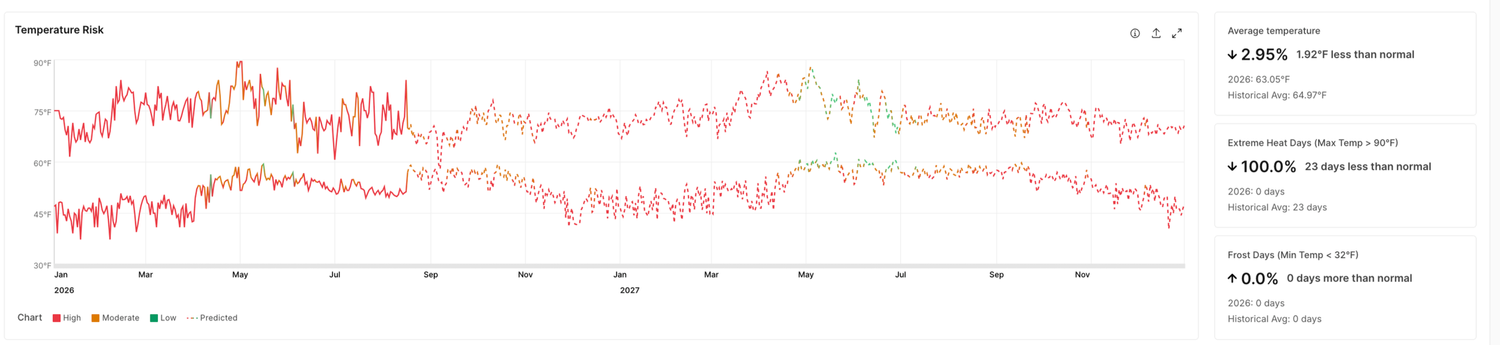
The question for fall buyers is whether Michoacán's drought stays a Watch or becomes the story. The margin between abundant guacamole and a repeat of past shortages is currently about 12 percentile points of dryness, and in some localities it has already closed.
What does the garlic aioli teach every procurement team about concentration risk?
The aioli is the ingredient nobody notices until it is gone. It is also the only one on this list that closed its season clean, and it still carries the sharpest lesson in the whole sandwich.
China's 2026 garlic season finished 100 percent complete and All Good, with Shandong, 41.8 percent of national production, recording negligible stress across every yield-critical phase. Spain's Andalucía season also closed at near-trend yields. Supply is comfortable, and global export prices reflect it.
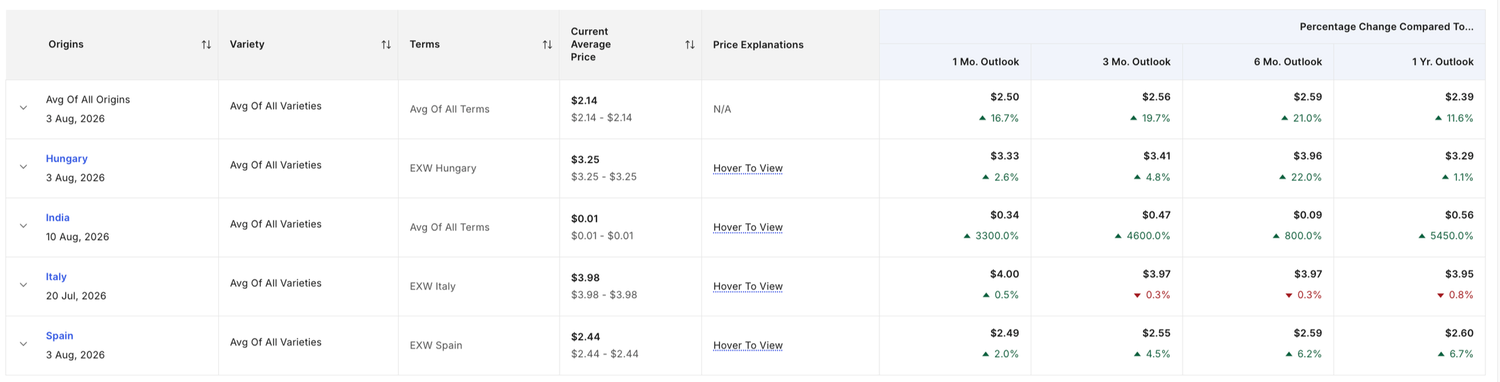
But look at the forward curve anyway. The average export price across all origins is $2.14 per kg today, with the 6-month outlook at $2.59, an increase of 21 percent. Even in a clean season, prices firm because the market knows what it depends on. China supplies the overwhelming majority of global garlic exports from a single concentrated region. One bad winter in Shandong, like the 2023-24 freezing-rain disruption that damaged crops, and every aioli on earth catches a cold.
Single-origin dependency is not an aioli problem. It is a portfolio problem that a condiment makes visible.
What should procurement teams do in the next 90 days?
Stack the layers back up. The pepper is in a record heat squeeze. The tomato has already confirmed its losses. The onion is calm with a storm in the forecast. The avocado is fine regionally and already lost in specific orchards. The aioli is clean this year and one Shandong winter away from repricing. Five ingredients, one shared window: the decisions made between now and November set the cost basis for 2027.
The teams that outperform will not be the ones with the best hedges. They will be the ones that saw the Sinaloa heat data in August instead of the price print in December.
Helios AI's CommodiTrack monitors climate risk and price forecasts for 80+ commodities across 100 countries, up to 12 months forward. If bell peppers, tomatoes, onions, avocados, or garlic are in your portfolio, the signals in this post came from live dashboards our clients checked this morning.
Happy Sandwich Month. May your ingredients stay boring.
Request a demo


.png)

Personalized commodity intelligence for the teams that feed the world.
