
The Chocolate on the Shelf Was Priced by a Crop That No Longer Exists. The Next One Is Late.
US candy prices are 7.7% above a year ago while the cocoa bean sits 44% below its January 2025 high; the crop that prices next Halloween is the 2026/27 West African main crop, capped at 1.4 million tonnes by the Ivorian regulator, called eight to ten weeks late in the trade, and grown through the driest September and October of the five seasons on file in Bas-Sassandra and Ghana's three largest regions, and an ordinary one in western Côte d'Ivoire.

October 28, 2026
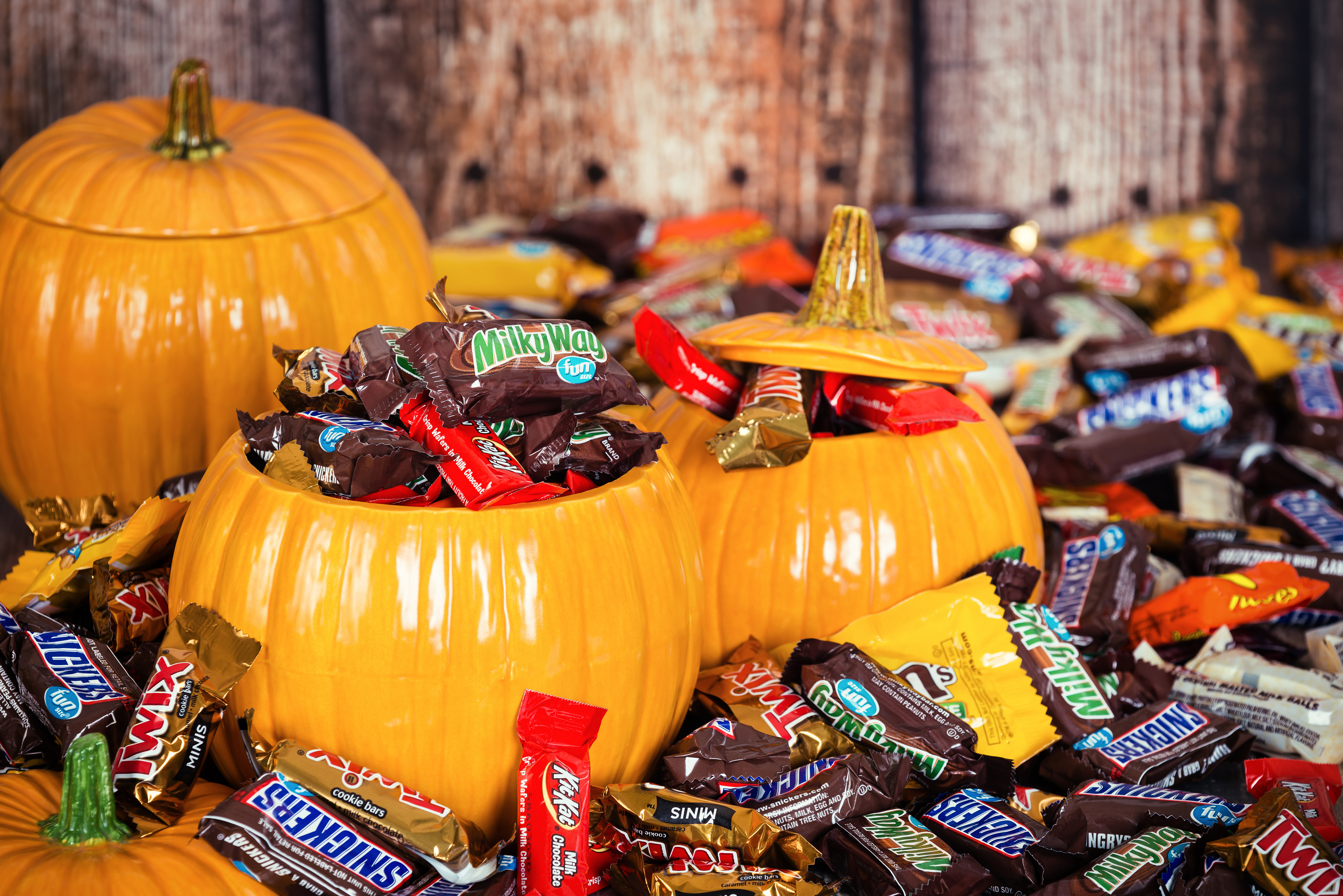
The Bar Is Up 7.7%. The Bean Is Down 44%.
The shelf and the port disagree this week. The US Bureau of Labor Statistics (BLS) put candy and chewing gum 7.7% above a year earlier in its September 2026 consumer price index (CPI), released 14 October, against 1.8% for food at home. The National Retail Federation (NRF) expects $4.1 billion of Halloween candy inside a record $13.5 billion of Halloween spending, on its survey of 22 September. That is the demand side.
The bean has gone the other way. The front-month cocoa future on ICE Futures US, the Intercontinental Exchange's New York market, settled at 9,881 USD/t on 29 January 2025. On Monday 26 October 2026 the December 2026 contract (CCZ26), now the front month, settled at 5,490 USD/t (ICE Futures US via Barchart): 44% below that high and 11% below the front month's 6,182 of 27 October 2025. ICE certified stocks stood at 3.68 million bags on 26 October, a two-and-a-half-year high (Barchart, 27 October 2026). Nothing in the bean today says scarcity.

The Lag Is on the Record. Two Hershey Statements Date It.
The chocolate sold this week was costed when the bean was high. Hershey's chief financial officer, Steve Voskuil, told the company's third-quarter call on 31 October 2025 that it still forecast cocoa inflation for 2026, and added: "In '26, we would not anticipate taking more price, even if cocoa remained at prior levels" (as reported by Just Food). In its second-quarter results of 30 July 2026, management said it expected cocoa costs to decline in 2027 even if futures stayed near their current levels.
Read together, the two statements date the lag. Cover bought in 2025 is the cost inside 2026 shelf prices; the relief the company places in 2027 rests on the bean prices of 2026. A category manager setting 2027 cover is pricing off this year's crop, the one now docking at Abidjan and San Pedro.
The Crop That Prices Next Halloween Is Late and Smaller.
The official numbers come from the regulators and the ports; the International Cocoa Organization (ICCO) has none. Its latest Quarterly Bulletin of Cocoa Statistics, listed 31 August 2026, withheld 2025/26 and has nothing on 2026/27. The benchmark is the Conseil du Café-Cacao (CCC), the Ivorian regulator, which told exporters that the 2026/27 main crop would be at most 1.4 million tonnes; one source told Reuters the crop was "eight to 10 weeks" late (Reuters, 27 August 2026).
The ports are printing the delay. Ivorian government data, reported by Bloomberg via Barchart on 27 October 2026, show 122,453 tonnes delivered to Abidjan and San Pedro from 1 to 25 October against 215,219 tonnes a year earlier, 43% less, counted from the international 1 October season start rather than the CCC's 1 September. Ghana's Cocoa Marketing Company (CMC) sees 470,000 to 620,000 tonnes against 760,000 a year earlier; its managing director, Wisdom Kofi Dogbey, said "trees are old and we still have issues with diseases" (Reuters via Zawya, 2026).
The Farmer Is Paid 1,200 FCFA a Kilo for It, Down From 2,800.
The Ivorian farmgate price fell by more than half in one season. President Alassane Ouattara opened the 2025/26 campaign on 1 October 2025 at 2,800 CFA francs (FCFA) per kilogram, farmgate, main crop (connectionivoirienne.net and allafrica.com, 2 October 2025). On 4 March 2026 the government cut the mid-crop price to 1,200 FCFA/kg from 1 April (koaci.com, 4 March 2026). On 1 September 2026 Agriculture Minister Bruno Koné opened the 2026/27 campaign at the same 1,200 FCFA/kg (koaci.com, 1 September 2026), 57% below a year earlier. Koaci attributes the level to volumes the CCC had already sold forward.
Ghana moved the other way, by a little. COCOBOD, the Ghana Cocoa Board, set its 2026/27 producer price at GH¢42,400 (Ghanaian cedis) per tonne, 2.4% above the previous GH¢41,392, effective 25 September 2026 (Ghana News Agency, 26 September 2026). What a cut of that size does to fertiliser use and tree care has no dated source, so we do not model it.
Bas-Sassandra and Ghana Were Dry. Western Côte d'Ivoire Was Not.
The belt split into two seasons in September and October. In our observed rainfall series, Bas-Sassandra, 22% of Ivorian output, received 9.22 inches from 1 September to 27 October 2026 against a Helios norm of 13.75: 67% of normal, the driest of the five seasons on file, 2022 to 2026. Ghana's three largest regions, Central, Ashanti and Western, 64% of the country's output, ran at 69%, 65% and 66% of norm, each the driest of its five. Central counted six days above 90 °F (32.2 °C) against a previous high of one; Western counted ten against five. Our daily history for these regions begins on 27 October 2021, so the prior seasons are 2022 to 2025.
Western Côte d'Ivoire had an ordinary season. Haut-Sassandra was at 94% of norm, Dix-Huit Montagnes and Moyen-Cavally at 90%, Fromager at 89%, all four drier in 2025 than in 2026; Sud-Bandama sat between the blocks at 80%. Those four western regions are 40% of Ivorian output, so the belt as a whole was not dry. On 25 and 26 October all nine regions passed 90 °F; none reached 95 °F (Ashanti's 94.9 °F on the 26th was the highest).
The Bas-Sassandra deficit has a shape. No day in the window delivered more than 0.45 inches (7 October), while each of the four prior seasons had at least four days above half an inch. Light and often, with no soaking event.

The Deficit Opened in February, in the Flowering Window.
The dry season before this crop is closed, and these are rainfall readings, not a harvest count. From January to April 2026, Haut-Sassandra received 48% of its normal rain; Fromager received 52%, Sud-Bandama 59%, Ghana Central and Western 76%, Bas-Sassandra 82%. The deficit opened in February and was deepest in March, when Fromager and Sud-Bandama had about a third of normal rain. The ICCO's growing guidance holds that dry spells, months under 100 mm of rain, "should not exceed three months"; Haut-Sassandra ran five in a row, December 2025 to April 2026, with March at 72 mm and April at 66 mm against norms of 154 mm and 129 mm.
The agronomy behind a late crop sits in that window. West African yield work drawing on Wood and Lass (1986) and Daymond and Hadley (2008) puts pod development at five to six months from flowering to ripe pod, so the February to April deficit fell on the flowering and early pod set of a crop harvested from October. Behind the season sits a strong El Niño, held at Advisory by the US Climate Prediction Center on 8 October; the published record linking El Niño to cocoa prices is weak, as we set out in our July El Niño playbook.
On the Helios phase calendar, Peak Harvest in Bas-Sassandra, Sud-Bandama and Ghana Central and Western begins on 1 November; the western Ivorian regions and Ashanti entered it on 1 October. The next eight weeks of Monday arrivals prints are where the two seasons show up in the port data, or do not.
The Bottom Line.
The candy on sale this week carries the bean prices of 2025, which Hershey said a year ago would carry into 2026 and now expects to unwind in 2027. The crop that prices next Halloween is the 2026/27 main crop, capped at 1.4 million tonnes by the CCC, 43% behind last year at the Ivorian ports through 25 October and bought from the farmer at 1,200 FCFA a kilo.
Our observed series puts the weather under those numbers: Bas-Sassandra and Ghana's three largest regions at about two-thirds of normal rain, western Côte d'Ivoire near normal, and all nine regions past 90 °F on 25 and 26 October. The ports print the tonnage every Monday. The next Reuters estimate is due 2 November.
Frequently asked questions
Why is chocolate still expensive if cocoa prices have fallen?
Because the cocoa in this year's chocolate was bought before the fall. The US Bureau of Labor Statistics' September 2026 CPI, released 14 October 2026, has candy and chewing gum 7.7% above a year earlier, while the ICE front-month bean settled at 5,490 USD/t on 26 October 2026, 44% below its 9,881 high of 29 January 2025 (ICE Futures US via Barchart). Hershey's chief financial officer said on 31 October 2025 that the company still forecast cocoa inflation for 2026 even with futures retreating, and in its 30 July 2026 results management said it expected cocoa costs to decline in 2027 even at current futures; costs bought ahead carry into the following year's prices.
How big is the 2026/27 West African cocoa crop?
No ICCO figure exists for 2026/27, or for 2025/26, whose production and grindings the ICCO withheld in its bulletin listed 31 August 2026. The Conseil du Café-Cacao told exporters the Ivorian main crop (1 September 2026 to 28 February 2027) would be at most 1.4 million tonnes, with exporters at 1.4 to 1.45 million (Reuters, 27 August 2026), and Ghana's Cocoa Marketing Company sees 470,000 to 620,000 tonnes against 760,000 the year before, citing old trees, disease and failing pollination (Reuters via Zawya, 2026). The prior Ivorian season ran large, 1.956 million tonnes of arrivals by 12 July 2026 against 1.640 million a year earlier (Reuters via AInvest, 13 July 2026).
When does the Ivory Coast main crop arrive, and why is it late this year?
The CCC's main-crop campaign runs 1 September 2026 to 28 February 2027; this year one source told Reuters the crop was eight to ten weeks late, with main-crop volumes expected from late October or early November and October to December arrivals seen at about 900,000 tonnes against 1.1 million a year earlier (Reuters, 27 August 2026). From 1 to 25 October 2026 arrivals at Abidjan and San Pedro were 122,453 tonnes against 215,219 a year earlier, 43% less, on Ivorian government data reported by Bloomberg via Barchart on 27 October 2026. The agronomy behind a late crop sits in the January to April 2026 dry season, which in our observed series left Haut-Sassandra at 48% of normal rain, Fromager at 52% and Sud-Bandama at 59%; pod development takes about five to six months from flowering (Wood and Lass 1986; Daymond and Hadley 2008), so that deficit fell on flowering and early pod set, though the lateness estimate is the trade's and the rainfall is ours.
What is the Ivory Coast farmgate cocoa price for 2026/27?
1,200 FCFA per kilogram for well-fermented, dried and sorted beans, announced by Agriculture Minister Bruno Koné at the opening of the campaign on 1 September 2026 (koaci.com, 1 September 2026), flat on the 1,200 FCFA/kg mid-crop price announced 4 March 2026 and 57% below the 2,800 FCFA/kg set for the 2025/26 main crop on 1 October 2025 (connectionivoirienne.net and allafrica.com, 2 October 2025). At the fixed peg of 655.957 FCFA per euro, 1,200 FCFA/kg is about EUR 1,829 a tonne. Ghana's COCOBOD set GH¢42,400 per tonne, GH¢2,650 per 64-kilogram bag, effective 25 September 2026, 2.4% above the previous price (Ghana News Agency, 26 September 2026).
Does El Niño affect cocoa prices?
Weakly, on the published record. The US Climate Prediction Center held an El Niño Advisory on 8 October 2026 and expects a strong to very strong event through January to March 2027, so the event is real; the academic work we summarised in our July El Niño playbook finds the average price effect for cocoa close to zero, with several studies finding no causal link at all. The observed signal this season is regional and split: Bas-Sassandra and Ghana's three largest regions at 65% to 69% of normal rain from 1 September to 27 October 2026, the driest of the five seasons on file (2022 to 2026), and western Côte d'Ivoire at 89% to 94% (Helios AI, pulled 28 October 2026). We assert no link from the El Niño to that split.
What are cocoa futures prices now?
The December 2026 contract (CCZ26), the ICE front month, settled at 5,490 USD/t on Monday 26 October 2026, down 102 on the session; March 2027 (CCH27) settled at 5,599, and the curve ran in contango to July 2027 (CCN27 at 5,689) before flattening into 2028 (ICE Futures US via Barchart). That is 44% below the 9,881 high of 29 January 2025, 96% above the 2,798 low of 27 February 2026 and 11% below the 6,182 of 27 October 2025. ICE certified stocks were 3,684,698 bags on 26 October 2026, a two-and-a-half-year high (Barchart, 27 October 2026). In our observed export series, Côte d'Ivoire Good Fermented, nearby FOB (free on board) RCI ports, was 5,655 USD/t on 26 October 2026, and Ghana Good Fermented, nearby FOB Ghanaian ports, 7,258 USD/t.


Personalized commodity intelligence for the teams that feed the world.
