
Valentine’s Day Chocolate and the New Reality of Cocoa Volatility
Every Valentine’s Day, chocolate becomes a symbol of love, indulgence, and tradition. For global food companies, however, cocoa is also a strategic input…

February 3, 2026
5 min read
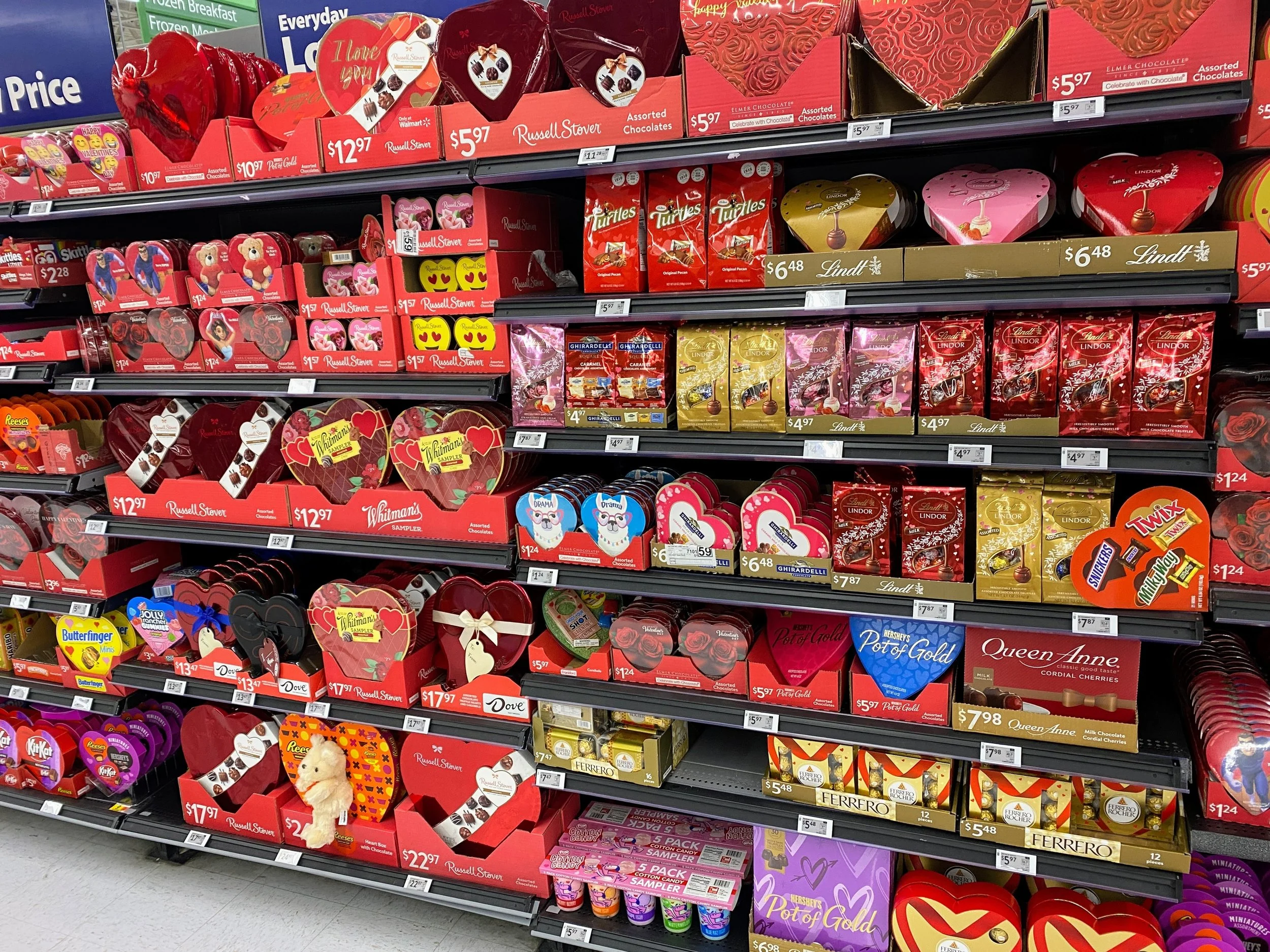
Every Valentine’s Day, chocolate becomes a symbol of love, indulgence, and tradition. For global food companies, however, cocoa is also a strategic input whose volatility can quietly reshape margins, sourcing strategies, and risk exposure. As we approach Valentine’s Day 2026, cocoa once again tells a familiar but increasingly urgent story: prices may ebb and flow, but climate risk is steadily tightening its grip on the market.
Over the past two years, cocoa has proven that volatility is no longer an anomaly — it is structural. Prices surged to historic highs in 2024, with cocoa futures at times exceeding $10,000 per metric ton, driven by severe production shortfalls in West Africa. Although prices eased through parts of 2025, the market has entered its third consecutive year of global supply deficit, meaning demand continues to outstrip production.
Critically, cocoa markets operate with a 6–12 month lag between raw bean prices and retail chocolate prices. That means the elevated cocoa costs seen throughout 2024 and early 2025 are only now fully reaching store shelves.
At Helios AI, we see cocoa as a case study in how climate signals translate into market outcomes — often months before consumers ever notice a change in price.
RSVP TO OUR COCOA WEBINARPrices Move Last. Climate Moves First.
The cocoa market’s dramatic spike in early 2024 caught many buyers — and ultimately consumers — off guard. Prices climbed from under $5/kg in early 2024 to well over $10/kg in 2025, driven by extreme weather linked to El Niño, prolonged drought conditions in West Africa, the spread of crop diseases such as cacao swollen shoot virus, and long-standing underinvestment in aging cocoa farms.
Helios Horizon data shows that average cocoa bean prices around Valentine’s Day are forecasted to fall year-over-year in 2026, but from historically extreme levels. The average price across all terms, origins, and varieties is forecasted at $7.64/kg in February 2026, down from $11.06/kg in February 2025 — a 30.9% decline year-over-year. Good fermented forward contracts show a similar pattern, falling from $11.00/kg to $6.98/kg (a 36.7% decline).
“This is the nuance most consumers miss,” says Francisco Martin-Rayo, CEO of Helios AI. “Yes, cocoa bean prices are projected to be about 30% lower this Valentine’s Day compared to last year. But that’s coming off a once-in-a-generation spike. These prices are still far above long-term norms.”
Crucially, cocoa markets operate with a 6–12 month lag between raw bean prices and retail chocolate prices.
“While raw cocoa prices will likely be lower, that doesn’t automatically translate into a cheaper box of chocolate next month. Because there’s a lag time in processing, the chocolate people will buy in February 2026 will have been largely produced with cocoa purchased in 2024 and early 2025, when prices were near or above $10 per kilo,” Francisco adds. “So even with some easing at origin, shoppers this year will still feel higher prices at the checkout.”
Price volatility is not random — it is increasingly a lagging indicator of climate disruption.
Why Cocoa Is So Exposed
Cocoa’s vulnerability stems from two reinforcing realities. First, production is highly concentrated in a handful of regions, particularly West Africa. Second, cocoa trees are exceptionally sensitive to weather variability across every stage of their lifecycle.
In the 2026 season, most major producing countries are in peak harvest, yet their climate risk profiles differ markedly. Côte d’Ivoire, the world’s largest producer, is contending primarily with heat stress. Ghana, the second largest, faces excess rainfall that threatens quality rather than outright volume. Nigeria is under drought pressure with a poor yield outlook, while parts of Latin America and Southeast Asia are dealing with rainfall volatility of their own.
Individually, none of these risks guarantees a supply shock. Collectively, they create fragility.
“What looks like a balanced global market on paper is actually a mosaic of regional climate risks,” Francisco explains. “That’s where large buyers get exposed — not by one disaster, but by many small stresses adding up.”
The Valentine’s Day Effect: Demand Meets Uncertainty
Seasonal demand around Valentine’s Day amplifies these dynamics. Chocolate consumption peaks just as markets — and manufacturers — are still absorbing the financial impact of earlier cocoa shortages.
Helios Horizon data indicates that retail chocolate prices are likely to be higher for Valentine’s Day 2026 than in 2025, despite some easing in cocoa bean prices at origin. The reason is timing: most chocolate sold this Valentine’s Day was produced using cocoa purchased during the 2024–2025 price surge.
“From a shopper perspective, Valentine’s Day 2026 is still feeling the aftershocks of the cocoa crisis,” says Francisco Martin-Rayo. “Even if bean prices look lower today, the chocolate on shelves was made with cocoa bought when prices were near record highs.”
Compared to Halloween or the 2025 holiday season, consumers should expect:
Fewer aggressive discounts on boxed chocolates
Modestly higher prices on premium assortments
Subtle changes in sizing or formulations as brands manage cocoa exposure
“We’re already seeing brands adapt quietly,” Francisco notes. “This is how climate risk shows up for consumers — not as empty shelves, but as smaller boxes, higher prices, or different ingredients.”
For multinational companies with global brands, this is not just a procurement issue. Cocoa price swings cascade into margin pressure, supplier stability, and ESG commitments tied to farmer resilience.
If You’re Nestlé, Mars, or Mondelez — What Should You Do?
The largest food companies are not asking whether cocoa will remain volatile. They are asking how to operate in a world where volatility is persistent.
Leading organizations are shifting their mindset in three key ways.
First, they are treating climate risk as a commercial input, not a sustainability sidebar. Heat stress, drought, and excess rainfall now belong in the same conversation as futures curves and supplier contracts.
Second, they are acting earlier. Rather than waiting for official crop reports or consensus price forecasts, they are monitoring climate signals during planting and mid-season growth — when outcomes are still malleable.
Third, they are building optionality into their sourcing strategies. Geographic diversification, flexible contracting, and dynamic hedging become far more effective when informed by forward-looking climate and price intelligence.
“The goal isn’t to predict the exact price,” Francisco notes. “It’s to avoid being surprised. In today’s cocoa market, surprise is the most expensive outcome.”
From Chocolate to Foresight
Valentine’s Day will always be about indulgence and emotion for consumers. For companies operating at global scale, however, cocoa is about foresight.
The lesson from the last two years is clear: volatility doesn’t begin on the trading screen. It begins in the field, under heat stress, excess rain, and shifting climate patterns. Prices merely catch up.
As cocoa heads into another season of uncertainty, the companies that succeed will be those that connect climate signals to commercial decisions — early, continuously, and at scale.
Because in a world of climate-driven markets, foresight is no longer optional. It’s the most valuable ingredient of all.
RSVP TO OUR COCOA WEBINAR


.png)

Personalized commodity intelligence for the teams that feed the world.
