
What Is Personalized Intelligence? Custom Commodity Reports & Disruption Alerts
That gap between "here's the data" and "here's the move" is where most procurement teams lose time they don't have. By the time a supply disruption shows up…

June 30, 2026
3 min read
Most commodity intelligence stops at the forecast. You get a number, a range, a probability, and then your team does the real work: figuring out what it means for your sourcing footprint and what to do about it.
That gap between "here's the data" and "here's the move" is where most procurement teams lose time they don't have. By the time a supply disruption shows up in a dashboard, it's often already in the price.
Helios AI built Personalized Intelligence to close that gap.
What Makes It "Dynamic" Instead of Static?
Traditional commodity reporting is static by design: a snapshot, pulled on a schedule, read by a person who then has to translate it into action. It tells you what happened. It doesn't tell you what to do next, and it doesn't know which commodities or regions actually matter to your business.
Personalized intelligence is built the opposite way - live, and tuned to your sourcing footprint. Instead of a generic market update, you get analysis scoped to the specific commodities and regions you actually buy from, delivered the way your team already works.
What's Included in Personalized Intelligence?
Personalized intelligence isn't one report. It's two products, delivered two ways.
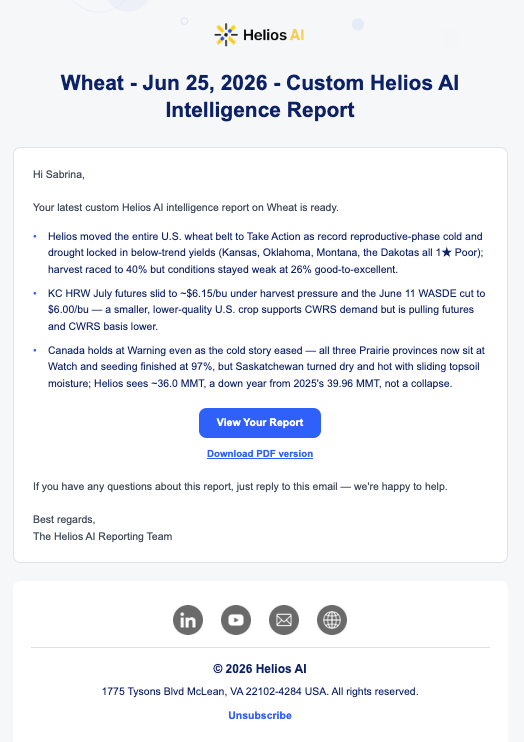
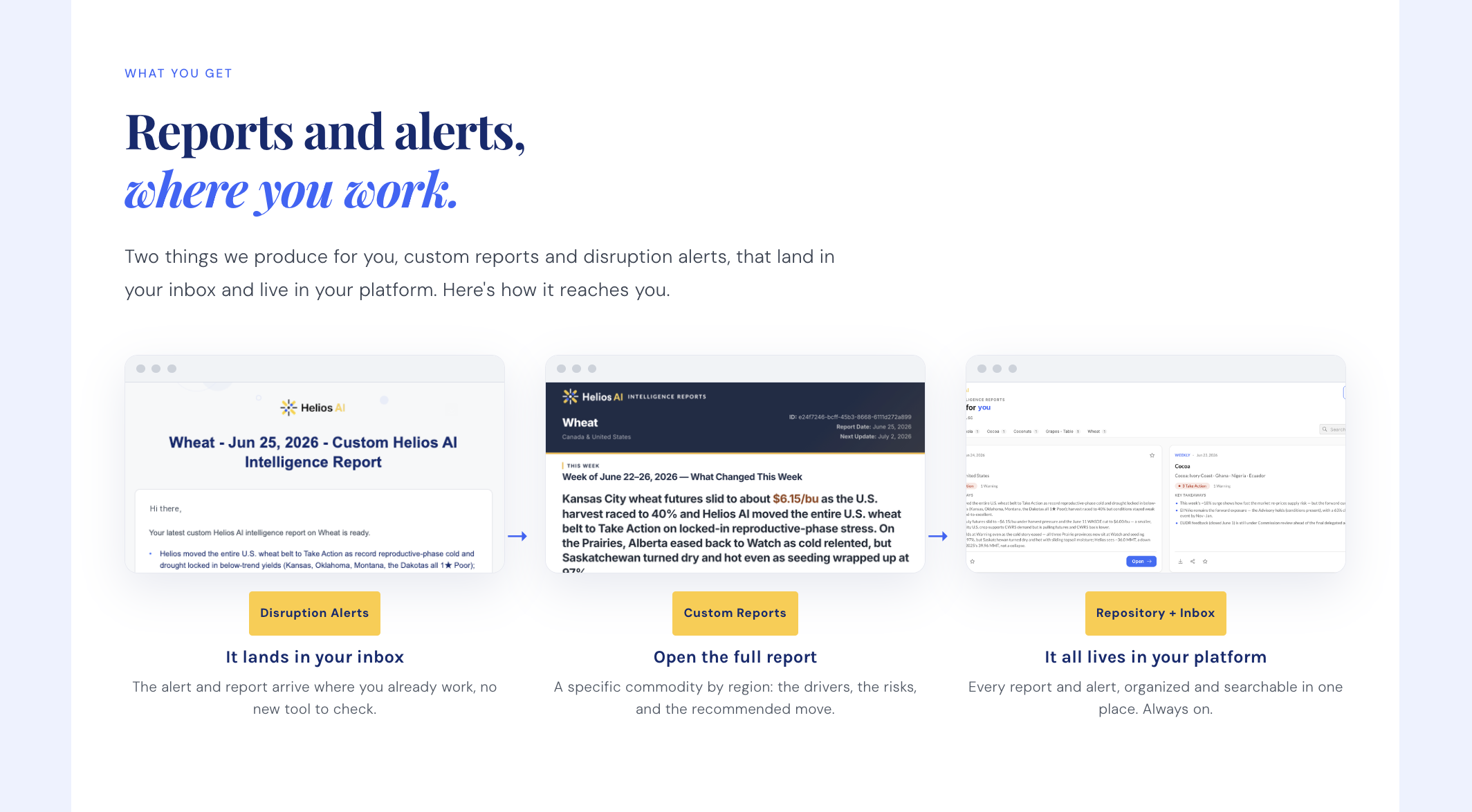
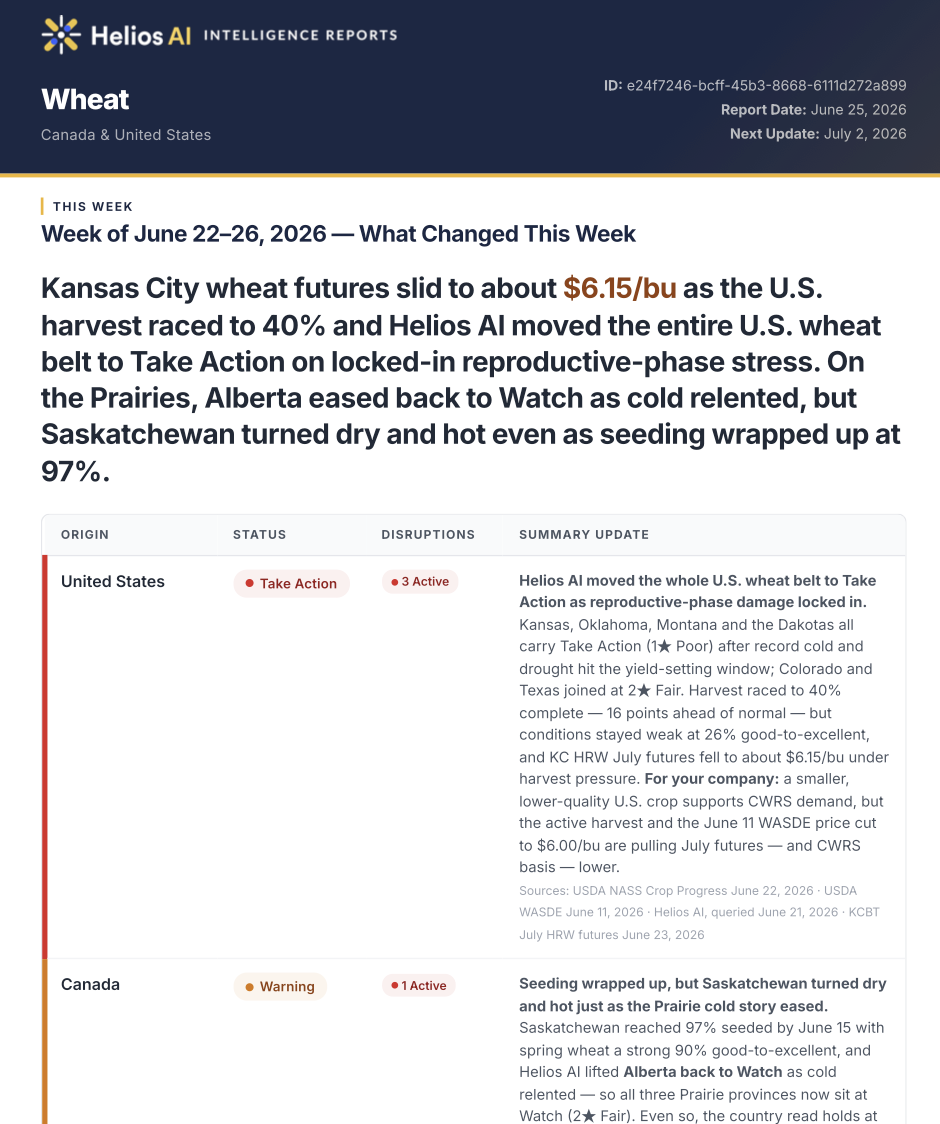
Custom Reports. Commodity x region analysis — drivers, risks, and a recommended move — built for your specific footprint, not a generic basket of commodities.
Disruption Alerts. Real-time, early-warning signals on the risks that matter to you, flagged before they hit the headlines and before they hit your price.
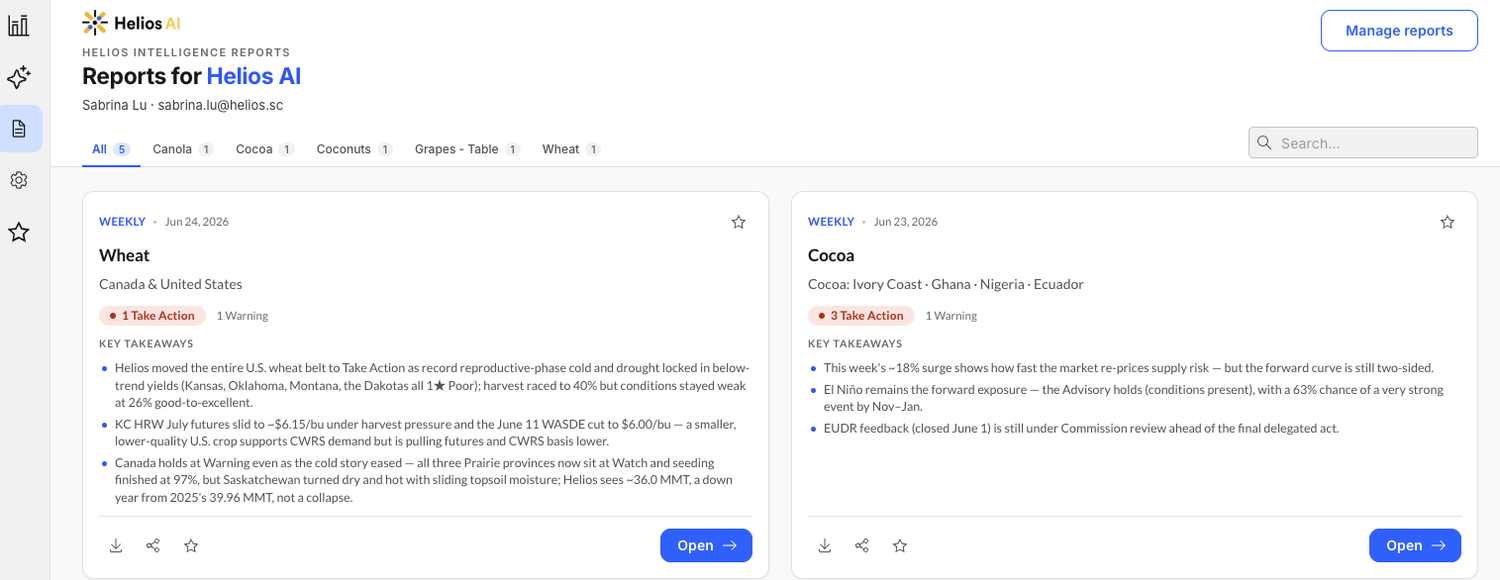
Repository. Every report and alert lives in your Helios AI platform, organized and searchable so nothing gets buried in an inbox, and your team always has a single place to go back and check what changed and when.
Reports and alerts both land in your inbox, and both are stored in the repository, so the intelligence shows up where your team is, instead of sitting in a dashboard someone has to remember to check.
Why Does "Personalized" Matter for Commodity Intelligence?
Generic dashboards give you data. They don't give you a decision. Someone on your team still has to do the synthesis: cross-reference the forecast against your actual exposure, figure out what's relevant, and decide what to act on.
Personalized Intelligence does that synthesis upfront. It's powered by 80+ crop-specific AI/ML models scanning hundreds of thousands of sources continuously, so the output isn't "Here's what's happening in coffee"; it's "Here's what's happening in the specific origins and grades you're sourcing, and here's the move."
Has Personalized Intelligence Caught Disruptions Early?
This isn't theoretical. Helios AI's disruption alerts have flagged supply shocks months ahead of market pricing — including an early signal on a major edible oil disruption that gave procurement teams a head start most of the market didn't have. Libby's has used the same early-warning approach to get ahead of mandarin supply risk before it became a pricing problem.
That's the difference between reading about a disruption after it's already in your costs and acting on it while you still have options.
Want to see what that looks like at the global level before you scope it to your own footprint? Our Q2/Q3 2026 Commodity Market Report covers 13 commodities across 4 regions, including the same kind of forward signals and procurement implications you'd get personalized to your sourcing in a custom report.
How Do I See This on My Own Sourcing Footprint?
A forecast tells you what's coming. Personalized Intelligence tells you what to do about it, tuned to the commodities and regions you actually buy.
GET YOUR CUSTOM REPORT
.png)

Personalized commodity intelligence for the teams that feed the world.
