
What’s new in Helios AI? Six takeaways from our fall 2026 product deminar
A recap of the Helios AI fall 2026 product deminar: faster Helios Horizon, MCP access in Claude, personalized reports, a veg oils and grains dashboard, the Disruption Impact Center and a first look at the new futures page.

October 20, 2026
3 min read
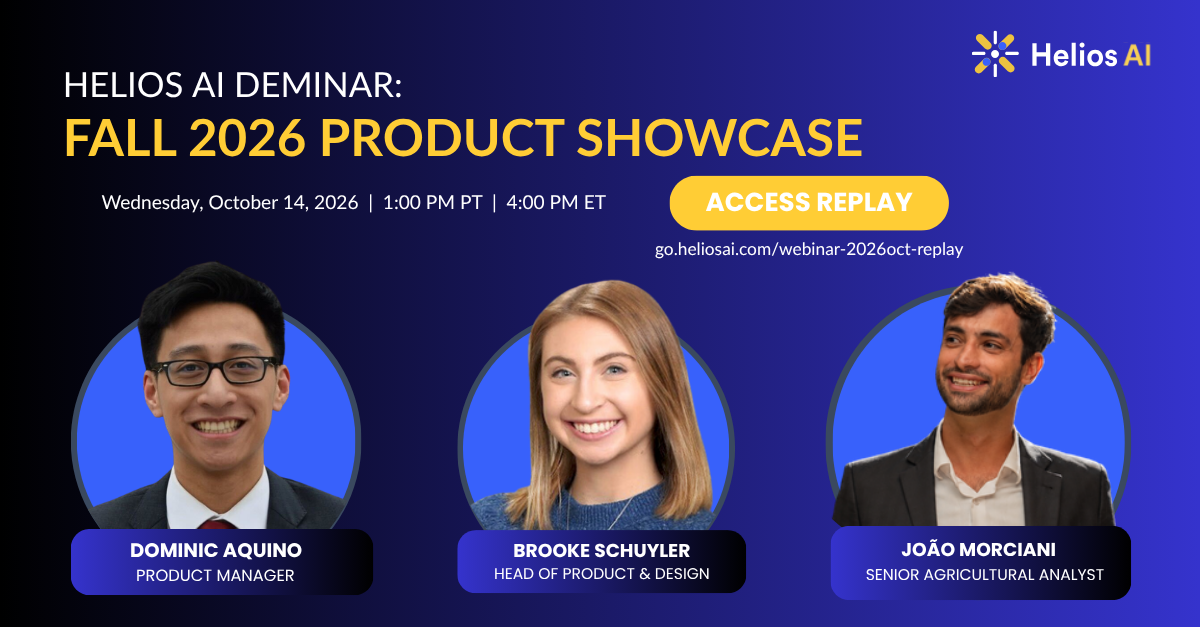
Commodity intelligence in Helios is getting faster to reach, easier to question and more specific to what each team buys or trades. That was the thread running through our fall 2026 product deminar on 14 October, where Brooke Schuyler, Dominic Aquino and João Morciani walked through everything that has shipped since our first deminar in April, live on the platform rather than on slides.
In April we gave customers a first look at email alerts. Six months later, the list is considerably longer: a rebuilt Helios Horizon, Helios data inside LLM tools, the Personalized Intelligence Suite, a new veg oils and grains dashboard, the Disruption Impact Center, and a prototype of a futures page built around individual contracts. Here is what each one does and why it matters for procurement and trading teams.
What changed in Helios Horizon?
Helios Horizon now answers faster and handles follow-up questions the way a conversation would. It draws on the same intelligence as the rest of the platform, which means climate, production, yield and price data plus news across every commodity in a subscription, but responses now come back quickly enough that users can ask, read, and ask again without losing the thread.
That matters most for historical questions, which used to take several steps to answer. Dom showed how users can ask how this season compares with previous years, whether a crop is at risk right now, how export prices have moved over time, or whether prices sit higher or lower than a year ago, and then push into the detail behind any of those answers. The path from question to insight is shorter, and the follow-ups are where the useful detail tends to live.
Can I use Helios AI data inside my own AI tools?
Yes. Through the Helios MCP server, the same data and context are available in LLM environments such as Claude, so analysts can work with Helios intelligence alongside whatever else is open on their desk.
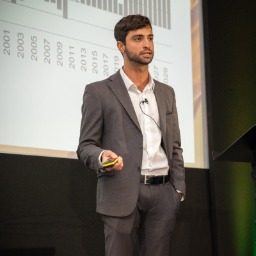
João, our Senior Agricultural Analyst, spends much of his day testing how Helios data behaves against market and financial data, and having Claude connected to the MCP server has let him widen the number of commodities and markets he covers. He asked Claude the same questions Dom had just put to Horizon and got the same answers, then went further: comparing the current season with analog and previous seasons, asking for the context behind a flagged region, and pulling in his own data files to extend the analysis.
Customers are already using it this way. Some procurement teams use it to build the deck that defends a buying decision to management. Some trading clients use it daily to pull climate insights for the markets they trade, faster than they could by working through the platform alone.
What is the Personalized Intelligence Suite?
The Personalized Intelligence Suite brings together customized reports, email alerts and dashboard views with a single aim: show each user only the information that matters to them.
Reports can be shaped around one origin, one commodity, several origins, one country or a mixed portfolio, delivered weekly or monthly. Brooke walked through live examples, from monthly and weekly market briefs to origin-specific and portfolio reports, and showed how each one highlights what has changed since the last edition. Depending on the format, a report can carry status indicators, active disruptions, prices, key signals and recommended actions, deep dives by origin and the data sources behind every claim. A report can also be built around a specific question, such as whether to contract now or wait out El Niño.
Email alerts are moving in the same direction. More targeted alerts, dedicated disruption alerts, weekly emails on selected topics and a summary at the top of every message are all designed to cut the noise, so an alert can be scanned in seconds and acted on or set aside.
How does the veg oils and grains dashboard show whether a contract is overpriced?
By setting the market price against Helios guidance and showing the gap between the two. Guidance is our view of where a contract should trade, so the difference tells users at a glance whether the market looks over- or underpriced.
Behind that guidance sit scenario legs, each a possible path for the season. Dom opened three during the session: late-season stress that trims yield, a base case where the crop confirms and demand holds, and harvest pressure as export pace fades. Users can adjust the probability of each scenario and watch the guidance price move in response, which turns the dashboard into a way to test assumptions rather than simply read a number. Six-month and twelve-month views sit alongside a discussion of the factors behind the guidance, upcoming market events that could move prices, weekly updates and a record of previous publications.
What does the Disruption Impact Center show?
The Disruption Impact Center is a new homepage built around the events affecting a user’s commodities, with risks and opportunities side by side.
A table at the top lists predicted and active disruptions by commodity, and can be sorted and filtered by severity, confidence, exposure, share of output, origin, hazard type and stage. Users can save the views they return to most, such as active disruptions for coffee, or excess rainfall only. Each disruption then has its own page with a summary, estimated impacts on yield, supply and price, the reasoning behind the call, similar past events, supporting news and a history showing when Helios first detected the event, escalated it and confirmed it.
It is not only about risk. The center also flags opportunities, such as favorable rain that helps a crop develop, and a new favorites tab brings users straight back to the pages they check most.
What is coming with the new futures page?
A futures page built around individual contracts rather than a broad bullish or bearish view. We closed the session with an early look at the prototype, so the people in the room saw it before anyone else.
For each contract, the page will show the current price, what Helios thinks the contract is worth, whether the market looks over- or underpriced, the full call and its history, and the evidence and reasoning behind it. Those calls draw on weather, supply, demand, seasonality, policy and positioning signals, alongside futures curves, past curves, cross-commodity ratios and historical analogs. A formula builder will let users add their own calculations to the chart, and clicking a specific day will surface the news that may have moved the market at that moment. It is still in development, and the final version may differ from what we showed.
Where can I watch the full deminar?
The full recording is available below.



Personalized commodity intelligence for the teams that feed the world.
