
Which avocado origin is the biggest Q4 risk? Not the one you think
Four countries grow just over half the world's avocados. Heading into the fourth quarter of 2026, all four are carrying climate stress, but only one has a Take Action flag on it. Here is where the risk sits, what the price forecasts say, and how much weight each of those forecasts can bear.

September 14, 2026
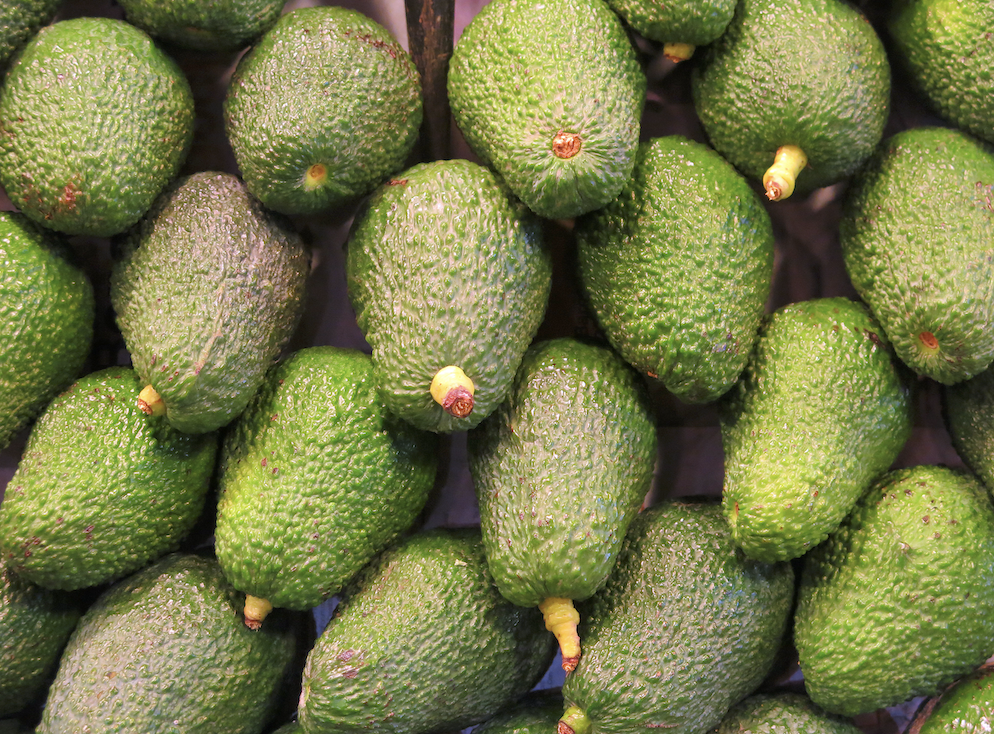
Four countries grow just over half the world's avocados. Heading into the fourth quarter of 2026, all four are carrying climate stress, but only one has a Take Action flag on it. Here is where the risk sits, what the price forecasts say, and how much weight each of those forecasts can bear.
Data throughout is from Helios Horizon as of 11 September 2026, with the 2026 growing season roughly 70% complete.
Which countries grow the most avocados?
By 2024/25 production share: Mexico 24.6% (2.76 Mt), Colombia 11.3% (1.27 Mt), the Dominican Republic 10.9% (1.23 Mt) and Peru 8.2% (0.92 Mt). Between them, 55% of global supply.
Which avocado origin carries the most climate risk into Q4 2026?

Colombia is the one to watch. Every day of peak harvest so far has logged wet stress. That is the worst reading in eight seasons and past the prior record of 75.6% of days. Antioquia, which grows 27% of the crop, sits at half a star and Take Action. Tolima (9%) is at one star. Quindío and Huila add further two-star stress. The dashboard has already tied the wet weather to confirmed disruption: fungal rot and harvest interruptions running for weeks at a time.
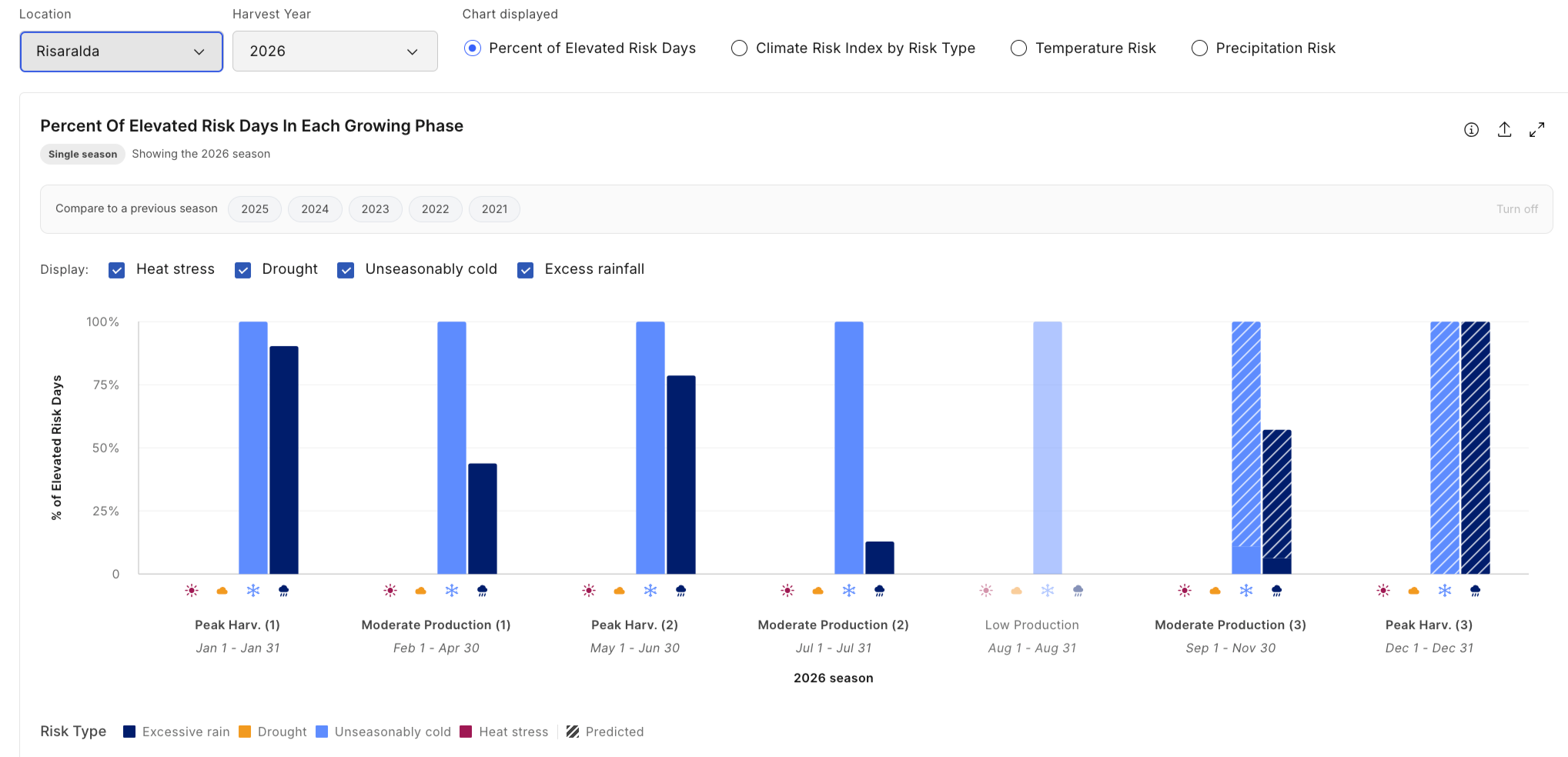
The forecast does not offer relief. In Risaralda, the December peak harvest window is predicted at 100% elevated-risk days for both unseasonable cold and excess rain. Comparable seasons in 2021 and 2022 yielded above average, but they did so under far lower wet stress than 2026 is producing. There is no close analogue.
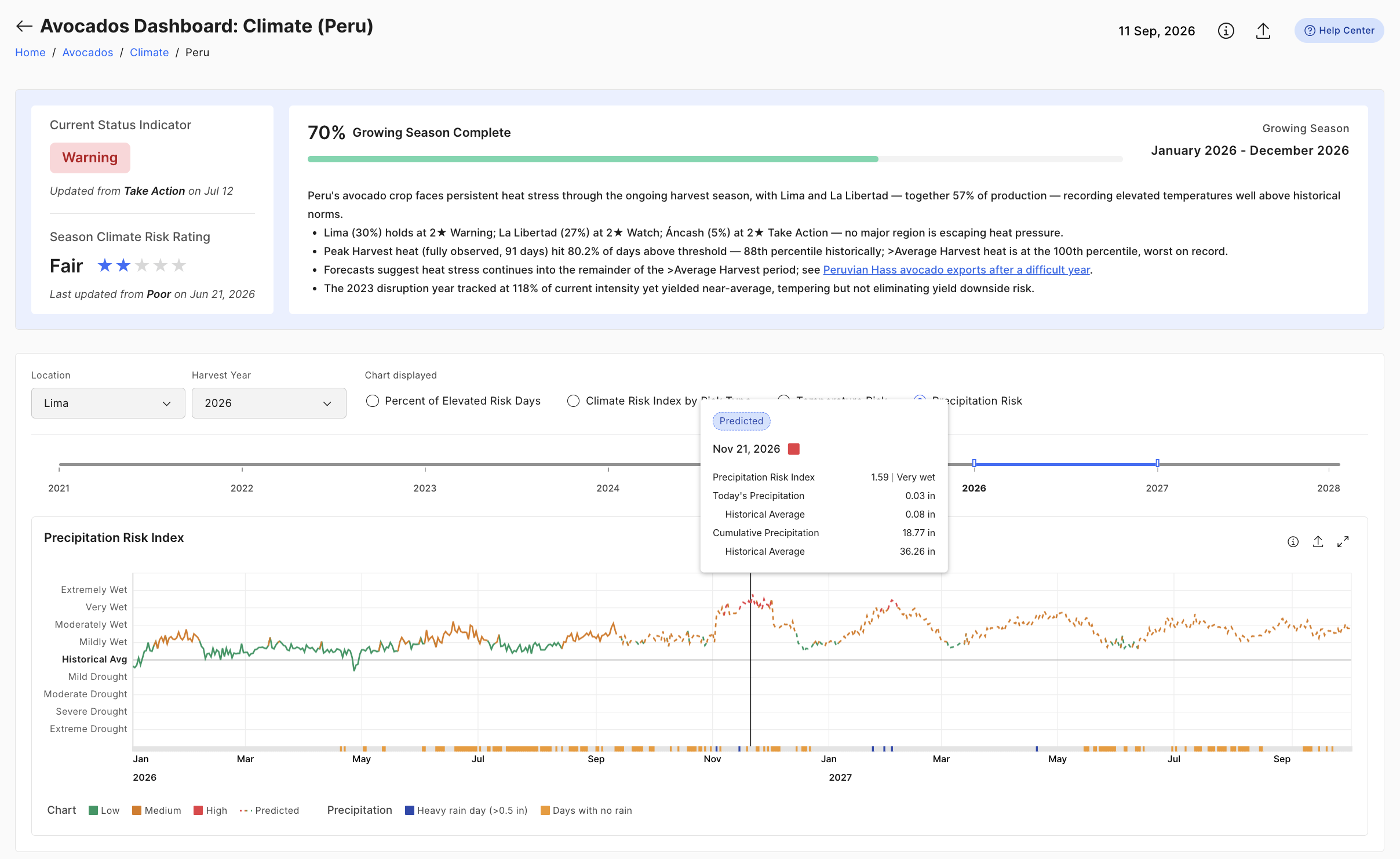
Peru has spent the season fighting heat. Peak harvest ran 80.2% of days above the heat threshold, the 88th percentile historically, and the above-average harvest window is at the 100th percentile, the worst on record. Lima (30% of production) holds at two stars and Warning; La Libertad (27%) is at Watch; Áncash (5%) is at Take Action. No major region is escaping it.
Q4 adds a second hazard. Lima's precipitation index is forecast to swing from near average into Very Wet territory in November, a sharp burst rather than a wet year: cumulative rainfall to date is running at roughly half the historical average. Status improved from Take Action to Warning in July, and the 2023 disruption year tracked at 118% of current intensity yet yielded near average. That tempers the downside without removing it.
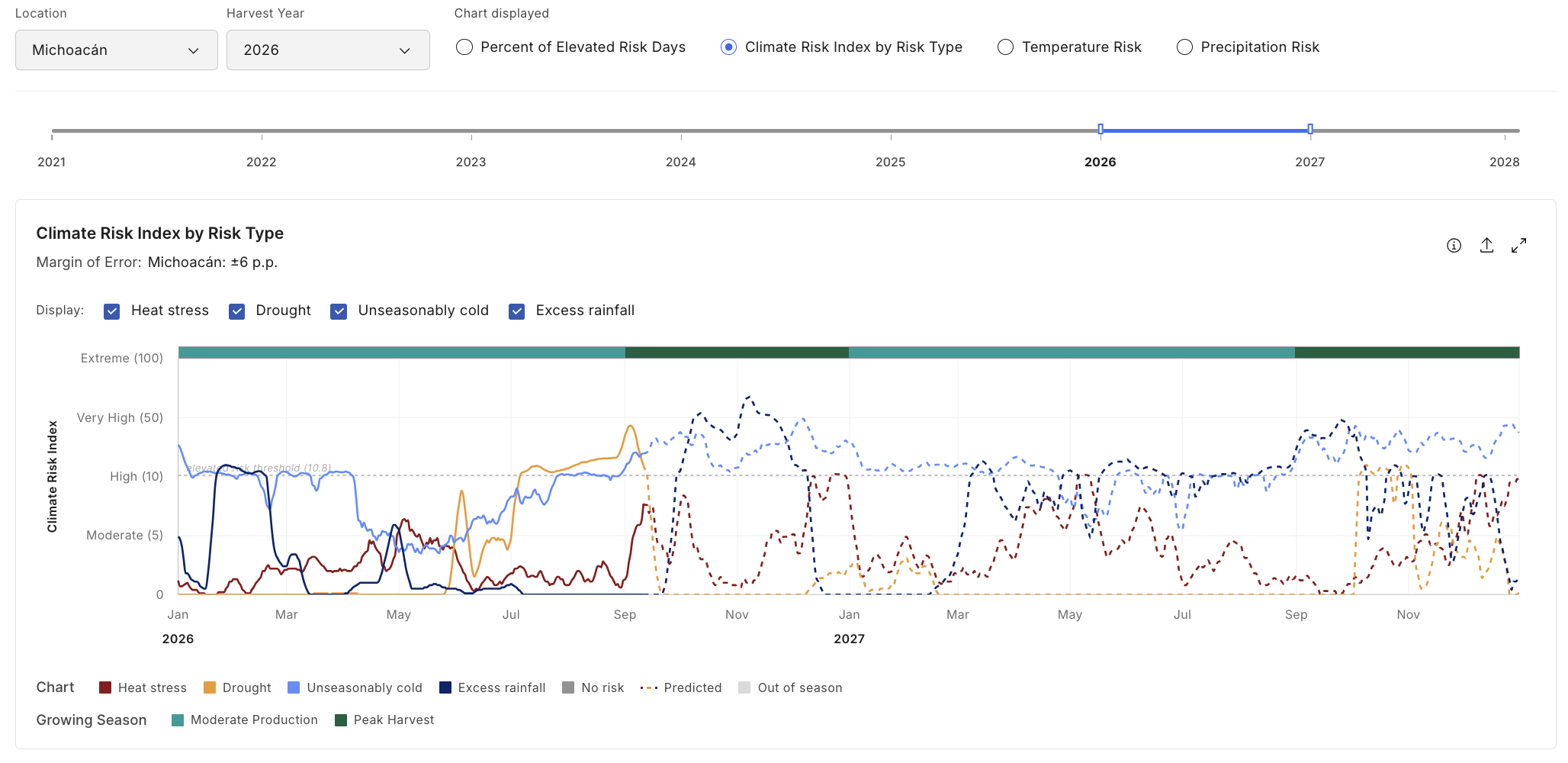
Mexico looks calm on the headline: Watch, two stars, Fair. Michoacán, which grows 73% of Mexico's avocados, tells a rougher story. Dry stress across the completed harvest window sat at the 88th percentile, 132% of 2024's drought intensity, and the climate risk index shows drought climbing through the summer. The forecast then flips. Excess rainfall is predicted to cross the Very High line in October and stay there through November. Joao Morciani covered why that wet window matters more than the drought headline in “The Hazard Changed. The Headline Didn't.”
The Dominican Republic has the weakest season rating of the four at one star, Poor. Cold stress in the at-or-below-average harvest window hit the 100th percentile: every day stressed, beyond the prior eight-season record. No historical season is a close analogue, which limits what yield history can tell you.
Where will avocado prices go in Q4 2026?
Wholesale, imported shipping point, US dollars per kilogram. Forecast path by month, with the current price for reference.
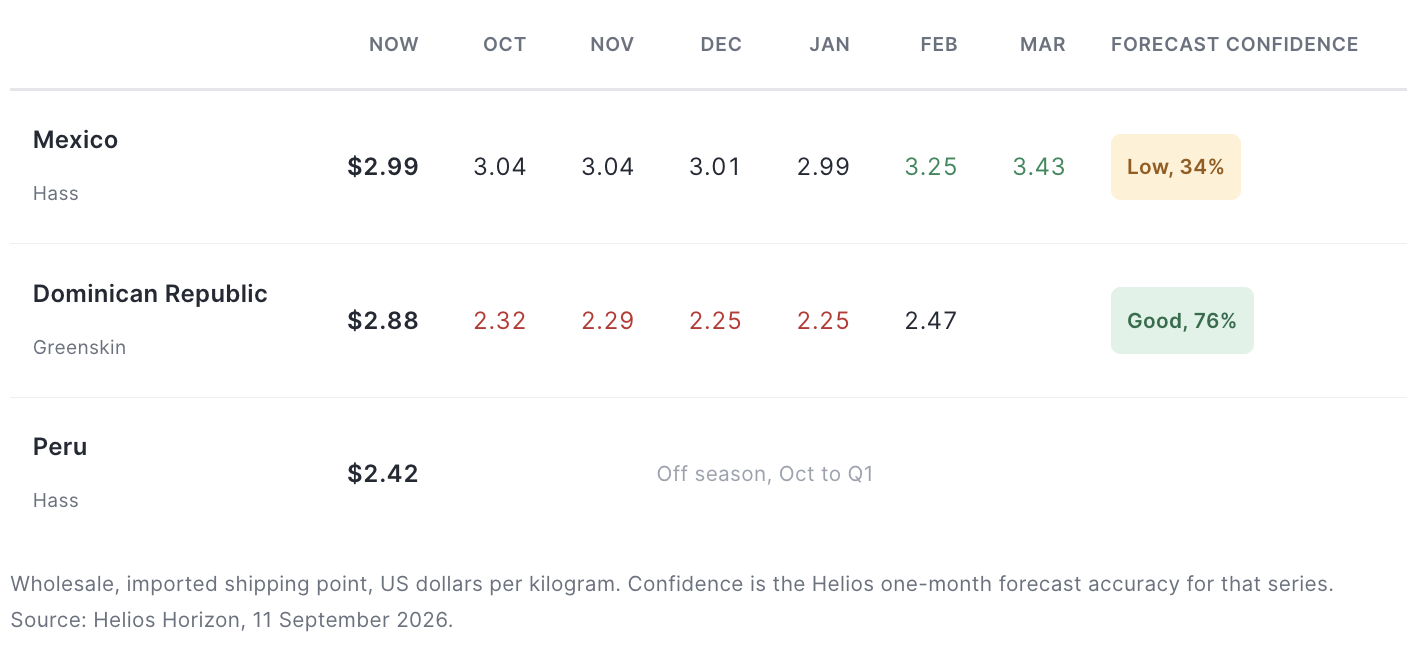
Mexico. The central line barely moves through Q4. The band is what widens: about ±$0.10 in October, $2.75 to $3.30 in January, $2.91 to $3.69 in February, $2.98 to $4.01 by March, when the seasonal peak lands 14.7% above today. That matches how 2026 has traded: $2.40 in February, $4.64 on 1 June, $2.94 by August. Assume the same capacity for 2x swings in Q1.
Dominican Republic. August's $2.88 was the seasonal peak. Harvest volume takes the price down 21.9% to a December low, then February lifts it. Bands are tight, roughly ±3 to 6%, which makes this the most predictable of the four.
Peru. Up 12.6% year on year on the 12-month view, but the market runs off-season from October through Q1, so there is no tradeable Q4 price signal. Peru's influence on Q4 shows up in export flow, not its quoted price.
Colombian avocado prices are not covered in this piece.
How much should buyers trust an avocado price forecast?
Helios scores its one-month price forecast for each series. For avocados: export 89%, greenskin wholesale 76%, all-varieties wholesale 59%, Hass wholesale 34%.
Read the Dominican greenskin path as a working number. Read the Mexican Hass path as directional: the shape (flat Q4, firmer February to March) is the signal, not the cents. For Mexico, price off the current print and the widening band rather than the central line.
What does this mean for Q4 procurement?
- Treat Colombia as the origin most likely to disappoint on volume and quality in December. It is the only Take Action flag among the four, its riskiest month falls inside Q4, and the wet stress behind it has no precedent in the recorded seasons.
- Do not read Mexico's flat Q4 price path as low risk. The band widens into Q1 and Michoacán's forecast wet window lands in October and November.
- Where a fixed price matters, the Dominican greenskin curve is the one the forecast supports.
The 2026 season is 70% done. The remaining 30% is where the flags are.

.png)

Personalized commodity intelligence for the teams that keep the world fed.
