
Why Ukraine's Reconstruction Depends on Where Crops Will Grow: Helios AI and the Tony Blair Institute
Climate risk is rewriting the map of where crops grow. That single idea now sits at the center of how one of the world's most important agricultural…

June 30, 2026
3 min read
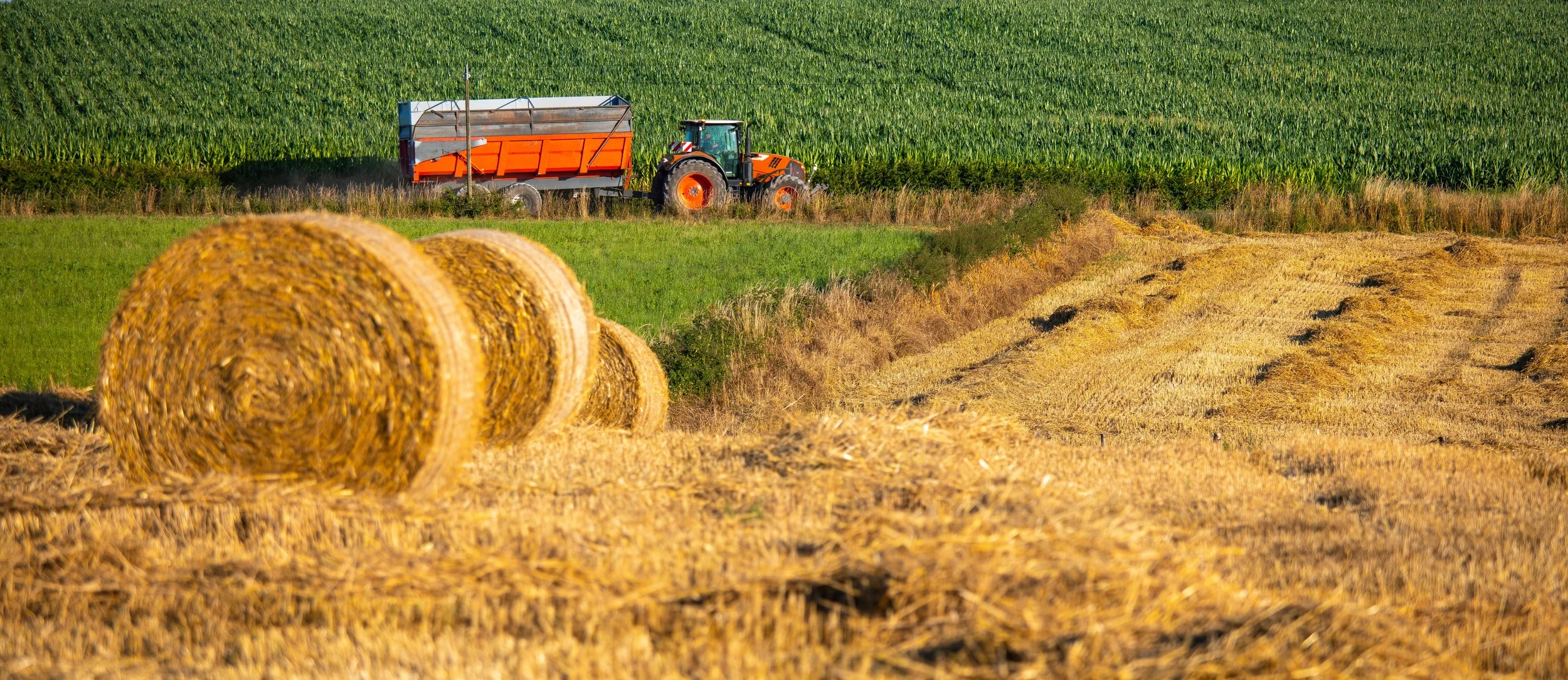
Climate risk is rewriting the map of where crops grow. That single idea now sits at the center of how one of the world's most important agricultural producers plans to rebuild.
The Tony Blair Institute for Global Change has published a new report, Beyond the Harvest: Modernising Ukraine's Agricultural Processing Sector, and we are proud that Helios AI analysis helped inform it. The report sets out a practical agenda for how Ukraine can move beyond exporting raw commodities and start capturing more value at home: through processing, food manufacturing, traceability, and resilient infrastructure.
We want to share a short summary of the work and why it matters.
What is the problem the report tackles?
Ukraine is already one of the world's great agricultural producers. Even through the war, agriculture has accounted for roughly two-thirds of the country's export value. But only around a quarter of its agricultural output undergoes domestic processing, and most of that stays in the earliest stages of transformation. The result is that much of the value created from Ukrainian harvests is captured elsewhere, through the processing, branding, and distribution that happen beyond its borders.
The opportunity is significant. Turning grain into flour increases its value by roughly 200 percent. Processing soybeans into protein concentrate multiplies it several times further. Moving up the value chain means more skilled jobs, more investment, and more resilient export revenue.
Where does our analysis come into play?
Processing plants are long-lived, location-specific investments. A facility built today may need to run for 15 years or more, tied to a specific region, crop, and supply chain. Build it around crops that may not stay viable as the climate shifts, and reconstruction capital creates stranded assets rather than lasting value.
This is exactly the risk our analysis helped illuminate. Helios modeling shows how Ukraine's crop map is already diverging region by region:
Southern steppe regions such as Mykolaiv face higher heat stress, tighter moisture constraints, shorter growing seasons, and greater yield volatility. That weakens the case for specialized wheat, barley, or maize processing in the south and strengthens the case for drought-tolerant crops like sunflower and selected pulses.
Central and northern regions tell a different story. Areas like Vinnytsia may support a broader crop and processing base, while northern oblasts remain stronger candidates for cereals, rapeseed, drying, and storage.
The report builds on this to make a clear recommendation: develop a climate-linked crop and processing map that combines climate modeling, soil and water conditions, yield volatility, logistics, and market demand to guide where public and private capital flows.
Why does it matter beyond Ukraine?
Ukraine's agricultural reconstruction will need an estimated $55.5 billion over the next decade, much of it private capital. Getting the siting decisions right is the difference between resilient value chains and wasted investment.
That is a powerful illustration of what climate intelligence is for. It is no longer just a yield question for individual farmers. It is a capital-allocation question for entire economies. This is what we built Helios AI to do: turn climate signals into decisions that are predictable and actionable, at the scale where they shape outcomes.
READ FULL REPORTThe Tony Blair Institute's full paper covers the five structural barriers to growth, financing instruments that work even in wartime, and a regional strategy for rural development. It is well worth the read.

.png)

Personalized commodity intelligence for the teams that feed the world.
