
Helios Identified Key Temperature Threats to 2024 Turkish Apricot Crop
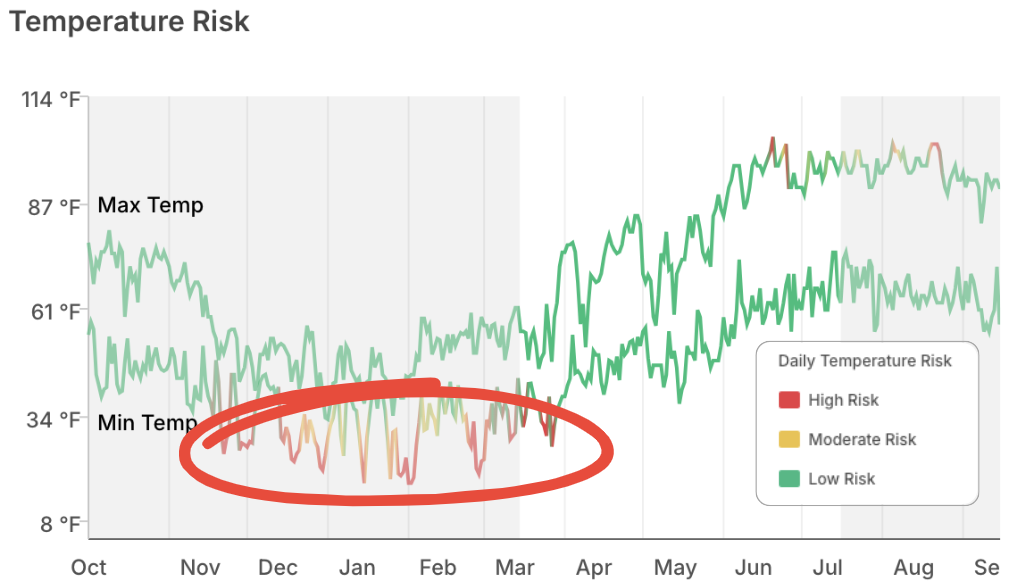
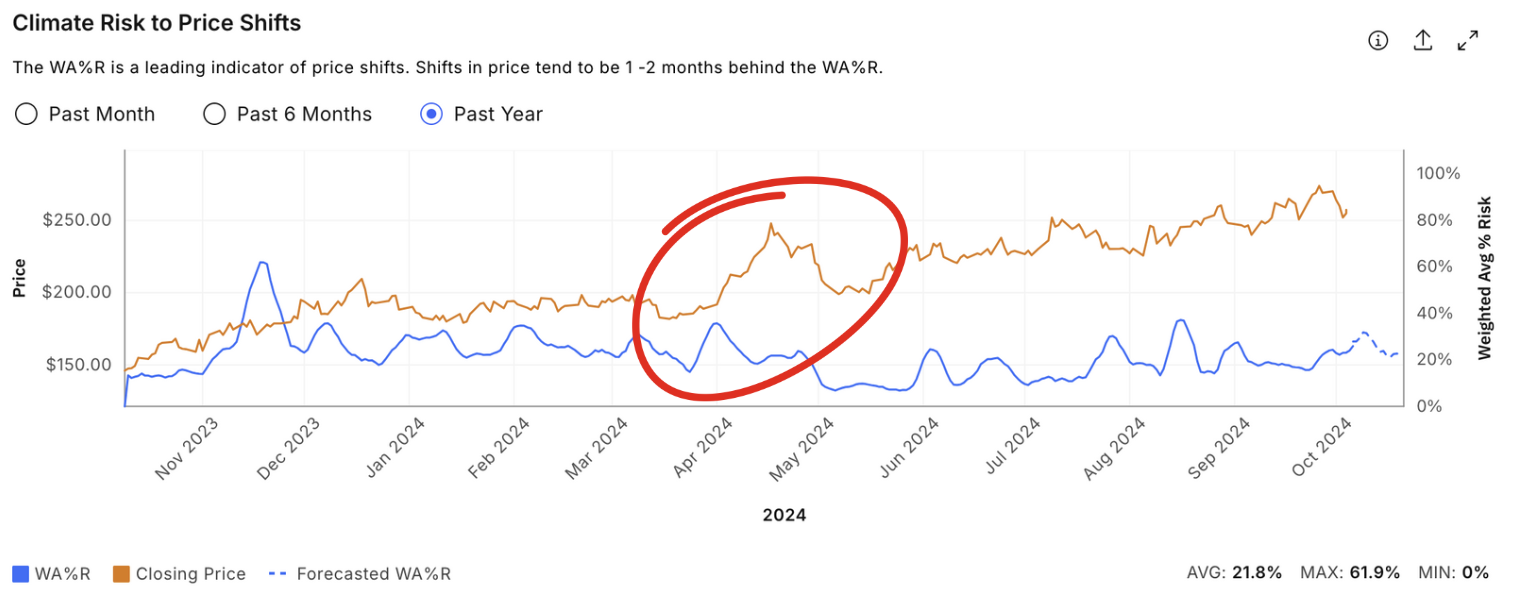
Unexpected frost-like temperatures threatened flowering apricot trees from late November to early spring. Helios detected this anomaly five months prior to media reports, allowing users to secure alternative suppliers before a 60% price surge.
At a glance: Helios helped its customers spot a disruption in Turkish apricots in November 2023, five months before the media reported about it and market prices went up by 60%.
What happened?
Fresh apricots are pricier due to their delicate harvesting requirements. Frosts from late November 2023 to March 2024, with temperatures dropping to 19℉, damaged the crop. By June 2024, export volume fell to 62,500 metric tons, a 22.5% decrease from 76,600 metric tons in 2023. Consequently, the price of Turkish apricots rose from $2.50 per kilogram in 2023 to about $4.00 per kilogram in 2024, marking a 60% increase and resulting in lower yields.
How Helios Helped
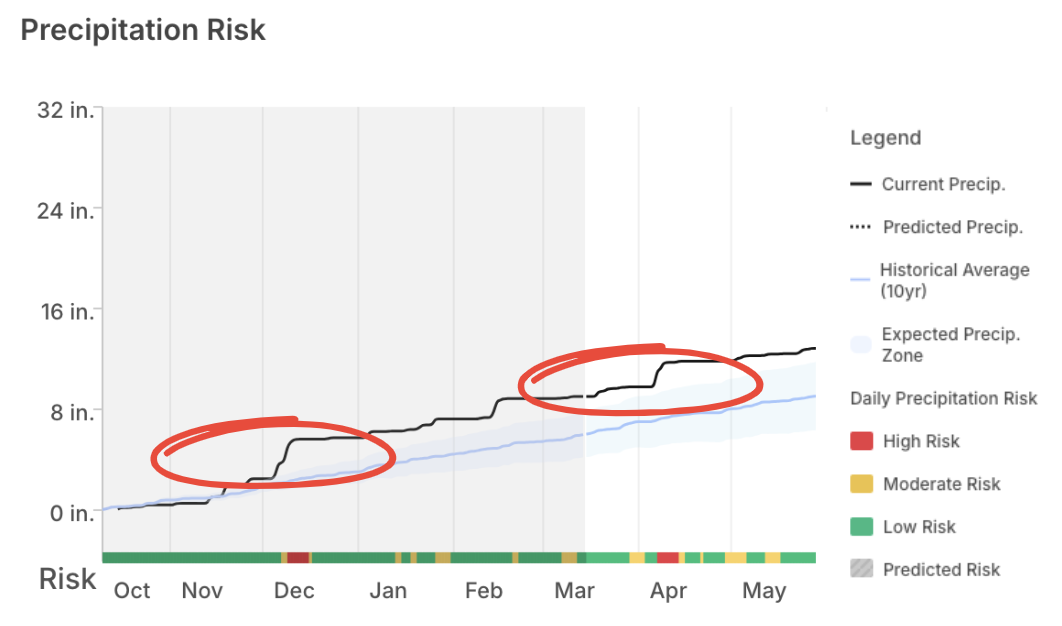
Unexpected frost-like temperatures threatened flowering apricot trees from late November to early spring. Helios detected this anomaly five months prior to media reports, allowing users to secure alternative suppliers before a 60% price surge. Users were also warned about heavy storms in December and April 2023, which increased precipitation and negatively impacted plant pollination, leading to lower quality and volume of the 2024 apricot harvest.
Related Case Studies
Vietnam’s Coffee Supply Plummets After Drought, Prices Hit 45-Year High
Vietnam's April 2024 drought caused lower yields, straining already tight stockpiles and driving coffee prices to a 45-year high. The Helios platform detected signals from drought-affected coffee regions in Vietnam, predicting the price surge ahead of media reports.
Helios’s 91% Success Rate in Detecting Global Supply Disruptions
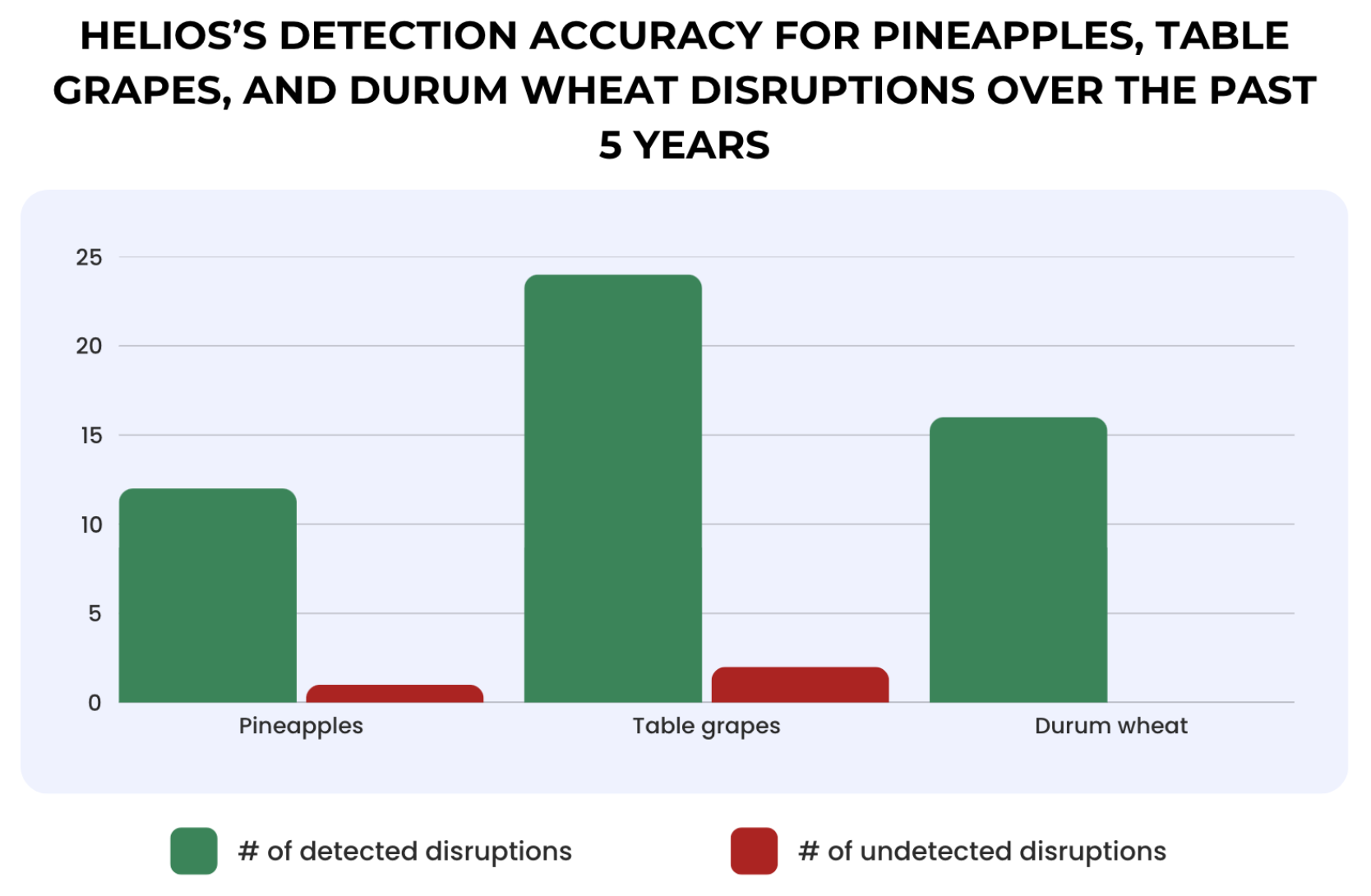
To assess the effectiveness of our platform, we conducted a five-year backtesting analysis of disruptions affecting three different commodity types to answer one key question: How well did Helios detect major disruptions affecting these commodities worldwide? Our analysis revealed that Helios successfully detected 91% of agricultural supply chain disruptions over the past five years.
.png)

Personalized commodity intelligence for the teams that feed the world.
