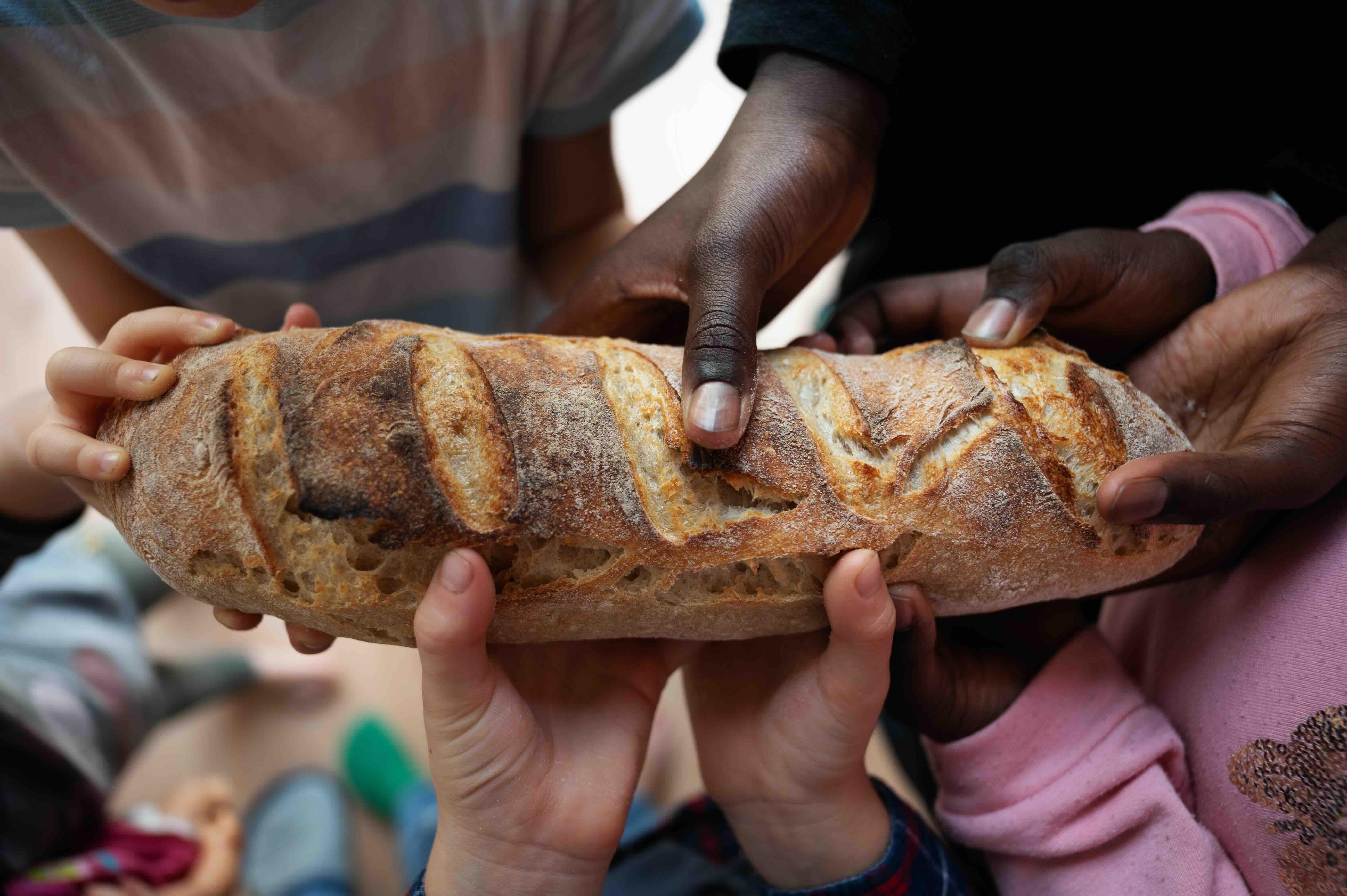
Who can withstand the next food shock?

Hunger Exposure Index

The world grew a record harvest and still hit a new high for hunger. Availability was never the constraint; the buffer underneath each country is. The Hunger Exposure Index scores 47 countries on who can withstand the next food shock, ahead of an El Niño whose damage lands in 2027.

The Hunger Exposure Index — Helios AI

Exposure by Country

Run 25 Aug, 2026 Next revisit 15 Jan, 2027

The Ranking, In Full

Sort any column. Click a row to open its record above the map — the map zooms to the country.

The Three Shocks

Three simultaneous pressures drive the index.

1
EXT — NOAA/IRI/WMOCLIMATE · 30%

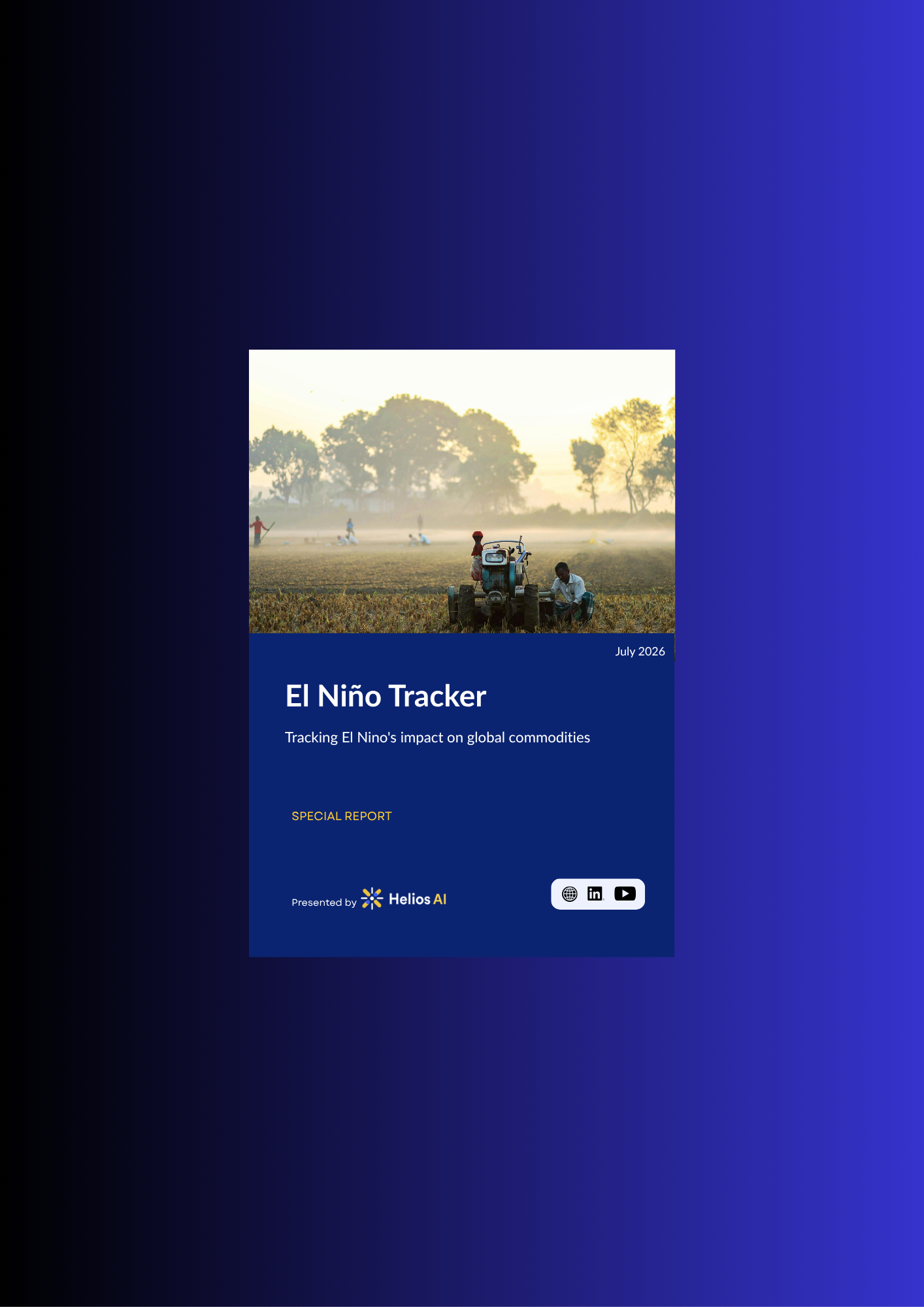
A strong El Niño is forming for the 2026/27 season

Forecasters put the odds at about 99% that El Niño conditions arrive by December 2026, peaking between September and November. There is a 63% chance it exceeds +2.0°C, which would make it a strong event. NOAA, the WMO and Australia's Bureau of Meteorology all agree.

That means a higher risk of drought across Southern Africa, the Sahel during its main rains, and the South Asian monsoon. Not everywhere loses: El Niño usually brings more rain to the Eastern Horn in October–December, so Somalia, Kenya and south-east Ethiopia may get a better season.

The last strong El Niño, in 2023–24, shows what this can cost. Zimbabwe's maize harvest fell by half, some Southern African cereal harvests dropped by two-thirds, and Malawi, Zambia and Zimbabwe all declared national disasters.

2
HELIOS ENERGYGULF · 25%

Gulf disruption has already raised fertilizer and fuel costs

Oil hit $118 a barrel in late March 2026 and stayed above $90 through May before falling back to about $74. The high prices have already worked through the first half of the year as higher shipping and farm input costs. The fall is recent and could reverse — the Strait of Hormuz is still a live risk.

Fertilizer is the bigger problem. It is made from natural gas and much of it ships through the Gulf. 14 of the 15 priority countries buy more fertilizer than they produce, and Sudan brings in roughly 54% of its supply through the Strait of Hormuz — more than any other country here.

Two countries are less exposed. Nigeria exports more urea than it imports, and Pakistan makes all its own urea — though it still buys DAP and almost all of its potash abroad.

3
HELIOS FXEXT RESERVESFX · 25%

Countries without foreign currency cannot buy their way out

This is what separates a bad harvest from a famine. A country that has foreign currency can buy food on the world market to cover the shortfall. A country that does not, cannot. The clearest measure is import cover — how many months of imports a country's reserves can pay for.

The spread is wide. South Sudan has about nine days of import cover; Malawi, Yemen, Sudan and Zimbabwe have roughly a month or less; Somalia's reserves are close to nothing and Afghanistan's are frozen. At the other end, Nigeria has about 11 months, Niger 7.8, and Kenya and Madagascar about 6.2 — enough to absorb a shock.

A weak currency is not always a warning sign. Ethiopia's birr is 215% and Nigeria's naira 134% weaker than their long-run averages, but both governments deliberately let their currencies float as part of IMF-backed reforms — a one-off correction, not a collapse. In Sudan and Malawi the fall is market-driven, and there it is a genuine sign of distress.

Caveats. Index figures are an analytical construct combining Helios and external inputs; pillar weights are adjustable. Several country figures rest on conservative estimates where conflict restricts data access (Sudan, Yemen, South Sudan, Afghanistan). Scores are deliberately conservative: the climate pillar encodes the El Niño amplitude assumed at build time, not the stronger current NOAA outlook.

Helios AI Intelligence Reports · priority-country brief 25 June 2026 · global run 25 August 2026. Geometry: Natural Earth (public domain). © Helios AI.

resources

See which regions and crops the next shock hits, and how to act before it does.

The Calm Before the Shock: El Niño, Food Security, and the Case for Early Action

Record grain, record hunger. Ahead of a strong El Niño, Helios AI, IFPRI and FAO on which countries can absorb the next shock and how to act early.

When Will the 2026 El Niño Actually Hit Crop Supply? Mostly in 2027

Helios AI monitors 34 crop-and-country combinations for the El Niño Tracker. Here is when the supply impact lands, and where.